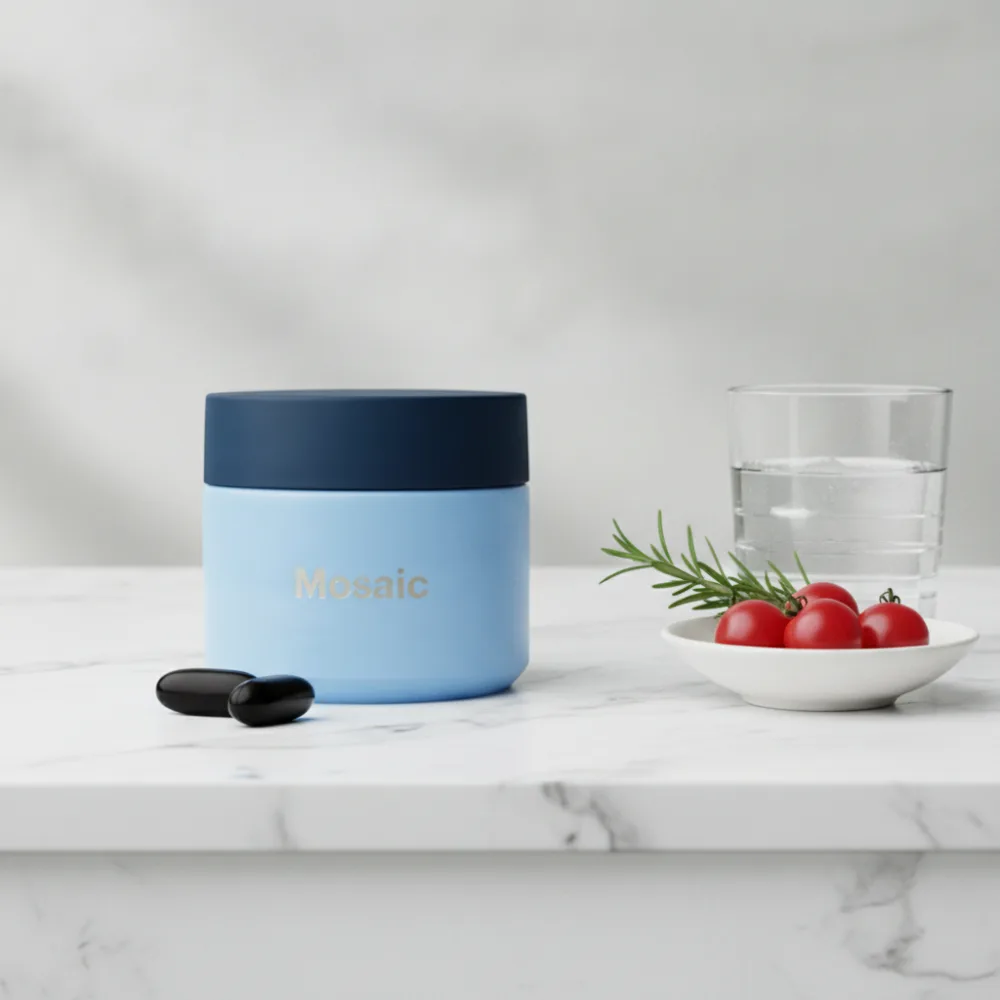
BodyHealth Gut Restore Review 2026 - Does It Work? is presented for informational purposes by Elmont Drugs. Talk to a pharmacist or your physician before starting any new supplement, device or treatment.
 Gut Barrier
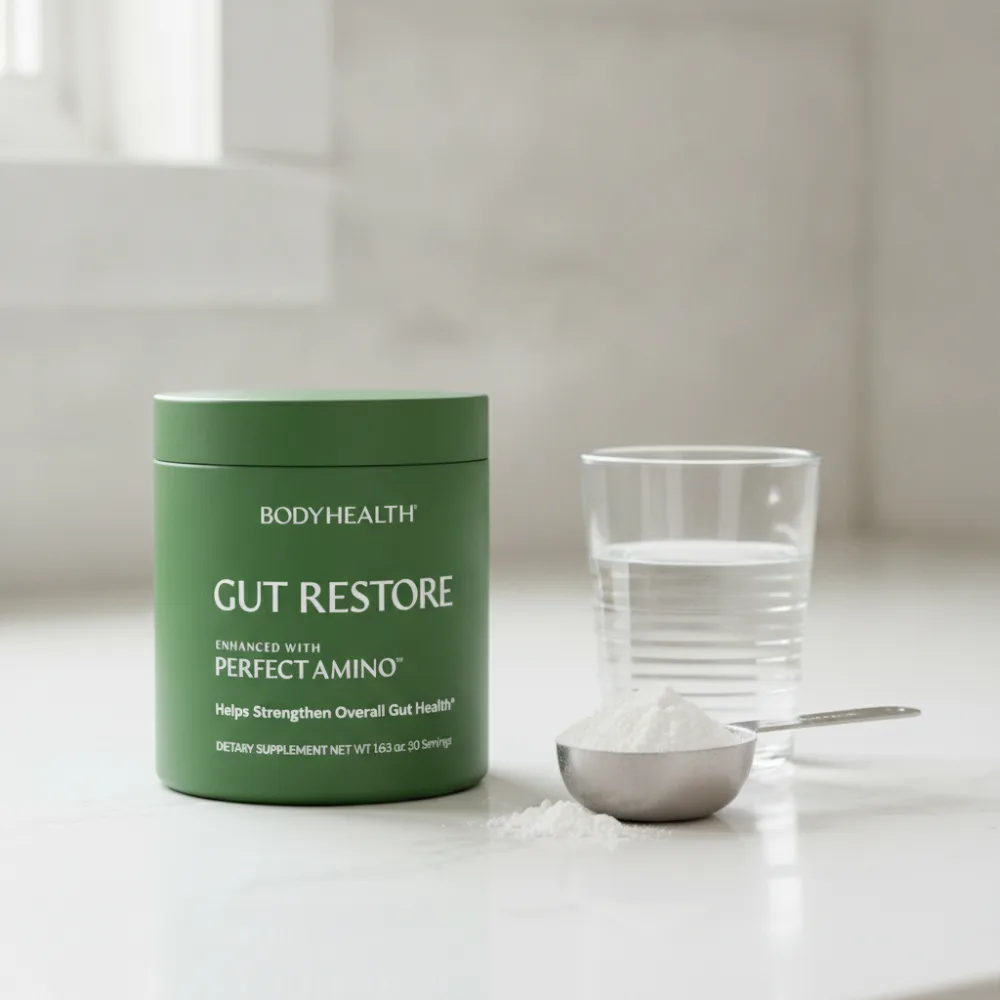
BodyHealth Gut Restore Review: Is This SBI Powder Worth $85?
424 reviews
An honest BodyHealth Gut Restore review: whether the SBI/ImmunoLin and amino acids actually support your gut, if it's under-dosed, the truth about the "Candida, C. diff and leaky gut" claims, and whether it's worth $85.
Published July 3, 2026
Is BodyHealth Gut Restore worth it? My honest review at a glance
BodyHealth Gut Restore is a functional-medicine gut powder built around a genuinely interesting ingredient: serum-derived bovine immunoglobulins (SBI, branded ImmunoLin), plus essential amino acids and humic acid. From an MD-founded brand (Dr. David Minkoff), it's marketed to strengthen your gut barrier and, per its sales page, "address" everything from bloating to Candida, C. difficile, H. pylori, leaky gut and gluten reactions. Let me be honest and careful up front, because this is a health and money decision: the core ingredient (SBI) is legitimate, but with modest evidence; the product looks under-dosed at the maintenance serving; some of its claims are seriously overreaching (a supplement doesn't treat C. diff or H. pylori); and at $85 a tub it's expensive. Let me walk you through the honest picture.
I went through what's actually in it, whether SBI works, the dose problem, the overstated claims, safety, and whether it's worth $85. Here's my straight, safety-first take.
A legit-ingredient gut-barrier powder — serum bovine immunoglobulins (SBI/ImmunoLin) that genuinely bind gut irritants, plus amino acids — from a credible MD-founded brand, and some users feel less bloated on it. The honest catches: SBI's evidence is modest (it supports, doesn't "heal"); the maintenance serving looks under-dosed versus the ~5g used in studies; its claims to "address Candida, C. difficile, H. pylori and leaky gut" are overstated and, for real infections, dangerous; humic acid's benefit is thin; and it's $85 versus cheaper SBI powders. A reasonable-but-pricey gut-barrier product wrapped in overreaching claims.
The essentials of my Gut Restore review
My rating: 5/10 — a legitimate SBI-and-amino-acid gut-barrier powder undercut by likely under-dosing, seriously overstated claims, and a high price.
Key spec: 1 scoop in water daily — SBI immunoglobulins + amino acids + humic acid.
| Detail | BodyHealth Gut Restore |
|---|---|
| Brand | BodyHealth — MD-founded (Dr. David Minkoff), functional-medicine leaning |
| Format | Powder in water; 1 scoop daily (30 servings, ~1.65g each) |
| Ingredients | SBI/ImmunoLin (bovine immunoglobulins), essential amino acids + nucleotides, humic acid |
| Best for | Gut-barrier support, IBS-D-type symptoms — not infections |
| Main concerns | Likely under-dosed SBI; overstated "treats infections" claims; price |
| Price | $84.95/tub (~$2.83/serving) |
✅ What I liked about Gut Restore
- ✅ Legitimate hero ingredient — SBI/ImmunoLin genuinely binds gut antigens and LPS, with real (if modest) data.
- ✅ Sensible support cast — amino acids and nucleotides are plausible fuel for gut-lining cells.
- ✅ MD-founded, reputable brand with generally positive customer reviews.
- ✅ Clean label — no sugar, gluten, dairy or artificial sweeteners.
❌ What held Gut Restore back
- ❌ Overreaching claims — "addresses Candida, C. difficile, H. pylori" is unsupported and, for real infections, dangerous.
- ❌ Likely under-dosed — the small serving suggests far less SBI than the ~5g used in studies.
- ❌ Expensive — $85 versus cheaper SBI powders that give a bigger, clearer dose.
- ❌ Weak extras — humic acid's gut evidence is thin, and taste draws complaints.
⚠️ For gut-barrier support only — never use it to self-treat an infection like C. diff or H. pylori. See a doctor.
In this BodyHealth Gut Restore review:
- What is Gut Restore, and what's actually in it?
- Does Gut Restore actually work for gut health and bloating?
- Is the SBI in Gut Restore dosed high enough to work?
- Can Gut Restore really "address" Candida, C. difficile and H. pylori?
- Is the "leaky gut" Gut Restore targets even real?
- Is Gut Restore safe, and what about the bovine serum and humic acid?
- Is Gut Restore worth $85 versus cheaper SBI powders?
- How do you take Gut Restore, and who should skip it?
- My verdict on Gut Restore
- BodyHealth Gut Restore FAQ
What is Gut Restore, and what's actually in it?
Gut Restore is a gut-barrier support powder you mix into water. Rather than a probiotic or enzyme, its approach is to bind gut irritants and feed the gut lining. Three components do the work:
- 🛡️ SBI / ImmunoLin (serum-derived bovine immunoglobulins) — the hero ingredient. These are purified antibodies (mostly IgG) that bind bacterial toxins, antigens and LPS in the gut so they can't provoke inflammation.
- 🧬 Essential amino acids + nucleotides (PerfectAmino) — building blocks that support the rapidly-renewing cells lining your gut.
- 🪨 Humic acid — a "binder/detox" ingredient BodyHealth adds (evidence for this in the gut is thin).
💡 So Gut Restore is a "bind the bad stuff and support the lining" formula — conceptually sound, and built on a real ingredient. The questions that decide whether it's worth it are dose, the overstated claims, and price, which the rest of this review tackles.
Does Gut Restore actually work for gut health and bloating?
For gut-barrier support, there's a real basis — but keep expectations modest.
🔬 What the science actually shows: SBI/ImmunoLin is a legitimately-studied ingredient. It binds microbial antigens and LPS in the gut lumen, which can reduce the inflammatory "load" on your gut — and there's genuine (if modest) human data for IBS-D (diarrhea-predominant IBS) and gut-barrier support. That's a real, plausible mechanism, not fairy dust.
🗓️ What users report: a share of people say they feel less bloated, less reactive to trigger foods, and calmer digestion — often over weeks to a couple of months. Others notice little, and the taste draws frequent complaints.
⚠️ The honest framing: SBI supports the gut barrier by binding irritants — it does not "heal" or "rebuild" your gut lining. In fact, the main human IBS-D trial that improved stool symptoms found no measurable improvement in intestinal permeability (and it was small and placebo-free). So the effect is supportive and gradual, not a cure. For food-reactivity and IBS-D-type bloating, it's worth-a-try with realistic expectations; for other kinds of bloating, it may do little.
Is the SBI in Gut Restore dosed high enough to work?
This is the value question the marketing skips, and it's a real concern.
📏 The human studies on SBI generally use around 5 grams (and up to 10g) per day. But Gut Restore's tub is ~49.7g total across 30 servings — only about 1.65g per scoop, and that scoop also has to contain the amino acids and humic acid. That strongly implies the SBI dose at the maintenance serving is well below the ~5g used in research.
⚠️ What that means practically:
- At 1 scoop a day, you're likely getting a fraction of the studied SBI dose — which may explain the "felt nothing" reviews.
- To approach a studied dose, you'd need 3–4 scoops a day — which burns through the tub in a week and multiplies the already-high cost.
➡️ So a genuine ingredient can still be under-delivered. Gut Restore's SBI is real, but at the everyday serving it looks too small to reliably match the research — a key reason a cheaper, higher-dose SBI powder may actually be the better buy (more below).
Can Gut Restore really "address" Candida, C. difficile and H. pylori?
This is the most important section, because it's where the marketing crosses a line that matters for your health.
🚨 The critical correction: Gut Restore's materials suggest it "addresses" Candida, C. difficile and H. pylori. But C. difficile and H. pylori are serious infections that require medical diagnosis and prescription treatment (antibiotics and, for H. pylori, a specific multi-drug regimen). No supplement treats them, and positioning one as if it does is dangerous — because it can lead people to self-treat and delay real care for infections that can become severe.
⚠️ The related instruction to take "up to 4 servings a day for infections" makes this worse — it actively frames the product as an infection treatment, which it is not.
➡️ The honest, safety-first read: whatever mild antigen-binding SBI does, Gut Restore is not a treatment for Candida overgrowth, C. diff or H. pylori. If you have (or suspect) any of these, that's a see-a-doctor situation, not a supplement purchase. Take Gut Restore, at most, as general gut-barrier support — and ignore the infection claims entirely.
Is the "leaky gut" Gut Restore targets even real?
Since "heal your leaky gut" is central to the pitch, here's the honest nuance.
🔬 Increased intestinal permeability is a real, measurable phenomenon — the gut barrier can become "leakier" in certain conditions (like celiac or IBD). But "leaky gut syndrome" as a standalone diagnosis that causes a long list of symptoms is not medically recognized (Cleveland Clinic and others are clear on this). It's a feature of other conditions, not a disease with a validated test and cure.
➡️ So Gut Restore may support a healthier gut barrier via SBI's antigen-binding — but it does not "cure leaky gut," because that isn't an established diagnosis. Treat the "heal your leaky gut" language as marketing, and the product as reasonable barrier support, not a fix for a disease that isn't formally defined.
Is Gut Restore safe, and what about the bovine serum and humic acid?
A few honest points on safety and the more unusual ingredients:
- 🐄 Bovine serum (SBI) — understandably gives some people pause, but purified SBI/ImmunoLin is a well-established, GRAS-status ingredient used in medical foods; it's generally well tolerated and dairy-free (it's serum, not milk protein).
- 🪨 Humic acid — the "binder/detox" add-on has weak human evidence for gut benefits and is the least-proven part of the formula. Because these compounds bind minerals, a poorly-purified humic/fulvic ingredient can even carry heavy-metal contamination — another reason to treat the "detox" claim skeptically.
- 😖 Taste — a recurring complaint; some users switch to a capsule form or mix it into stronger-flavored liquids.
- ⚠️ Generally low-risk, but if you're pregnant, breastfeeding, immunocompromised, on medication, or have a diagnosed GI condition, check with a professional — and never use it in place of real treatment for an infection.
A pharmacist can help you weigh it against your situation — see how your pharmacist helps you use supplements safely.
Is Gut Restore worth $85 versus cheaper SBI powders?
Because SBI is a commodity ingredient available in other products, the value math matters.
| Product | ~Price | Key ingredient | Note |
|---|---|---|---|
| BodyHealth Gut Restore | $85 | SBI + amino acids + humic acid | Multi-ingredient; likely low SBI dose; overstated claims |
| NuEthix Bloat-Eaze Pro | ~$55–65 | SBI (mono-ingredient) | The same SBI, more simply, aimed at IBS-D/bloat |
| MegaIgG2000 / generic SBI | ~$50 | SBI, disclosed 2g dose | Cheaper, transparent SBI dose |
| ARMRA Colostrum | ~$55 | Bovine colostrum (IgG mix) | A different immunoglobulin source |
So is the premium justified? Not really, on value. Gut Restore adds amino acids and humic acid around the same SBI you can get elsewhere for less — and it likely delivers a smaller SBI dose per serving. If SBI is what you want, a cheaper, higher-dose SBI powder (or the simpler Bloat-Eaze Pro) gives you more of the active for less money. Gut Restore's premium buys the extra amino acids, the MD brand and the (overstated) all-in-one positioning — not a better SBI deal.
How do you take Gut Restore, and who should skip it?
The label says 1 scoop daily in water for maintenance, best taken away from food (30 minutes before or 1–2 hours after). Give it several weeks to a couple of months to judge.
🚫 Ignore the "up to 4 servings for infections" instruction — a supplement is not infection treatment, and that's the one part of the directions to disregard.
👎 You should skip Gut Restore if:
- You have (or suspect) a real infection like C. diff, H. pylori or a Candida overgrowth — that's a doctor visit, not a powder.
- You mainly want SBI — a cheaper, higher-dose SBI product is better value.
- Your bloating isn't barrier/food-reactivity related — an enzyme, fiber or targeted approach may fit better.
- You're budget-conscious — $85 for a likely-low SBI dose is a hard sell.
My verdict on Gut Restore — should you buy it?
Is BodyHealth Gut Restore worth it? My verdict is: a real ingredient, under-dosed and oversold — 5/10.
There's a legitimate product here. Gut Restore is built on a real, studied ingredient (SBI/ImmunoLin genuinely binds gut irritants), rounded out with plausible amino acids, from a credible MD-founded brand, and a fair share of users feel less bloated and less food-reactive on it. As gut-barrier support, it's a reasonable idea.
What holds it to a 5: the hero ingredient looks under-dosed at the daily serving (a fraction of the ~5g used in studies), the claims are seriously overstated — and, for C. diff and H. pylori, genuinely dangerous, since those need real medical treatment — the "leaky gut" framing is oversold, the humic acid is unproven, and at $85 it's pricey for what you get versus cheaper, higher-dose SBI.
- 👍 Consider Gut Restore if you specifically want an SBI-plus-amino-acid barrier-support blend, you'll take it consistently for weeks, and you treat the infection claims as marketing to ignore.
- 👎 Skip it if you suspect a real infection (see a doctor), you want the best SBI value (buy a cheaper, higher-dose SBI), or you're on a budget.
➡️ Bottom line: Gut Restore is a credible, real-ingredient gut-barrier powder wrapped in overstated (and, for infections, unsafe) marketing at a premium price. The SBI and amino acids are legitimate support; the "treats Candida/C. diff/H. pylori/leaky gut" story is not. If you want SBI, get it cheaper and higher-dosed elsewhere; if you have an infection, see a doctor; and if you try Gut Restore, do it for gradual barrier support with realistic expectations.
Reasonable gut-barrier support — but a cheaper, higher-dose SBI is better value, and infections need a doctor.
BodyHealth Gut Restore FAQ
Does BodyHealth Gut Restore actually work?
For gut-barrier support, there's a real basis — its SBI/ImmunoLin binds gut antigens and LPS, with modest human data for IBS-D and barrier support, and some users feel less bloated over weeks. But it supports rather than "heals" the gut, and the daily serving looks under-dosed versus studies, so results are variable.
Is the SBI in Gut Restore under-dosed?
Likely, at the maintenance serving. SBI studies typically use ~5g/day, but Gut Restore's tub is only about 49.7g across 30 servings (~1.65g each) — and that scoop also holds amino acids and humic acid. So the everyday SBI dose appears well below the studied amount; you'd need several scoops (and much higher cost) to approach it.
Can Gut Restore treat Candida, C. difficile or H. pylori?
No — and this is important. C. difficile and H. pylori are serious infections that require medical diagnosis and prescription treatment; no supplement treats them, and using one instead can dangerously delay care. Ignore those claims and the "4 servings for infections" instruction; see a doctor for any suspected infection.
Is "leaky gut" real, and does Gut Restore fix it?
Increased intestinal permeability is a real, measurable phenomenon, but "leaky gut syndrome" as a standalone diagnosis isn't medically recognized — it's a feature of other conditions, not a disease with a validated cure. Gut Restore may support the gut barrier, but it doesn't "cure leaky gut," because that isn't an established diagnosis.
Is Gut Restore safe, and is the bovine serum a concern?
Purified SBI/ImmunoLin is a well-established, GRAS-status ingredient used in medical foods; it's generally well tolerated and dairy-free (serum, not milk protein). The humic acid is the least-proven part. Taste is a common complaint. If you're pregnant, breastfeeding, immunocompromised, on medication, or have a GI condition, check with a professional first.
Is Gut Restore worth $85?
Not on value. It adds amino acids and humic acid around the same SBI available elsewhere, likely at a smaller dose. If SBI is your goal, a cheaper, higher-dose SBI powder (or a simpler SBI product like Bloat-Eaze Pro) gives you more active for less. You're paying a premium for the blend and brand, not a better SBI deal.
How long does Gut Restore take to work?
Give it several weeks to a couple of months of consistent daily use to judge — SBI's support is gradual, not immediate. Take it away from food (about 30 minutes before or 1–2 hours after). If you notice nothing after two months at the maintenance dose, the low SBI amount may be why.
Keep reading before you buy Gut Restore
Gut-barrier products work in different ways — here's how Gut Restore compares:
- NuEthix Bloat-Eaze Pro review — the same SBI immunoglobulin, as a simpler mono-ingredient aimed at IBS-D and bloat.
- ARMRA Colostrum review — a different immunoglobulin source (bovine colostrum) for gut-barrier support.
- GutPersonal Gut Soother review — the L-glutamine gut-lining approach versus SBI's antigen-binding.
- How your pharmacist helps manage medications and supplements — useful before adding a gut-barrier powder.
Disclaimer: This BodyHealth Gut Restore review is independent editorial information, not medical advice. Dietary supplements are not intended to diagnose, treat, cure or prevent any disease. Gut Restore's serum bovine immunoglobulins (SBI) support the gut barrier by binding antigens/LPS — a supportive, modest effect, not tissue "healing," and the maintenance serving appears to deliver less SBI than the ~5g used in research. C. difficile and H. pylori are serious infections that require medical diagnosis and prescription treatment; this product does not treat them, and it should never be used to self-treat a suspected infection — seek medical care. "Leaky gut syndrome" is not a recognized standalone diagnosis, and humic acid's gut benefits are not well established. If you are pregnant, breastfeeding, immunocompromised, take medication, or have a gastrointestinal condition, consult a licensed healthcare professional before use. This page may contain affiliate links; we may earn a commission at no extra cost to you, which never changes our honest assessment. Pricing and formulation were accurate at the time of writing (July 2026) and may change — verify on the official site.