Gundry MD Total Restore Review 2026 - Worth It? is presented for informational purposes by Elmont Drugs. Talk to a pharmacist or your physician before starting any new supplement, device or treatment.
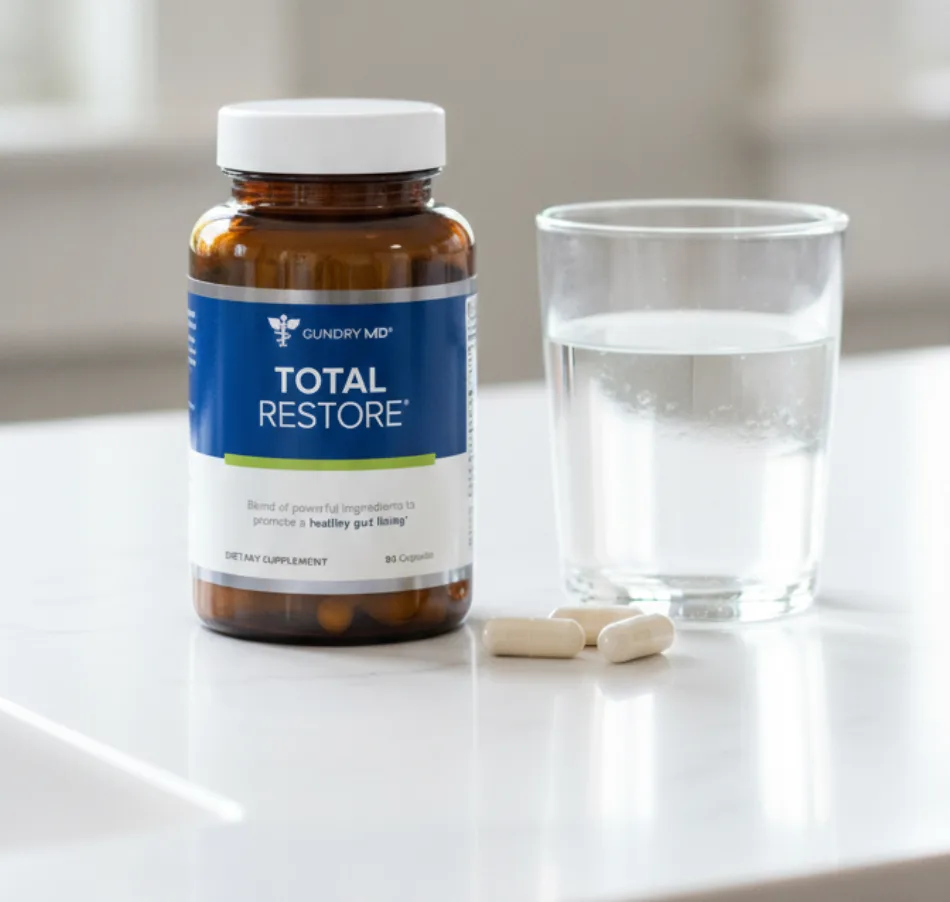 Gut Lining
Gundry MD Total Restore Review: Does It Work, or Underdosed?
4000 reviews
An honest Gundry MD Total Restore review: whether the gut-lining supplement works, if the ingredients are underdosed, the lectin theory, the shellfish and autoship catches, and whether it's worth $42.
Published July 5, 2026
Is Gundry MD Total Restore worth it? My honest review at a glance
Total Restore is Dr. Steven Gundry's "gut lining support" capsule — a 20-ingredient, lectin-free formula built on his lectin theory, promising to "seal" a leaky gut and deliver smoother digestion, more energy and clearer thinking. Let me be honest and useful from the first line: Total Restore is actually built around some legitimate, well-chosen gut-lining ingredients — L-glutamine, zinc-carnosine (PepZin GI), licorice/DGL — which is more than a lot of "gut repair" products can say. But the catch decides everything: those good ingredients are massively underdosed (the L-glutamine is a fraction of the studied amount), the lectin theory it's based on is contested, the glucosamine is shellfish-derived, and Gundry's aggressive autoship funnel is a real headache. So the honest question is: right ideas at the wrong doses, or a gut fixer worth $42? Let me walk you through it.
I went through whether it works, whether the doses are effective, the lectin theory, the shellfish and autoship catches, and whether it's worth it. Here's my straight take.
A sensible list of gut-lining ingredients (L-glutamine, zinc-carnosine, licorice) that are badly underdosed — the L-glutamine is around 213mg vs the ~5,000mg used in studies. The premise (Gundry's lectin theory) is contested by mainstream nutrition; the glucosamine is shellfish-derived (allergen); reviews are polarized; and the autoship funnel draws real billing complaints. Good picks, token doses, contested premise.
The essentials of my Total Restore review
My rating: 4/10 — well-chosen gut-lining ingredients undermined by token doses, a contested lectin premise, and a pushy subscription.
Key spec: 3 capsules daily — 20-ingredient lectin-free gut-lining blend.
| Detail | Gundry MD Total Restore |
|---|---|
| Brand | Gundry MD (Dr. Steven Gundry) — DTC supplement brand |
| Format | Capsules; 3 daily (90/bottle) |
| What's inside | L-glutamine (~213mg), zinc-carnosine (PepZin GI), N-acetyl-glucosamine (shellfish), licorice/DGL + lectin-blocker spices (20 total) |
| Best for | People sold on the lectin/leaky-gut concept who want a convenient capsule |
| Main knocks | Underdosed actives; contested premise; shellfish allergen; autoship |
| Price | ~$41.95/bottle on subscription (~$50 member; up to ~$69.95 retail) |
✅ What I liked about Total Restore
- ✅ Well-chosen ingredients — L-glutamine, zinc-carnosine and DGL licorice are genuine, evidence-backed gut-lining actives.
- ✅ Clean label — sugar-free, soy-free, dairy-free, no artificial sweeteners.
- ✅ Helps some people — a share of users report better regularity and less bloating.
- ✅ 90-day money-back guarantee is offered (keep records in case you need it).
❌ What held Total Restore back
- ❌ Massively underdosed — L-glutamine ~213mg vs ~5,000mg studied; zinc-carnosine and licorice also token.
- ❌ Contested premise — the lectin theory and "leaky gut" framing aren't mainstream science.
- ❌ Shellfish allergen — the N-acetyl-glucosamine is crustacean-derived.
- ❌ Autoship funnel — real complaints about surprise recurring charges and refunds.
⚠️ Choose the one-time purchase, not autoship — and avoid it if you have a shellfish allergy.
In this Gundry MD Total Restore review:
- What is Gundry MD Total Restore, and what's in it?
- Does Gundry MD Total Restore actually work?
- Are the ingredients in Total Restore dosed effectively?
- Is the lectin theory behind Total Restore real science?
- Is Total Restore safe, especially with a shellfish allergy?
- Is Gundry MD Total Restore worth $42, and what's the autoship catch?
- How does Total Restore compare to Terra Origin and other gut-lining supplements?
- Total Restore vs Bio Complete 3 — which Gundry product should you get?
- My verdict on Gundry MD Total Restore
- Total Restore FAQ
What is Gundry MD Total Restore, and what's in it?
Total Restore is a 3-capsules-a-day "gut lining" supplement — a 20-ingredient blend aimed at strengthening the intestinal barrier and blocking dietary lectins.
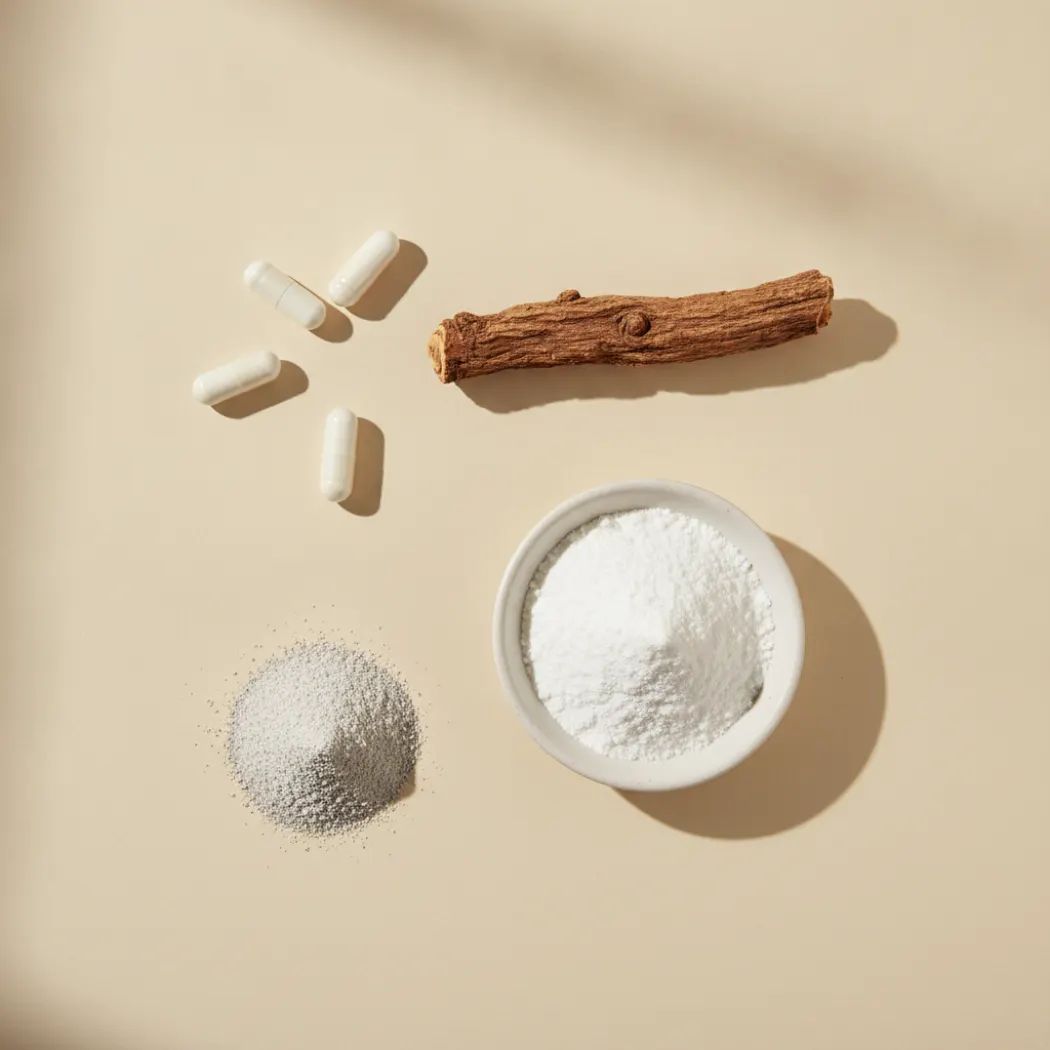
- 🔬 L-glutamine — the most-studied amino acid for the gut lining (but here at ~213mg).
- 🦪 N-acetyl-D-glucosamine — a gut-lining/joint compound — derived from shellfish (allergen).
- 🌿 Licorice root / DGL + PepZin GI (zinc-L-carnosine) — soothing, gut-lining actives with real evidence at proper doses.
- 🌶️ Lectin-blocker spices — cinnamon, clove, black pepper and others, plus grape seed, maitake and more (20 ingredients total).
💡 The important thing to understand: this is a thoughtful list of gut ingredients — better-chosen than many rivals — but spread across 20 ingredients in a capsule, which (as the next section shows) forces each one to a small dose. The selection is the strength; the amounts are the problem.
Does Gundry MD Total Restore actually work?
Results are genuinely polarized — and that tells you something.
🗓️ What users report: the reviews split hard. One camp calls it a "miracle" — "regular bowel movements for the first time in years," less bloating, more energy. The other camp says it "did nothing," "made me feel sick," or was a "rip-off." That kind of split usually points to a mix of placebo, individual variation, and a formula too light to reliably move the needle.
🔬 Why some feel better: the licorice/DGL and small amounts of gut-soothing ingredients can genuinely calm digestion for some people, and any improvement in diet that comes with "gut-focused" habits helps too.
➡️ So Total Restore works for some and does nothing for others — consistent with a product built on good ingredients at doses too small to guarantee an effect. Give it a few weeks if you try it, and use the guarantee if you're in the "nothing" camp.
Are the ingredients in Total Restore dosed effectively?
This is the crux, and the honest answer is: no — the key actives are far below research doses.
🔢 Independent analyses of the label put the doses well under what studies use:
- L-glutamine ~213mg — gut-lining supplementation typically uses 5,000mg (5g) and up, and a 2024 meta-analysis found glutamine only affected intestinal permeability at very high doses (over 30g/day). At ~213mg, this is a tiny fraction of any studied amount.
- Zinc-carnosine (PepZin GI) ~10mg — the studied dose is around 75mg/day.
- Licorice ~54mg — soothing doses run higher (~150mg+); berberine and others appear in trace amounts.
⚠️ The reason is simple: you can't fit effective doses of 20 ingredients into 3 capsules. The "long ingredient list" that looks impressive on the label is exactly why each active is tiny. A single, focused ingredient at its studied dose would do more than 20 sprinkled ones.
➡️ So the label reads like a gut-lining dream team, but the amounts are token. If you want the actual gut-lining benefit of L-glutamine or zinc-carnosine, you need them at real doses — which Total Restore doesn't deliver (see the comparison below).
Is the lectin theory behind Total Restore real science?
Largely no — and it's worth knowing the premise is contested.
🧬 Total Restore is built on Dr. Gundry's lectin theory — the idea (from his book The Plant Paradox) that lectins in plants like beans, tomatoes and grains drive "leaky gut" and disease. This theory is not accepted by mainstream nutrition science. Major institutions (Harvard's public-health school, Cleveland Clinic) have said a lectin-free diet is more likely to be risky than beneficial, because cooking neutralizes most lectins and the "banned" foods (legumes, whole grains) are among the healthiest.
🔍 It's also worth noting "leaky gut syndrome" isn't a recognized medical diagnosis — increased intestinal permeability is a real research phenomenon, but the marketing "leaky gut" label is broader and looser than the science supports.
➡️ So take the lectin/leaky-gut framing as a marketing premise, not established science. That doesn't mean your symptoms aren't real — but a product built on a contested theory, at token doses, is a shaky foundation for a $42 purchase.
Is Total Restore safe, especially with a shellfish allergy?
Generally low-risk for most, with two real cautions.
- 🦪 Shellfish allergy — important: the N-acetyl-D-glucosamine is derived from shellfish (crustaceans). If you have a shellfish allergy, do not take Total Restore. This is the single most important safety point, and a recurring worry in reviews.
- 🩺 Licorice & blood pressure — licorice root (in larger amounts) can raise blood pressure and lower potassium; the dose here is small, but worth knowing if you have hypertension.
- 💨 Digestive effects — some report bloating, nausea or, paradoxically, constipation; stop if symptoms persist.
- ⚠️ Check first — if you take medication or have a condition, talk to a professional — see how your pharmacist helps you use supplements safely.
➡️ So the headline safety issue is the shellfish-derived glucosamine — a genuine allergen risk that rules the product out for shellfish-allergic people. Otherwise it's generally gentle, with the usual "stop if it upsets you" caveat.
Is Gundry MD Total Restore worth $42, and what's the autoship catch?
Hard to justify on value, and the funnel is a real risk.
💰 The price depends heavily on how you buy: ~$41.95/bottle on subscription, ~$50 with "membership," but up to ~$69.95 at full retail. Either way, you're paying a premium for token doses of ingredients you can get, at real doses, for less elsewhere. On a cost-per-effective-dose basis, it's poor value.
⚠️ The autoship catch: Gundry MD runs an aggressive DTC funnel, and a recurring complaint (BBB, Trustpilot) is buyers being enrolled in a subscription they didn't clearly intend, then facing recurring charges and refund friction — with "customer service that's easiest to reach when you're buying."
🛡️ How to protect yourself: choose the one-time purchase, not autoship; read the checkout carefully; use a disputable card; and note the cancellation steps and 90-day guarantee terms before you buy. Watch your statements.
How does Total Restore compare to Terra Origin and other gut-lining supplements?
Against dedicated gut-lining products, Total Restore is outgunned on doses and value.
| Product | Key gut-lining actives | ~Price | Note |
|---|---|---|---|
| Gundry Total Restore | L-glutamine ~213mg + trace zinc-carnosine | ~$42–50 | Good picks, token doses; capsule |
| Terra Origin Healthy Gut | L-glutamine 5g + zinc-carnosine (PepZin GI) | ~$25–36 | ~23× the glutamine, cheaper; powder |
| GutPersonal Gut Soother | L-glutamine 4g + DGL + zinc + NAG | ~$65 | Full-dose glutamine, third-party tested |
| Generic L-glutamine | L-glutamine 5g | ~$15 | Real dose, cheapest; single ingredient |
So which makes sense? If you want the gut-lining benefit of L-glutamine, a Terra Origin-style powder gives you 5g (versus Total Restore's ~213mg) for less money — a far better deal. A dedicated glutamine gut powder or even a generic L-glutamine both out-dose Total Restore for less. Total Restore's only real edge is the convenient capsule and the Gundry brand — not the doses or value.
Total Restore vs Bio Complete 3 — which Gundry product should you get?
These are two different Gundry gut products, and people mix them up.
- 🧱 Total Restore (this one) — a gut-lining capsule (L-glutamine, zinc-carnosine, DGL + lectin-blocker spices), aimed at "sealing" the intestinal barrier.
- 🦠 Bio Complete 3 — a synbiotic (prebiotic Sunfiber + Bacillus coagulans probiotic + tributyrin postbiotic), aimed at the microbiome and bloating.
➡️ Which to pick? If you're set on the lectin/gut-lining angle, Total Restore is the "barrier" product; if you want probiotic/microbiome support, Bio Complete 3 is the other one. Honestly, neither is a value standout — both carry the Gundry premium and funnel — and for gut-lining specifically, a full-dose glutamine product beats Total Restore.
My verdict on Gundry MD Total Restore — should you buy it?
Is Total Restore worth it? My verdict is: right ideas at the wrong doses — 4/10.
Credit where due: Total Restore is built on a genuinely sensible list of gut-lining ingredients — L-glutamine, zinc-carnosine (PepZin GI) and DGL licorice are real, evidence-backed actives for the intestinal barrier, which is more than many "gut repair" products manage. It's a clean label, and a share of users honestly feel more regular and less bloated on it.
What holds it to a 4 is that the good ingredients are token doses. The L-glutamine is ~213mg versus the ~5,000mg used in studies, the zinc-carnosine and licorice are similarly light, and you simply can't fit effective doses of 20 ingredients into a capsule. On top of that, the lectin/leaky-gut premise is contested by mainstream science, the glucosamine is a shellfish allergen, reviews are polarized, and the autoship funnel draws real billing complaints — at a premium price.
- 👍 Consider Total Restore if you're sold on the lectin/gut-lining concept, want a convenient capsule, and buy it one-time (not autoship) with modest expectations.
- 👎 Skip it if you want real doses of gut-lining actives, better value, or you have a shellfish allergy — a full-dose glutamine powder does more for less.
➡️ Bottom line: Gundry MD Total Restore is a well-designed ingredient list delivered at doses too small to match the research, built on a contested theory and sold through a pushy funnel. The ideas are sound; the execution and premise aren't. If gut-lining support is your goal, a full-dose L-glutamine product (like Terra Origin) gives you far more actual active for less money — and skip it entirely if shellfish is a problem for you.
Buy the one-time option, keep records, and use the 90-day guarantee if it disappoints.
Total Restore FAQ
Does Gundry MD Total Restore actually work?
Results are polarized — some call it a "miracle" for regularity and bloating, others say it did nothing or made them feel sick. That split fits a product built on good ingredients at doses too small to reliably work. Some benefit likely comes from the licorice/DGL and gut-focused habits. Try it a few weeks and use the guarantee if you're in the "nothing" camp.
Are the ingredients underdosed?
Yes, significantly. Independent label analyses put L-glutamine around 213mg (studies use ~5,000mg+), zinc-carnosine around 10mg (studied ~75mg), and licorice around 54mg — with several ingredients in trace amounts. You can't fit effective doses of 20 ingredients into 3 capsules, so the long, impressive-looking list is exactly why each active is tiny.
Is the lectin theory real science?
It's contested. Dr. Gundry's lectin theory isn't accepted by mainstream nutrition — Harvard's public-health experts and Cleveland Clinic have said a lectin-free diet is more likely risky than beneficial, since cooking neutralizes most lectins and the "banned" foods (legumes, whole grains) are very healthy. "Leaky gut syndrome" also isn't a recognized medical diagnosis. Treat the premise as marketing, not established science.
Is Total Restore safe with a shellfish allergy?
No — avoid it. The N-acetyl-D-glucosamine is derived from shellfish (crustaceans), so it's not safe if you have a shellfish allergy. Also note the licorice can raise blood pressure in larger amounts (the dose here is small), and some users report bloating, nausea or constipation. Check with a professional if you take medication.
Is Total Restore worth $42, and what's the autoship catch?
It's poor value for the doses you get — you can buy real-dose gut-lining ingredients for less. The catch is Gundry's autoship: complaints (BBB, Trustpilot) describe buyers enrolled in subscriptions they didn't clearly intend, recurring charges, and refund friction. Choose the one-time purchase, decline upsells, use a disputable card, and note the 90-day guarantee terms.
Total Restore vs Bio Complete 3 — what's the difference?
They're different Gundry products. Total Restore is a gut-lining capsule (L-glutamine, zinc-carnosine, DGL + lectin-blocker spices) aimed at the intestinal barrier. Bio Complete 3 is a synbiotic (prebiotic + probiotic + tributyrin postbiotic) aimed at the microbiome and bloating. Neither is a value standout; for gut-lining specifically, a full-dose glutamine product beats Total Restore.
How do you take Total Restore, and how long until it works?
The label directs 3 capsules daily, typically with food. Users who benefit usually notice changes over a few weeks. Given the light doses, don't expect dramatic results, and judge honestly at the 4–6 week mark — using the money-back guarantee if you see nothing.
Keep reading before you buy Total Restore
Gut-lining supplements vary a lot on dose and value — here's how Total Restore compares:
- Terra Origin Healthy Gut review — a full-dose (5g) L-glutamine gut powder for less money.
- GutPersonal The Gut Soother review — a third-party-tested glutamine gut-lining powder.
- Gundry MD Bio Complete 3 review — the other Gundry gut product (a synbiotic).
- Happy Mammoth Complete Gut Repair review — a collagen "gut repair" powder (no glutamine).
- How your pharmacist helps manage medications and supplements — useful before any new supplement.
Disclaimer: This Gundry MD Total Restore review is independent editorial information, not medical advice. Dietary supplements are not intended to diagnose, treat, cure or prevent any disease. "Leaky gut syndrome" is not a recognized medical diagnosis, and the lectin theory this product is based on is not accepted by mainstream nutrition science; major institutions consider a lectin-free diet more likely to be risky than beneficial. Independent analyses indicate the product's key gut-lining actives are dosed well below research levels (e.g., L-glutamine around 213mg versus roughly 5,000mg used in studies; zinc-carnosine around 10mg versus ~75mg studied), so benefits from those ingredients may be minimal. The product contains N-acetyl-D-glucosamine derived from shellfish (a crustacean allergen) — do not use it if you have a shellfish allergy — and licorice root, which in larger amounts can raise blood pressure and lower potassium. Reviews are polarized. Many consumer complaints about this brand concern subscription/autoship enrollment, recurring billing and refunds — review the terms and consider a one-time purchase. If you are pregnant or breastfeeding, take medication, or have a medical condition, consult a licensed healthcare professional before use, and see a doctor for persistent digestive symptoms. This page may contain affiliate links; we may earn a commission at no extra cost to you, which never changes our honest assessment. Pricing and formulation were accurate at the time of writing (July 2026) and may change — verify on the official site.