Benefiber Review 2026 - Does It Help or Cause Bloating? is presented for informational purposes by Elmont Drugs. Talk to a pharmacist or your physician before starting any new supplement, device or treatment.
 Prebiotic Fiber
Benefiber Review: Does This Prebiotic Fiber Help or Cause Bloating?
9800 reviews
An honest Benefiber review: whether the wheat dextrin fiber helps or causes bloating, how it compares to Metamucil, the gluten/celiac question, GLP-1 use, the value vs generics, and who should skip it.
Published July 3, 2026
Is Benefiber worth it? My honest review at a glance
Benefiber is the taste-free, dissolves-clear fiber powder you've seen in every pharmacy aisle — a mainstream, doctor-recommended prebiotic fiber from Haleon, built around wheat dextrin. For closing your daily "fiber gap" and staying regular, it's genuinely useful, cheap and pleasant to take (no grit, no chalk). But there's an important catch for anyone who found this looking to debloat: Benefiber is a highly fermentable fiber, which means it can actually cause gas and bloating for some people — the opposite of what they hoped. Whether it's a great buy or the wrong tool comes down entirely to why you're taking it. Let me sort that out honestly.
I dug into whether Benefiber helps or causes bloating, how it compares to Metamucil, the gluten/celiac question, the GLP-1 angle, the real value versus generics, and who should skip it. Here's my straight, sourced take.
A legit, cheap, genuinely taste-free prebiotic fiber (wheat dextrin) that's great for the fiber gap, daily regularity and GLP-1 users — and mixes invisibly into any drink. The honest catches: it's a fermentable fiber, so it can cause gas/bloating (especially early, at high doses, or with IBS/SIBO) rather than fix it; for chronic constipation, psyllium (Metamucil) has stronger evidence; and a generic wheat dextrin is nearly identical for half the price. A good everyday fiber — just not a targeted "debloat."
The essentials of my Benefiber review
My rating: 6/10 — a genuinely useful, affordable, taste-free daily fiber, held back (for a bloating audience) by its fermentability and a lack of constipation-specific evidence versus psyllium.
Key spec: ~1 tablespoon in liquid daily — taste-free wheat dextrin prebiotic fiber.
| Detail | Benefiber |
|---|---|
| Brand | Benefiber, by Haleon — a mainstream, pharmacy-shelf brand |
| Fiber type | Wheat dextrin — a soluble, highly fermentable prebiotic fiber |
| Formats | Powder (taste-free), stick packs, caplets, gummies, chewables |
| Best for | Fiber gap, daily regularity, prebiotic support, GLP-1 users |
| Not ideal for | Fast debloating, IBS/SIBO gas, celiac disease |
| Price | ~$14–16 a tub (~$0.37/serving); generics ~half that |
✅ What I liked about Benefiber
- ✅ Genuinely taste-free and grit-free — dissolves clear in water, coffee, anything; the #1 reason people prefer it to psyllium.
- ✅ Cheap and everywhere — an affordable, pharmacy-staple way to close your fiber gap.
- ✅ Doctor/GI-recommended brand with a real prebiotic (feeds good gut bacteria).
- ✅ Great for regularity and for GLP-1 users fighting medication-related constipation.
- ✅ Versatile formats — powder, sticks, caplets, gummies.
❌ What held Benefiber back
- ❌ Can cause gas/bloating — wheat dextrin is highly fermentable, so it's not a targeted "debloat."
- ❌ Weaker constipation evidence — psyllium (Metamucil) is the fiber gastroenterologists back for chronic constipation.
- ❌ Wheat-derived — low gluten but not recommended for celiac disease.
- ❌ Priced above generics — a near-identical wheat dextrin costs about half.
💡 Best for daily regularity and the fiber gap — start with a low dose to avoid gas.
In this Benefiber review:
- What is Benefiber, and how does it work?
- Does Benefiber cause bloating or relieve it?
- Does Benefiber actually work for regularity and gut health?
- How does Benefiber compare to Metamucil and other fibers?
- Is Benefiber safe for celiacs, or does the wheat matter?
- Is Benefiber good for GLP-1 users and weight loss?
- How much does Benefiber cost, and is it good value?
- How do you take Benefiber, and who should skip it?
- My verdict on Benefiber
- Benefiber FAQ
What is Benefiber, and how does it work?
Benefiber is a fiber supplement whose active ingredient is wheat dextrin — a soluble fiber that dissolves completely and tastelessly in liquid. You stir a spoonful into water, coffee, or food, and it adds soluble fiber to your day. Its two jobs are regularity (adding some bulk and supporting normal bowel movements) and acting as a prebiotic (feeding the beneficial bacteria in your gut).
The key technical detail that shapes everything else in this review: wheat dextrin is a soluble but highly fermentable fiber. That means:
- 💧 It's soluble — it dissolves in water (hence taste-free and clear).
- 🦠 It's fermentable — your gut bacteria readily eat it, which is what makes it a "prebiotic"…
- 💨 …but fermentation produces gas, which is exactly why a fiber that feeds your bacteria can also make you gassy.
💡 So Benefiber is a genuine, useful soluble prebiotic fiber — but its "feeds good bacteria" strength and its "can cause gas" weakness are two sides of the same fermentable coin. That's the paradox everyone actually wants resolved.
Does Benefiber cause bloating or relieve it?
This is the single most-asked question about Benefiber, and the honest answer is both — depending on why you're bloated.
✅ Benefiber can relieve bloating when your bloating comes from constipation or a low-fiber diet. Getting regular and clearing a backed-up gut often flattens that kind of bloating over days to a couple of weeks.
⚠️ Benefiber can cause bloating when you're sensitive: because wheat dextrin is highly fermentable, your gut bacteria produce gas as they digest it. This is most common:
- In the first 1–2 weeks as your gut adjusts.
- At higher doses or if you ramp up too fast.
- In people with IBS or SIBO, where extra fermentation can make gas and bloating noticeably worse.
😮💨 How to avoid the gas: start with a low dose (half a serving), increase slowly over 1–2 weeks, and drink plenty of water. For most healthy people, the early gas settles.
➡️ The fair read: Benefiber is not a targeted "debloat" product — it's a regularity/prebiotic fiber that reduces constipation-type bloating but can trigger gas-type bloating. If your bloating is gas- or IBS-driven, a non-fermentable fiber (see the comparison below) is a smarter pick.
Does Benefiber actually work for regularity and gut health?
For its real core job — closing the fiber gap and feeding your gut bacteria — yes. For laxative-style regularity, the honest evidence is weaker than you'd think.
🦠 Prebiotic/gut health (its genuine strength): because it's fermentable, Benefiber genuinely feeds gut bacteria and helps close the gap between the fiber most people eat (~15g/day) and what's recommended (~25–38g/day). That's a real prebiotic effect — just keep it grounded: much of the prebiotic evidence is mechanistic, so treat it as gentle daily support, not a dramatic microbiome makeover.
⚠️ Regularity (the honest caveat most reviews skip): here's the fact the marketing glosses over — wheat dextrin is a non-viscous fiber with essentially no water-holding capacity, so unlike psyllium it doesn't reliably bulk or soften stool. Evidence reviews have even found that at typical doses it provides no laxative benefit and can slightly reduce stool output in some people. It usually works gently over 24–72 hours if it works for you, but it is not a dependable constipation fix.
➡️ Bottom line: Benefiber's genuine value is as an easy, tasteless way to add prebiotic fiber to your day — not as a laxative. For actual, stubborn constipation, psyllium (Metamucil) is the evidence-backed choice; Benefiber is a maintenance/gut-health fiber, not a heavy-duty regularity treatment or a debloat cure.
How does Benefiber compare to Metamucil and other fibers?
The fiber aisle confuses everyone, so here's the honest lineup — because the type of fiber matters more than the brand.
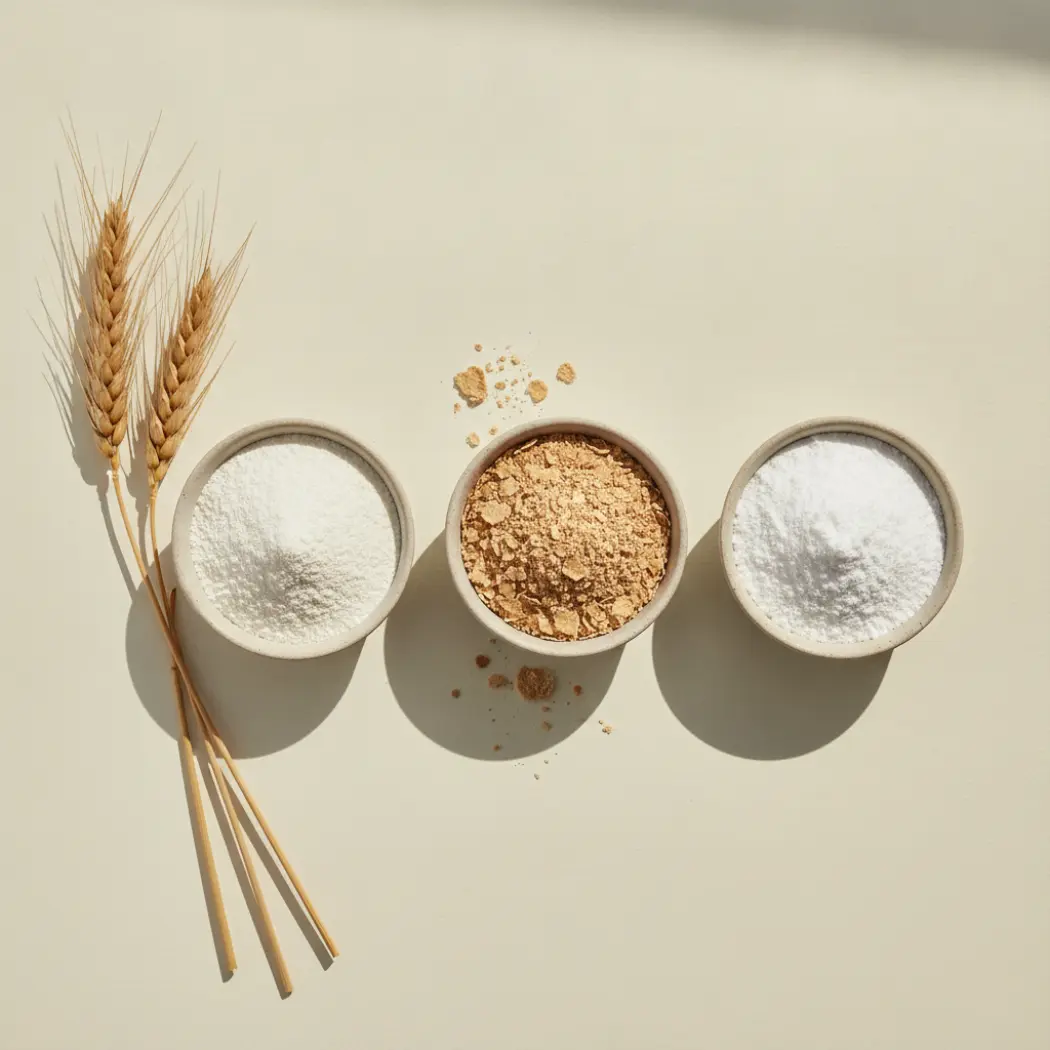
| Product | Fiber | Gas risk | Best for |
|---|---|---|---|
| Benefiber | Wheat dextrin (soluble, fermentable) | Higher | Taste-free daily fiber, prebiotic, regularity |
| Metamucil | Psyllium (soluble, gel-forming) | Lower | Chronic constipation (best evidence); cholesterol |
| Citrucel | Methylcellulose (non-fermentable) | Lowest | Bloating-prone / gassy users |
| Generic wheat dextrin | Same as Benefiber | Higher | Identical active, ~half the price |
So which should you pick?
- 🟢 Benefiber if you want a taste-free daily prebiotic fiber and you tolerate it well.
- 🟢 Metamucil (psyllium) if chronic constipation is your issue — it's the fiber gastroenterologists most back, and it gels rather than ferments (though it's gritty).
- 🟢 Citrucel (methylcellulose) if you're gas- or bloating-prone — it's non-fermentable, so it's the gentlest on gas.
- 🟢 Generic wheat dextrin if you like Benefiber but want the same thing for less money.
➡️ For a gentle-on-bloating soluble fiber, low-fermentation options like PHGG (as in a PHGG-based fiber blend) or Citrucel beat Benefiber. For everyday fiber and prebiotic support, Benefiber is a fine, affordable pick.
Is Benefiber safe for celiacs, or does the wheat matter?
This trips up a lot of people, because "wheat dextrin" understandably sets off alarm bells.
The nuance: Benefiber's wheat dextrin is processed to contain very little gluten (below the 20 ppm "gluten-free" threshold). So it's technically low-gluten — but that's not the same as celiac-safe. Because it's still derived from wheat, experts generally advise people with celiac disease to avoid wheat-dextrin fibers and choose a non-wheat option instead.
➡️ Practical guidance:
- If you have celiac disease, skip Benefiber and choose a fiber that isn't wheat-derived (psyllium, methylcellulose, PHGG, acacia).
- If you're gluten-sensitive (non-celiac), the very low gluten content may be fine, but a non-wheat fiber avoids the question entirely.
- If you have no gluten issue, the wheat origin is a non-issue.
Is Benefiber good for GLP-1 users and weight loss?
Benefiber is now marketed as "GLP-1 friendly," so let's be clear about what that does and doesn't mean.
💉 For GLP-1 users (Ozempic, Wegovy, Zepbound), it's a reasonable helper: these medications very commonly cause constipation and make it hard to eat enough fiber, and a taste-free fiber you can stir into anything is a practical, easy way to close the fiber gap and support satiety. Honest caveat: for the constipation part specifically, a stool-bulking fiber like psyllium (or a doctor-advised osmotic) tends to work better than fermentable wheat dextrin — Benefiber's edge is simply that it's the easiest to take.
⚠️ But it is not a weight-loss drug. "GLP-1 friendly" means it complements the medication by helping with fiber and regularity — it does not burn fat or replicate the drug's effect. Fiber can modestly support fullness, but don't buy Benefiber expecting weight loss on its own.
➡️ So: a smart companion for GLP-1 users fighting constipation, and a reasonable fullness aid — but the "weight" association is about supporting the medication and appetite, not a standalone slimming effect.
How much does Benefiber cost, and is it good value?
Benefiber runs about $14–16 for a tub (roughly $0.37 per serving), with stick packs, caplets and gummies priced a bit higher per serving for the convenience.
💰 On value, there's one thing worth knowing: a generic/store-brand wheat dextrin (the same active ingredient) often costs around half the price — roughly $8. You're paying a brand premium for the Benefiber name and quality reputation. Meanwhile, psyllium (Metamucil) is actually cheaper per serving despite the bigger price tag, because you use less.
➡️ The value verdict: Benefiber is affordable but not the cheapest way to get its fiber. If you value the trusted brand and QA, it's fine; if you just want taste-free wheat dextrin, the generic delivers the identical fiber for less. Either way, fiber is one of the better-value things you can add to your routine.
How do you take Benefiber, and who should skip it?
Usage is simple, but doing it right is the difference between smooth results and a gassy week:
- 🥄 Start low — half a serving for the first few days, then build up over 1–2 weeks.
- 💧 Drink water — fiber needs fluid to work and to minimize gas.
- ⏰ Space it from medications — take other meds about 2 hours apart, since fiber can affect absorption.
- 🗓️ Give it days, not minutes — results build over 24–72 hours and improve with consistency.
👎 You should skip Benefiber if:
- You have IBS or SIBO and are gas/bloating-prone — a non-fermentable fiber (Citrucel) or low-fermentation fiber (PHGG) is gentler; and if methane/SIBO is your driver, extra fermentable fiber can make things worse.
- You have celiac disease — choose a non-wheat fiber.
- You want fast debloating — this is a daily habit, not a same-day fix.
- Your constipation is chronic and stubborn — psyllium has the stronger evidence.
A pharmacist can help you match the right fiber to your situation and meds — see how your pharmacist helps you manage supplements and medications.
My verdict on Benefiber — should you buy it?
Is Benefiber worth it? My verdict is: a genuinely useful, affordable everyday fiber — used for the right reason — 6/10.
I like Benefiber for what it actually is: a cheap, doctor-recommended, genuinely taste-free prebiotic fiber that closes the fiber gap, supports daily regularity, and is a smart, practical companion for GLP-1 users battling constipation. The dissolves-clear, no-grit texture is a real advantage over psyllium, and it mixes into anything. For a maintenance fiber, it's an easy, low-cost win.
What keeps it at a 6, especially for a bloating-focused reader: it's a fermentable fiber, so it can cause gas and bloating rather than fix it; for chronic constipation, psyllium (Metamucil) is better-evidenced; for gassy/IBS guts, Citrucel is gentler; it's not celiac-safe; and a generic delivers the identical fiber for about half the price. It's a good product that's often bought for the wrong job.
- 👍 Buy Benefiber if you want an easy, taste-free daily fiber for the fiber gap, regularity or GLP-1 support, and you tolerate it well.
- 👎 Skip it if you're gas/IBS/SIBO-prone (choose Citrucel or PHGG), you have celiac disease, you want fast debloating, or your main issue is stubborn chronic constipation (choose psyllium).
➡️ Bottom line: Benefiber is a solid, affordable, pleasant everyday prebiotic fiber — one of the easiest ways to actually stick with a daily fiber habit. Just go in knowing it's a regularity and fiber-gap tool, not a targeted debloat, that it can cause gas in sensitive guts, and that cheaper generics and better-tolerated alternatives exist for specific problems. Matched to the right goal, it's a genuinely good buy.
A reliable everyday fiber — start low, drink water, and give it a couple of weeks.
Benefiber FAQ
Does Benefiber help or cause bloating?
Both, depending on the cause. It can relieve bloating from constipation or a low-fiber diet by getting you regular. But because wheat dextrin is highly fermentable, it can cause gas and bloating — especially in the first 1–2 weeks, at high doses, or in people with IBS or SIBO. Start low, go slow, and drink water to minimize it.
Is Benefiber or Metamucil better?
It depends on your goal. Benefiber (wheat dextrin) is taste-free, dissolves clear, and is a nice everyday prebiotic fiber. Metamucil (psyllium) is gritty but gel-forming and has the strongest evidence for chronic constipation, plus cholesterol and blood-sugar benefits. For gassy guts, Citrucel (methylcellulose) is gentler than either.
Is Benefiber gluten-free and safe for celiacs?
Benefiber's wheat dextrin is processed to below the 20 ppm "gluten-free" threshold, so it's technically low-gluten. But because it's wheat-derived, experts generally advise people with celiac disease to avoid it and choose a non-wheat fiber (psyllium, methylcellulose, PHGG). If you have no gluten issue, the wheat origin doesn't matter.
How long does Benefiber take to work?
Usually 24–72 hours, sometimes up to 3–5 days as your system adjusts. It's a daily habit that builds with consistency, not an instant laxative. If you need faster relief for occasional constipation, that's a different type of product (like an osmotic laxative) — talk to a pharmacist.
Is Benefiber good for GLP-1 users or weight loss?
It's genuinely useful for GLP-1 users (Ozempic, Wegovy, Zepbound), who commonly get constipated and struggle to eat enough fiber — a taste-free fiber helps regularity and satiety. But "GLP-1 friendly" doesn't mean it's a weight-loss drug; it complements the medication, it doesn't burn fat on its own.
Is it safe to take Benefiber every day?
For most people, yes — it's designed for daily use to close the fiber gap. Increase gradually, drink enough water, and space it about 2 hours from other medications since fiber can affect absorption. If you have a GI condition or take medications, check with a pharmacist or doctor first.
Is generic wheat dextrin as good as Benefiber?
The active fiber is identical, and a store-brand wheat dextrin often costs around half the price. You're paying a premium for the Benefiber brand and its quality reputation. If you tolerate the fiber and just want the active, the generic delivers the same thing for less.
Keep reading before you buy Benefiber
Fiber type matters more than brand — here's how Benefiber fits with other gut options:
- Happy Mammoth Complete Belly Reset review — a PHGG-based fiber that's gentler on gas/bloating than fermentable wheat dextrin.
- Atrantil review — important if your bloating is methane/SIBO-driven, where extra fermentable fiber can backfire.
- Promix Debloat review — a prebiotic-plus-probiotic (synbiotic) approach versus fiber alone.
- How your pharmacist helps manage medications and supplements — useful for matching the right fiber to your meds and gut.
Disclaimer: This Benefiber review is independent editorial information, not medical advice. Dietary supplements and fiber products are not intended to diagnose, treat, cure or prevent any disease. Benefiber (wheat dextrin) is a fermentable fiber that can cause gas or bloating in some people, especially early, at higher doses, or with IBS/SIBO, and it is not a substitute for medical evaluation of persistent bloating or constipation. It is wheat-derived and, despite low gluten content, is generally not recommended for people with celiac disease. Fiber can affect the absorption of medications — separate doses by about two hours. If you are pregnant, breastfeeding, take medication, or have a diagnosed gastrointestinal condition, consult a licensed healthcare professional. This page may contain affiliate links; we may earn a commission at no extra cost to you, which never changes our honest assessment. Pricing and formulation were accurate at the time of writing (July 2026) and may change — verify on the official site.