Masi Resveratrol Review 2026 - Is Premium Resveratrol Worth $85? is presented for informational purposes by Elmont Drugs. Talk to a pharmacist or your physician before starting any new supplement, device or treatment.
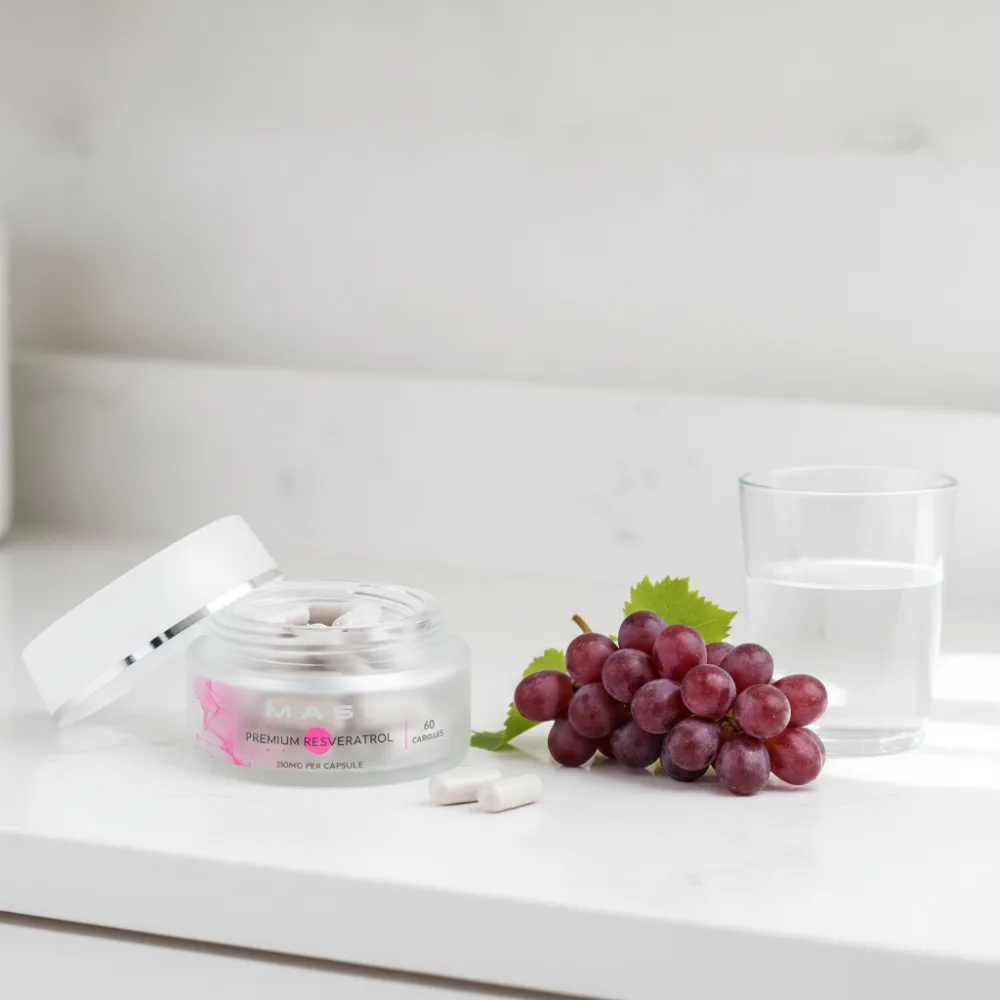 Resveratrol
Masi Resveratrol Review: Is Premium Resveratrol Worth $85?
56 reviews
An honest Masi Resveratrol review: whether resveratrol actually works in humans, if the poor bioavailability is a dealbreaker, whether the premium quality justifies the price, and if it's worth $85 versus a generic.
Published July 6, 2026
Is Masi Resveratrol worth it? My honest review at a glance
Masi Resveratrol is a premium, German-made trans-resveratrol supplement — 250mg at 99% purity, plus grape seed extract and selenium, third-party tested in Switzerland — from the longevity brand Masi, at roughly $75–115 for a 60-capsule bottle (US price; promotions vary). Let me be honest and useful from the first line: on product quality, this is genuinely excellent — 99% pure trans-resveratrol, Swiss lab tested for potency and heavy metals, cleanly made. That matters, because independent testing has found most resveratrol products are underdosed or mislabeled, so verified purity is a real advantage. But you have to separate two things: is the product well-made (yes, very), and does the molecule deliver? Here's the honest part: resveratrol's dramatic anti-aging data is in yeast and mice — the human evidence is weak and inconsistent, it's notoriously poorly absorbed (a problem Masi doesn't solve), the famous sirtuin story is contested, and it costs several times the per-milligram price of a reputable generic. So the question is: a beautifully-made version of a molecule whose benefits are largely unproven — is that worth a big premium? Let me walk you through it.
I went through whether resveratrol works in humans, the bioavailability problem, the sirtuin controversy, and whether it's worth $85. Here's my straight take.
A genuinely high-quality product — 99% pure trans-resveratrol, Swiss-tested, heavy-metal screened (a real plus when most resveratrol is mislabeled). The honest catches: resveratrol's human evidence is weak (the mouse/yeast longevity data didn't translate); it's poorly absorbed and Masi doesn't fix that; the sirtuin story is contested; and it costs several times the per-mg price of a generic that contains the same compound. Excellent product, unproven and pricey molecule.
The essentials of my Masi Resveratrol review
My rating: 5/10 — a genuinely premium, well-tested product wrapped around a molecule with weak human evidence, poor absorption, and an extreme price premium.
Key spec: 250mg trans-resveratrol (99%) — 1–2 capsules daily.
| Detail | Masi Resveratrol |
|---|---|
| Brand | Masi Longevity Science — premium European longevity brand |
| What it is | Trans-resveratrol 250mg (99% purity) + grape seed extract + selenium |
| Testing | Third-party tested in Switzerland (potency, heavy metals); Made in Germany |
| Best for | Longevity experimenters who want verified-pure resveratrol and accept the price |
| Main knocks | Weak human evidence; poor absorption; contested sirtuin story; extreme price |
| Price | ~$75–115 / 60-cap bottle (US; promos vary); generics ~$15–35 |
✅ What I liked about Masi Resveratrol
- ✅ Verified 99% purity — genuine trans-resveratrol, third-party tested in Switzerland.
- ✅ Quality that matters here — most resveratrol products are underdosed/mislabeled; Masi's testing is a real edge.
- ✅ Clean, premium build — Made in Germany, heavy-metal screened, plus grape seed extract and selenium.
- ✅ Well tolerated — resveratrol is generally safe at these doses (with the blood-thinner caveat below).
❌ What held Masi Resveratrol back
- ❌ Weak human evidence — the dramatic longevity data is in yeast/mice; human trials are mostly neutral.
- ❌ Poor bioavailability — resveratrol is badly absorbed, and Masi uses no enhanced delivery to fix it.
- ❌ Contested sirtuin story — the SIRT1 "longevity switch" claim was largely a lab artifact.
- ❌ Steep price — several times the per-mg cost of a reputable generic that contains the same compound; even fans admit it isn't "better."
Beautifully made — just know the molecule's human benefits are unproven, and a generic contains the same thing.
In this Masi Resveratrol review:
- What is Masi Resveratrol, and what's in it?
- Does resveratrol actually work in humans, or is it mouse studies?
- Is resveratrol's poor bioavailability a dealbreaker for Masi Resveratrol?
- Was the sirtuin story behind resveratrol debunked?
- Is Masi Resveratrol's quality and testing actually better?
- Is Masi Resveratrol worth $85 versus a generic?
- How does Masi Resveratrol compare to other resveratrol supplements?
- Are there side effects to Masi Resveratrol, and how do you take it?
- My verdict on Masi Resveratrol
- Masi Resveratrol FAQ
What is Masi Resveratrol, and what's in it?
Masi Resveratrol is a daily longevity/antioxidant supplement built around trans-resveratrol — the active form of a polyphenol found in grape skins and Japanese knotweed.
- 🍇 Trans-resveratrol 250mg (99% purity) — the active isomer, at verified high purity.
- 🫐 Grape seed extract 300mg — polyphenol antioxidants (proanthocyanidins) with modest cardiovascular support.
- ⚗️ Selenium 20mcg — a trace antioxidant mineral.
- 🔬 Testing — third-party tested in Switzerland for potency and heavy metals; Made in Germany; 1 capsule daily (40–50) or 2 (50+).
💡 So the product itself is legitimately premium: verified purity, real testing, clean sourcing. That's the easy part of this review. The harder question is what resveratrol actually does in humans — and whether it even gets absorbed. That's next.
Does resveratrol actually work in humans, or is it mouse studies?
Here's the honest core: the exciting data is in yeast and mice, and the human evidence is weak.
🐭 The famous science is animal: resveratrol extended lifespan in yeast, worms and mice, which launched the whole "longevity molecule" story. But the mouse-to-human translation largely failed. Across 150+ human trials, most found no significant benefit, and none used lifespan as an endpoint.
📊 What humans show: only modest, inconsistent signals — small effects on blood pressure or metabolic markers in some groups (mainly people with diabetes, and mostly at doses above 300mg) — and plenty of null results. A large study following adults 65+ for nine years found dietary resveratrol levels were not associated with mortality, heart disease or cancer at all. There is no proven human longevity benefit. Tellingly, aging researchers — and even longevity brands (which have pivoted to NMN/NAD+) — have largely moved on.
➡️ So does resveratrol "work"? Not as a proven anti-aging treatment in people. It's an antioxidant with weak, mixed human data — a speculative bet, not an established one. Buy Masi's version (if at all) for the quality, not because the molecule's benefits are settled.
Is resveratrol's poor bioavailability a dealbreaker for Masi Resveratrol?
It's the elephant in the room — and Masi's premium doesn't fix it.
🚫 Resveratrol is notoriously poorly absorbed. It's taken up but then rapidly metabolized (first-pass glucuronidation/sulfation), so less than 1% reaches your bloodstream as free resveratrol, and tissue levels stay low. This is a core reason the human results are so underwhelming — even a pure, high-dose capsule may not reach effective levels where it matters.
⚗️ Critically, Masi uses no enhanced-delivery system (no liposomal or micronized formulation) to improve absorption. Its 99% purity guarantees you get clean resveratrol — but purity doesn't fix bioavailability. (Taking it with fat helps a little; it's still limited.)
➡️ So the bioavailability problem is real and unsolved here. You're paying a premium for verified-pure resveratrol that your body still struggles to absorb — a key reason to keep expectations low regardless of brand.
Was the sirtuin story behind resveratrol debunked?
Largely, yes — the clean "longevity switch" narrative doesn't hold up.
🧬 Resveratrol's fame rests on the idea that it activates SIRT1 (a "longevity gene") like flipping a switch — the story that launched David Sinclair's work and a billion-dollar company. But a 2010 study showed that activation was largely an artifact of the fluorescent test used to measure it; any real sirtuin effect is indirect and situation-dependent, not the clean mechanism the marketing implies. It's still contested.
➡️ So don't buy resveratrol because it "activates your longevity genes" — that mechanism is far shakier than the marketing suggests. (And the "it's the resveratrol in red wine" / French Paradox angle is also debunked: a glass has ~1–2mg; studies use hundreds of times that.)
Is Masi Resveratrol's quality and testing actually better?
Yes — and this is genuinely where Masi earns its keep.
🔬 Independent lab testing (e.g., ConsumerLab) has repeatedly found that a majority of resveratrol products are underdosed or mislabeled — some containing a fraction of what the label claims. Against that backdrop, Masi's verified 99% trans-resveratrol purity, third-party Swiss testing, heavy-metal screening, and German manufacturing are a real, meaningful advantage. You can actually trust you're getting clean, correctly-dosed resveratrol.
➡️ So on quality, Masi is legitimately near the top. That's the strongest reason to choose it over a random cheap bottle — you're buying trust and verification. The catch is that quality can't rescue a molecule with weak evidence and poor absorption — it just guarantees you get that molecule cleanly.
Is Masi Resveratrol worth $85 versus a generic?
This is the hardest part to justify.
💰 A 60-capsule bottle runs roughly $75–115 (US price, depending on promotions). At 1 capsule a day (ages 40–50) that's a two-month supply (~$40–55/month); at 2 a day (50+) it's one month (~$75–115/month). Either way, per milligram of resveratrol it's roughly 2–5× a reputable generic (e.g., Toniiq or NOW at higher doses for ~$25–35). You're paying for verified purity, Swiss testing and the premium brand — worth something given the mislabeling problem — but it's the same compound, and even Masi's own reviewers admit it's "not providing better results than the cheaper version" they used before.
⚖️ The honest trade-off: a reputable third-party-tested generic (there are a few) gets you clean resveratrol for a fraction of the price. Masi's premium buys extra assurance and packaging, not a different or better effect — especially when the molecule itself is poorly absorbed and unproven.
➡️ The value verdict: Masi is worth it only if verified quality is worth a big premium to you and you specifically want the best-made resveratrol. For most people, a reputable, tested generic delivers the same compound for far less — and the money might be better spent on something with stronger human evidence.
How does Masi Resveratrol compare to other resveratrol supplements?
Among resveratrol options, Masi is the luxury pick.
| Product | Dose / form | ~Price/mo | Note |
|---|---|---|---|
| Masi Resveratrol | 250mg trans-resveratrol 99% | ~$40–115* | Premium; verified purity/testing; priciest per mg |
| Toniiq / NOW Resveratrol | ~600mg (higher %) | ~$20–30 | Reputable, higher-dose, far cheaper |
| Thorne ResveraCel | Resveratrol + NR + quercetin | ~$60 | Combines with an NAD+ precursor |
| NMN / NR (NAD+ precursor) | Different molecule | ~$8–40 | Reliably raises NAD+ (also unproven for longevity) |
*Masi's ~$40–115/month depends on dose (a bottle lasts 2 months at 1 cap/day, 1 month at 2/day) and promotions; per milligram of resveratrol it's the priciest by far.
So which makes sense? If you want the cleanest, most verified resveratrol and price is no object, Masi leads on quality. But a reputable, tested generic (Toniiq, NOW) gives you the same compound — often at a higher dose — for a fraction of the price. And if you're building a longevity stack, note that resveratrol is often paired with an NAD+ precursor (NMN or NR) in the "Sinclair stack" — a different molecule that at least reliably raises NAD+ (though its human longevity benefit is also unproven). The honest theme: none of these has proven human longevity, so don't overpay.
Are there side effects to Masi Resveratrol, and how do you take it?
Generally well tolerated, but not a "free" antioxidant.
- 🩸 Blood-thinner interaction (important) — resveratrol can increase bleeding risk and interacts with warfarin, aspirin and clopidogrel; stop it ~2 weeks before surgery, and check with a doctor if you're on blood thinners.
- 🍽️ How to take it — with a meal containing fat (it improves the limited absorption); 1 capsule (40–50) or 2 (50+).
- 🤢 High doses — large amounts can cause GI upset; 250mg is at the low end of studied doses.
- ⚠️ Avoid if — pregnant/breastfeeding, or on hormone-sensitive conditions without medical advice — see how your pharmacist helps you use supplements safely.
➡️ So Masi is low-risk for most healthy people at this dose — but the blood-thinner interaction is a real caveat, not a footnote. Take it with fat, and clear it with your doctor if you're on any anticoagulant.
My verdict on Masi Resveratrol — should you buy it?
Is Masi Resveratrol worth it? My verdict is: a beautifully-made product wrapped around a weak, poorly-absorbed molecule — 5/10.
Credit where due: on quality, Masi is genuinely excellent. It's 99% pure trans-resveratrol, third-party tested in Switzerland, heavy-metal screened and Made in Germany — and that matters, because independent testing finds most resveratrol products are underdosed or mislabeled. If you're going to take resveratrol, this is a trustworthy, verified version.
What holds it to a 5 is the molecule and the price, not the product. Resveratrol's human evidence is weak (the yeast/mouse longevity data didn't translate; 150+ trials, mostly neutral); it's poorly absorbed and Masi does nothing to fix that; the sirtuin "longevity switch" is contested (the original activation was largely a lab-assay artifact); and it costs several times the per-mg price of a reputable generic containing the same compound — with even its own reviewers saying it's no better than the cheaper option.
- 👍 Buy Masi Resveratrol if you specifically want the cleanest, most verified resveratrol, you value German/Swiss quality assurance, and the price doesn't bother you.
- 👎 Skip it if you want value or proven results — a reputable tested generic delivers the same molecule for a fraction, and resveratrol's human longevity benefit is unproven either way.
➡️ Bottom line: Masi Resveratrol is a legitimately premium, verified-pure product — but you're paying a luxury price for a molecule whose human longevity benefits are unproven and that your body barely absorbs. The quality is real and rare; the science and the value are not. If verified purity is worth a big premium to you, it's a fine choice; for almost everyone else, a reputable tested generic gets you the same thing for far less — and the strongest honest advice is to keep your expectations low on resveratrol itself.
Take it with a fatty meal, mind the blood-thinner caveat, and keep expectations realistic.
Masi Resveratrol FAQ
Does resveratrol actually work?
Not as a proven anti-aging treatment in humans. The dramatic lifespan results are in yeast, worms and mice, and the translation to people largely failed — across 150+ human trials, most found no significant benefit, and none measured lifespan. There are modest, inconsistent signals on blood pressure and inflammation, but no proven human longevity effect. Treat it as a speculative antioxidant, not an established one.
Is the poor absorption a real problem?
Yes, and it's central. Resveratrol is rapidly metabolized after absorption, so less than 1% reaches your bloodstream as free resveratrol and tissue levels stay low — a key reason human results are underwhelming. Masi uses no liposomal or enhanced-delivery system to improve this, so its 99% purity gives you clean resveratrol your body still struggles to absorb. Taking it with fat helps a little.
Was the sirtuin/Sinclair story debunked?
Largely. The idea that resveratrol cleanly "activates SIRT1" (a longevity gene) rested on a 2010 finding that the activation was mostly an artifact of the fluorescent test used to measure it. Any real sirtuin effect is indirect and situation-dependent, not the switch the marketing implies. The red wine / French Paradox link is also debunked — a glass has only 1–2mg versus the hundreds of mg used in studies.
Is Masi Resveratrol's quality really better?
Yes, genuinely. Independent testing (like ConsumerLab) finds most resveratrol products are underdosed or mislabeled, so Masi's verified 99% trans-resveratrol purity, third-party Swiss testing, heavy-metal screening and German manufacturing are a real advantage. You can trust you're getting clean, correctly-dosed resveratrol. Quality can't fix the molecule's weak evidence or poor absorption, but it guarantees you get the compound cleanly.
Is Masi Resveratrol worth $85 versus a generic?
Only if verified quality is worth a premium to you. A bottle runs ~$75–115 (US, promos vary) and, per milligram of resveratrol, costs roughly 2–5× a reputable generic (~$25–35) that contains the same compound, often at a higher dose. You're paying for purity assurance and brand, not a better effect — even Masi's own reviewers say it's no better than the cheaper version they used. A reputable, third-party-tested generic is the value choice.How do you take it, and are there side effects?
Take it with a meal containing fat (to help the limited absorption) — 1 capsule for ages 40–50, 2 for 50+. It's generally well tolerated, but resveratrol can increase bleeding risk and interacts with blood thinners (warfarin, aspirin, clopidogrel); stop it about two weeks before surgery, and check with a doctor if you take anticoagulants. Avoid in pregnancy. High doses can cause stomach upset.
Should I take resveratrol with NMN (the Sinclair stack)?
That's the popular pairing — resveratrol as a supposed sirtuin activator plus an NAD+ precursor (NMN or NR) as the "fuel." But note that both parts have unproven human longevity benefits: NMN/NR reliably raise NAD+, and resveratrol is poorly absorbed with weak evidence. The stack is a reasonable experiment for longevity enthusiasts, not a proven protocol — and you can raise NAD+ far more cheaply with plain NMN powder.
Keep reading before you buy Masi Resveratrol
Longevity supplements share a common theme — promising molecules, thin human proof:
- Renue By Science NMN review — the NMN often paired with resveratrol in the "Sinclair stack."
- Tru Niagen review — the NR/NAD+ precursor with more human data.
- Elysium Mosaic review — a carotenoid antioxidant from a longevity brand.
- MicroVitamin review — an evidence-based multivitamin for a longevity routine.
- How your pharmacist helps manage medications and supplements — useful before any new supplement, especially with blood thinners.
Disclaimer: This Masi Resveratrol review is independent editorial information, not medical advice. Dietary supplements are not intended to diagnose, treat, cure or prevent any disease. Resveratrol extends lifespan in yeast, worms and mice, but this has not translated to humans: across more than 150 clinical trials most found no significant benefit, none used lifespan as an endpoint, and there is no proven human longevity or healthspan effect (modest, inconsistent signals exist for blood pressure, inflammation and metabolic markers). Resveratrol has poor oral bioavailability due to rapid metabolism, which limits its effects regardless of purity; this product does not use an enhanced-delivery (e.g., liposomal) formulation. The claim that resveratrol activates SIRT1 as a "longevity switch" is contested, as the original activation was largely an assay artifact. Resveratrol can increase bleeding risk and interacts with anticoagulant/antiplatelet medications (warfarin, aspirin, clopidogrel); discontinue before surgery and consult a physician if you take these, and avoid use in pregnancy and breastfeeding. If you take medication or have a medical condition, consult a licensed healthcare professional before use. This page may contain affiliate links; we may earn a commission at no extra cost to you, which never changes our honest assessment. Pricing (converted from the brand's listed price and subject to currency/retailer variation), formulation and testing claims were accurate at the time of writing (July 2026) and may change — verify on the official site.