MicroVitamin Review 2026 - Is Brad Stanfield's Multivitamin Worth It? is presented for informational purposes by Elmont Drugs. Talk to a pharmacist or your physician before starting any new supplement, device or treatment.
 Evidence-Based
MicroVitamin Review: Is Brad Stanfield's Multivitamin Worth It?
644 reviews
An honest MicroVitamin review: whether Brad Stanfield's evidence-based multivitamin works, if the methylated no-megadose formula beats a generic, the conflict of interest, and whether it's worth $65.
Published July 6, 2026
Is MicroVitamin worth it? My honest review at a glance
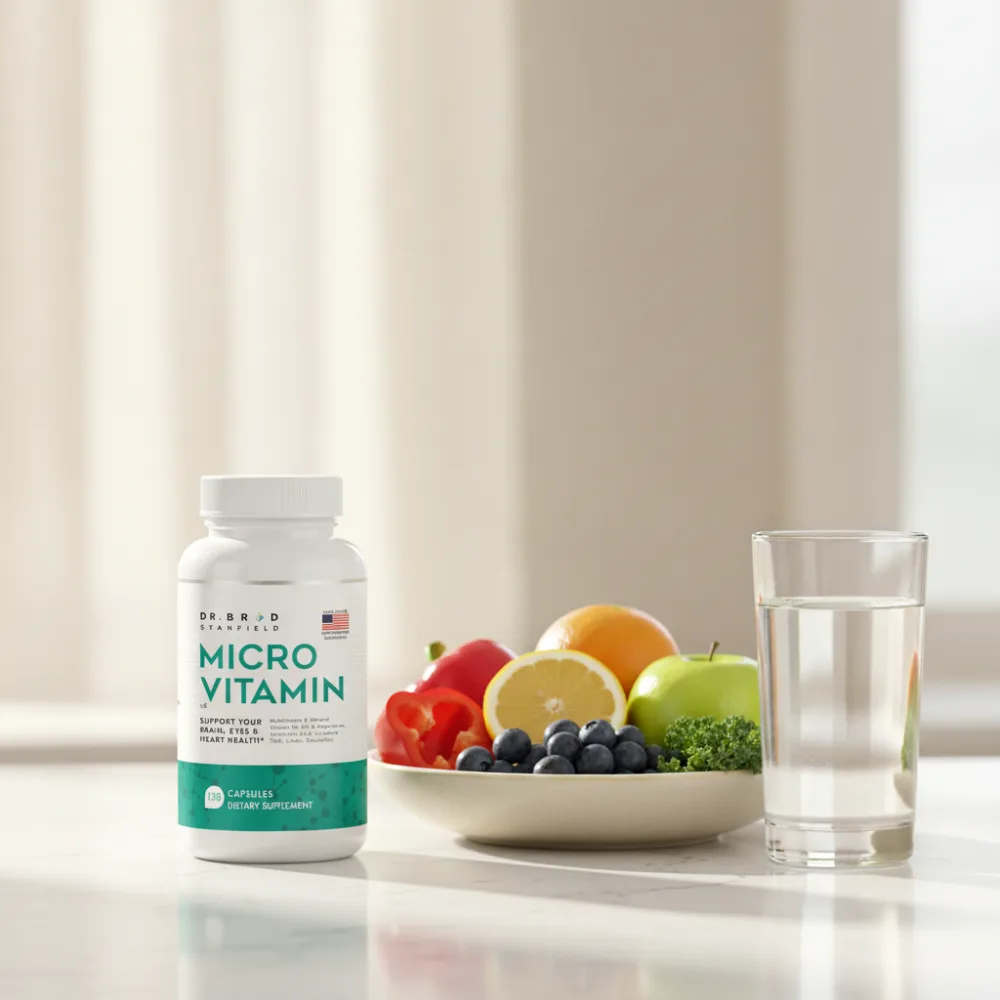
MicroVitamin is the "evidence-based" multivitamin from Dr. Brad Stanfield — the anti-hype longevity YouTuber — a 5-capsule, 25-ingredient formula with methylated B vitamins, D3+K2, chelated minerals and Lutemax lutein, at $65 a month. Let me be honest and useful from the first line: on formula quality, this is one of the best multivitamins you can buy. It uses bioactive forms (methylfolate, methyl-B12, P5P), deliberately has no megadoses, no iron and no vitamin A (a genuine safety plus for well-fed adults), it's third-party tested (Labdoor rated it near the top), and it comes from a credible MD who is usually skeptical of supplements. But the honest catches are real: Stanfield sells it (conflict of interest), it's expensive versus a generic, it's 5 pills a day, and — the big one — multivitamins offer only modest benefit for already well-nourished people. So the real question is: a genuinely smart multivitamin, or a premium price for something most people don't strictly need? Let me walk you through it.
I went through whether it works, whether multivitamins even help, whether the formula beats a generic, and whether it's worth $65. Here's my straight take.
One of the best-formulated, most transparent multivitamins on the market — bioactive forms, no megadoses, no iron/vitamin A, third-party tested, from a credible evidence-based MD. If you're going to take a multivitamin and want to consolidate a stack, this is a smart one. The honest catches: multivitamins have only modest, uncertain benefit for well-nourished people; it's $65 vs ~$15 for a generic; it's 5 capsules a day; a couple of ingredients (oral hyaluronic acid, TMG) are evidence-thin; and the founder profits from it. Excellent formula, honest caveats.
The essentials of my MicroVitamin review
My rating: 7/10 — a genuinely excellent, transparent multivitamin; the caveats are the multivitamin premise itself, price and pill count, not quality.
Key spec: 5 capsules daily — 25 ingredients, bioactive forms, no megadoses.
| Detail | MicroVitamin (Dr. Brad Stanfield) |
|---|---|
| Brand | MicroVitamin — by Dr. Brad Stanfield, evidence-based MD |
| Format | 5 vegetarian capsules daily; 150-capsule bottle (30 days) |
| What's inside | 25 ingredients — methylated B, D3+K2, chelated minerals, Lutemax, no megadoses/iron/vitamin A |
| Best for | Consolidating a supplement stack into one evidence-based multi |
| Main knocks | Multivitamin premise; price vs generic; 5 pills; a few thin ingredients |
| Price | $65 one-time / ~$55–58 subscription |
✅ What I liked about MicroVitamin
- ✅ Bioactive, methylated forms — methylfolate, methyl-B12, P5P, D3+K2, magnesium taurate; well-chosen throughout.
- ✅ No megadoses, no iron, no vitamin A — deliberate restraint that avoids the risks of over-supplementing well-fed adults.
- ✅ Transparent and tested — no proprietary blends, third-party tested (top Labdoor score).
- ✅ Credible, anti-hype creator — an MD who normally debunks supplements, so the formula reflects that skepticism.
❌ What held MicroVitamin back
- ❌ The premise — multivitamins have modest, uncertain benefit for already well-nourished people.
- ❌ Expensive — $65 versus ~$15 for a generic that "checks the box."
- ❌ 5 capsules a day — more than many people want to remember.
- ❌ A few thin ingredients — oral hyaluronic acid and TMG have limited evidence; and the founder sells it.
A genuinely smart multivitamin — just know a multi is a modest-benefit product, and a generic is far cheaper.
In this MicroVitamin review:
- What is MicroVitamin, and what's inside it?
- Does MicroVitamin actually work, and do multivitamins even help?
- Are MicroVitamin's methylated forms and no-megadose approach actually better?
- Is Brad Stanfield's MicroVitamin trustworthy given he sells it?
- Is MicroVitamin worth $65 versus a generic multivitamin?
- Are there weak ingredients or downsides to MicroVitamin?
- How does MicroVitamin compare to AG1, Ritual and a generic?
- Who should buy MicroVitamin, and who should skip it?
- My verdict on MicroVitamin
- MicroVitamin FAQ
What is MicroVitamin, and what's inside it?
MicroVitamin is a once-daily (5-capsule) multivitamin designed by Dr. Brad Stanfield, a New Zealand MD known for evidence-based, anti-hype supplement videos.

- 🅱️ Methylated B vitamins — methylfolate (5-MTHF), methyl-B12, and P5P (active B6), the bioactive forms.
- ☀️ Vitamin D3 (algae) + K2 MK-7 — a sensible pairing for bone and cardiovascular support.
- ⚗️ Chelated minerals + magnesium taurate — well-absorbed mineral forms.
- 👁️ Lutemax 2020 (lutein + zeaxanthin), lycopene, choline, TMG, hyaluronic acid — extras aimed at eye, brain and general health.
- 🚫 Deliberately excluded — no megadoses, no iron, no vitamin A, no proprietary blends, no fillers.
💡 The whole philosophy is restraint over kitchen-sink: cover real nutrient gaps with bioactive forms at sensible doses, and leave out the things (iron, high-dose fat-soluble vitamins) that can accumulate or harm well-fed adults. That's a genuinely thoughtful design — the scrutiny below is about whether you need it and what you pay.
Does MicroVitamin actually work, and do multivitamins even help?
Here's the honest premise check every buyer deserves: a multivitamin is a modest-benefit product, not a magic one.
📊 What the science says: large reviews (and the US Preventive Services Task Force) find little to no benefit for heart disease, cancer or lifespan from multivitamins in well-nourished adults. But it's not "useless": the COSMOS trial showed a small cognition benefit in older adults, and a 2026 Harvard analysis linked daily multivitamin use to modestly slower biological aging (on the order of a few months over two years — small and uncertain). So: not a longevity drug, but "useless" overstates it.
🗓️ What users report: the most believable wins are for people filling a gap — "got my low vitamin D back into range," reduced brain fog, or simply replacing a handful of separate pills. If your diet and blood work are already solid, you'll likely notice little.
➡️ So MicroVitamin "works" the way any good multivitamin does: it reliably covers nutrient gaps and consolidates a stack, with a possible small long-term upside. Just don't expect a felt transformation if you're already well-fed — the honest benefit is insurance, not energy.
Are MicroVitamin's methylated forms and no-megadose approach actually better?
Yes — this is where MicroVitamin earns its "evidence-based" label.
🧬 Bioactive forms: using methylfolate and methyl-B12 instead of folic acid/cyanocobalamin is a low-risk, defensible choice — though, honestly, RCTs haven't shown a consistent clinical edge over plain folic acid, even in people with MTHFR variants (folic acid still reaches adequate blood levels). It's a reasonable upgrade, not a proven one. The D3+K2, P5P and chelated minerals are similarly sensible picks.
🛡️ The no-megadose, no-iron, no-vitamin-A restraint is the real strength. Most cheap multis pile in iron and high-dose fat-soluble vitamins that well-fed adults don't need and can accumulate — high-dose vitamin E and beta-carotene have actually been linked to higher mortality, and independent testing (ConsumerLab) finds roughly 1 in 3 multivitamins exceed safe upper limits on some nutrients. Leaving the megadoses out is a smarter, safer design — the opposite of "more is better."
➡️ So the formula isn't marketing gloss: it's a genuinely better-designed multivitamin than most, especially the drugstore megadose types. The bioactive forms are a modest upgrade; the restraint is the real win.
Is Brad Stanfield's MicroVitamin trustworthy given he sells it?
Both things are true: he's credible, and he profits from it — so judge the formula on its merits.
👨⚕️ The credibility: Stanfield is a practicing MD whose whole reputation is built on debunking supplement hype and following evidence. The formula reflects that — no megadoses, no fads, and third-party tested with a high independent Labdoor score (purity and heavy metals were clean). In fairness, that same lab test flagged some label-dose deviations (measured D3 ran well above the label, vitamin C below) — minor, but worth knowing. Overall, a real trust signal.
⚖️ The conflict of interest: he also sells the product, so his videos praising "evidence-based multivitamins" aren't neutral. The right frame is the one he preaches: apply the same skepticism to his product. Encouragingly, it holds up — the formula is defensible on its own, and the independent lab data backs the label.
➡️ So don't buy it just because a trusted YouTuber made it — but the formula and the third-party testing stand on their own merits. The credibility is earned; the conflict of interest is real; both can be true.
Is MicroVitamin worth $65 versus a generic multivitamin?
This is the crux of the decision.
💰 At $65 (~$55–58 on subscription), MicroVitamin costs 3–4× a generic multivitamin (a Kirkland/Centrum "checks the box" for ~$10–15). The premium buys bioactive forms, branded ingredients (Lutemax), third-party testing, and the consolidation of 6–8 separate supplements into one bottle.
🧮 The value math: the "replaces 6–8 supplements" claim is where the price makes sense or doesn't. If you were already buying D3, K2, magnesium, a B-complex, lutein and CoQ10 separately, MicroVitamin can genuinely save money and hassle. If you'd otherwise just take a $15 generic (or nothing), you're paying a big premium for incremental quality.
➡️ The value verdict: MicroVitamin is worth it if you're consolidating a real stack and value evidence-based forms and testing. If you just want basic "insurance," a cheap generic delivers most of the box-checking benefit for a fraction of the price — the premium is quality and convenience, not a different health outcome.
Are there weak ingredients or downsides to MicroVitamin?
A few honest ones, none disqualifying.
- 💧 Evidence-thin extras — oral hyaluronic acid has weak evidence, and TMG's benefits are marginal for most; they add cost more than proven value.
- 💊 5 capsules a day — a genuine commitment; easy to forget, and more than a one-a-day.
- 💵 Premium price — covered above; the main practical downside for most.
- 🧾 The premise — if you're well-nourished, even a great multi delivers modest benefit.
➡️ So the "flaws" are mostly a couple of nice-to-have ingredients and the price/pill count — not safety or quality problems. It's a well-made product with a few extras you're partly paying for.
How does MicroVitamin compare to AG1, Ritual and a generic?
Among multivitamins, it's the "evidence-based, transparent" option.
| Product | Approach | ~Price/mo | Note |
|---|---|---|---|
| MicroVitamin | 25 ingredients, bioactive, no megadoses | ~$65 | Transparent, Labdoor-tested; 5 pills; premium |
| AG1 (Athletic Greens) | Greens powder + vitamins (blend) | ~$99 | Pricier; proprietary blend; no iron/enough D |
| Thorne / Ritual multivitamin | Bioactive forms, cleaner labels | ~$28–40 | Also methylated; fewer extras; cheaper |
| Centrum / Kirkland (generic) | Standard forms, often w/ iron | ~$10–15 | Cheapest; "checks the box"; megadoses common |
So which makes sense? If you want the most transparent, evidence-based multi and are consolidating a stack, MicroVitamin leads. If you want similar bioactive quality for less, Thorne or Ritual's multivitamins are cheaper (with fewer extras). If you want a kitchen-sink greens drink, AG1 is the pricier, less-transparent option (and it skips iron and full-dose D too). And if you just want basic insurance, a generic checks the box for a fraction of the price. For a gentler gummy format, Gruns is another route.
Who should buy MicroVitamin, and who should skip it?
This one is genuinely about your situation.
👍 MicroVitamin is a good fit if you:
- Already take (or would take) several separate supplements and want to consolidate into one evidence-based bottle.
- Value bioactive forms, no megadoses, and third-party testing — and the price is fine.
- Have a known gap (low D, MTHFR, limited diet) a smart multi can help fill.
👎 You should skip it if you:
- Eat a solid, varied diet and have good blood work — the benefit will be modest.
- Just want basic insurance — a $15 generic checks the same box.
- Won't reliably take 5 capsules a day, or don't want to pay a premium.
My verdict on MicroVitamin — should you buy it?
Is MicroVitamin worth it? My verdict is: one of the best-formulated multivitamins, for a modest-benefit product — 7/10.
Credit where due: on formula quality and transparency, MicroVitamin is near the top of the category. It uses bioactive, methylated forms, it deliberately skips megadoses, iron and vitamin A (a genuinely smart, safer design for well-fed adults), it's third-party tested with a top independent lab score, and it comes from a credible, anti-hype MD. For people consolidating a supplement stack, it can even save money and hassle. This is a serious, well-designed product.
What keeps it at a 7 is the premise and the price, not the quality. Even the best multivitamin delivers only modest, uncertain benefit for already well-nourished people; at $65 it's 3–4× a generic that checks the same basic box; it's 5 capsules a day; a couple of ingredients (oral hyaluronic acid, TMG) are evidence-thin; and the founder, credible as he is, profits from it.
- 👍 Buy MicroVitamin if you're consolidating a real stack, value evidence-based forms and testing, and the price is fine — it's arguably the smartest multivitamin out there.
- 👎 Skip it if you eat well and just want basic insurance — a generic delivers most of the box-checking for far less.
➡️ Bottom line: MicroVitamin is a genuinely excellent, transparent, well-reasoned multivitamin — you're paying a premium for bioactive forms, sensible restraint and testing, not a dramatic health upgrade. If you're going to take a multivitamin, this is one of the best; if you're well-nourished or budget-focused, a cheap generic gets you most of the way. The formula deserves its praise — just remember a multivitamin is insurance, not a miracle, and hold Stanfield's product to his own evidence standard (it passes).
Best for consolidating a stack — take all 5 capsules with a meal, and check your blood work.
MicroVitamin FAQ
Does MicroVitamin actually work?
It works the way any good multivitamin does: it reliably covers nutrient gaps and consolidates a stack. Users filling a gap (low vitamin D, limited diet) report the most benefit, including less brain fog. But for already well-nourished people, the benefit is modest — the honest value is nutritional insurance, not a felt transformation. Expect subtle, not dramatic.
Do multivitamins even do anything?
Modestly. Large reviews and the US Preventive Services Task Force find little to no benefit for heart disease, cancer or lifespan in well-nourished adults. But the COSMOS trial showed a small cognition benefit in older adults, and a 2026 Harvard analysis linked daily use to slightly slower biological aging. So multivitamins aren't a longevity drug, but "useless" overstates it — they're best for filling gaps.
Is MicroVitamin's formula better than a generic?
Yes, meaningfully. It uses bioactive forms (methylfolate, methyl-B12, P5P, D3+K2), and it deliberately leaves out megadoses, iron and vitamin A that well-fed adults don't need and can accumulate. Most cheap multis do the opposite. The bioactive forms are a modest upgrade; the restraint (no megadoses/iron) is the bigger, genuinely smarter advantage.
Is Brad Stanfield trustworthy since he sells it?
He's a credible, evidence-based MD known for debunking supplement hype — and he profits from this product, so his praise isn't neutral. The right approach is to judge the formula itself, which holds up: no megadoses, transparent dosing, and a high independent Labdoor score for purity (it did flag minor label-dose deviations on D3 and vitamin C). The credibility is earned and the conflict of interest is real; both are true.Is MicroVitamin worth $65 versus a generic?
It's worth it if you're consolidating several supplements (D3, K2, magnesium, B-complex, lutein) into one — then it can save money and hassle. If you'd otherwise take a $15 generic or nothing, you're paying a big premium for incremental quality. The bioactive forms and testing are real, but a generic checks the basic box for far less.
Why 5 capsules a day, and why no iron or vitamin A?
Fitting 25 ingredients at sensible (non-mega) doses takes more than one pill, hence five capsules — a genuine commitment. Iron and vitamin A are left out on purpose: well-nourished adults usually get enough, and both can accumulate and cause harm in excess. Leaving them out is a deliberate safety choice, not an omission.
Are any MicroVitamin ingredients weak?
A couple. Oral hyaluronic acid has limited evidence for the benefits people assume, and TMG's advantages are marginal for most. They add cost more than proven value. They're not harmful — just the "nice-to-have" extras you're partly paying the premium for, rather than the formula's core strengths.
Keep reading before you buy MicroVitamin
Multivitamins and all-in-one formulas vary a lot — here's how MicroVitamin compares:
- AG1 (Athletic Greens) review — the pricier greens-powder all-in-one (and why transparency matters).
- Gruns Superfood Gummies review — a gummy multivitamin alternative.
- Ritual Synbiotic+ review — from the brand known for methylated multivitamins.
- How your pharmacist helps manage medications and supplements — useful before starting any new multi.
Disclaimer: This MicroVitamin review is independent editorial information, not medical advice. Dietary supplements are not intended to diagnose, treat, cure or prevent any disease. For well-nourished adults, multivitamins have shown little to no benefit for cardiovascular disease, cancer or mortality in large trials (per the US Preventive Services Task Force); more recent research (the COSMOS trial and a 2026 Harvard analysis) suggests small, uncertain benefits for cognition and biological aging. A multivitamin's clearest value is filling identified nutrient gaps. MicroVitamin deliberately excludes iron and vitamin A; if you have a diagnosed deficiency (e.g., iron-deficiency anemia) you may need those separately. Some ingredients (oral hyaluronic acid, TMG) have limited evidence for their marketed benefits. The product's creator sells it, which is a financial conflict of interest; the formula's quality and third-party testing are nonetheless verifiable. If you are pregnant or breastfeeding, take medication, or have a medical condition, consult a licensed healthcare professional before use, and consider blood work to identify what you actually need. This page may contain affiliate links; we may earn a commission at no extra cost to you, which never changes our honest assessment. Pricing and formulation were accurate at the time of writing (July 2026) and may change — verify on the official site.