AG1 Review 2026 - Does It Help Bloating or Cause It? is presented for informational purposes by Elmont Drugs. Talk to a pharmacist or your physician before starting any new supplement, device or treatment.
 All-in-One Greens
AG1 (Athletic Greens) Review: Worth $99 for Your Gut?
2400 reviews
An honest AG1 (Athletic Greens) review for your gut: whether it helps or causes bloating, if the proprietary blend is underdosed, whether it's worth $99/month, the Next Gen update, and cheaper alternatives.
Published July 3, 2026
Is AG1 worth it for your gut? My honest review at a glance
AG1 (formerly Athletic Greens) is the podcast-famous, green-pouch "foundational nutrition" powder — a single daily scoop packing 75+ (now 83) ingredients: greens, vitamins, minerals, probiotics, prebiotics, digestive enzymes, adaptogens and mushrooms. It's marketed hard for energy, immunity and gut health. Since you're likely reading this on a bloating/digestion site, here's my honest framing: AG1 is a genuinely well-made, NSF-certified, convenient all-in-one with some real gut ingredients — but it is not a targeted bloating product, it can actually cause gas and bloating for some people, its proprietary blend hides the doses (many are likely too small to matter), and at ~$79–99/month it's very expensive. Let me give you the straight, gut-focused verdict.
I went through whether AG1 helps or causes bloating, whether it actually does anything, the proprietary-blend question, the value, the Next Gen update and cheaper alternatives. Here's my honest take.
A premium, NSF-tested, convenient all-in-one greens/multivitamin with real (if under-dosed) gut ingredients — but for bloating specifically it's the wrong tool. It can actually cause gas/bloating (inulin, FOS, probiotics, fiber), especially the first 1–2 weeks; its 83 ingredients sit in a proprietary blend at likely sub-clinical doses; its own evidence for digestion is thin (a trial showed no significant difference vs placebo); it lacks iron and vitamin D and only has ~2g fiber (so it replaces neither a multivitamin nor vegetables); and it's ~$79–99/month. Fine for convenience if you're rich in patience and budget — overkill and overpriced for bloating.
The essentials of my AG1 review
My rating: 5/10 — a well-made, NSF-tested convenience product that's genuinely oversold and overpriced for gut/bloating, with hidden doses and thin digestive evidence.
Key spec: 1 scoop in water daily — 83-ingredient all-in-one greens powder.
| Detail | AG1 (Athletic Greens) |
|---|---|
| Brand | AG1 — the market-leading premium greens brand (heavy podcast marketing) |
| Format | Powder (or travel packs); 1 scoop in water daily |
| Contents | 83 ingredients: greens, vitamins/minerals, probiotics, prebiotics (inulin), enzymes, adaptogens, mushrooms |
| Testing | NSF Certified for Sport (a genuine quality plus) |
| For bloating | Not a targeted fix — and can cause gas/bloating in some |
| Price | ~$79–99/month (subscription); ~$3.30/serving |
✅ What I liked about AG1
- ✅ NSF Certified for Sport — genuine third-party testing for purity and banned substances (a real trust signal).
- ✅ Convenient all-in-one — greens, vitamins, probiotics and enzymes in one scoop, easy habit.
- ✅ Well-made and clean — reputable brand, quality sourcing, mixes and tastes reasonably.
- ✅ Real (if small) gut ingredients — probiotics, digestive enzymes and prebiotics are legitimately in there.
❌ What held AG1 back
- ❌ Can cause bloating/gas — the inulin/FOS prebiotics, probiotics and fiber bloat some people, especially early.
- ❌ Proprietary blend — 83 ingredients with hidden doses, many likely too small to do much.
- ❌ Thin digestive evidence — a trial showed no significant difference vs placebo on digestion.
- ❌ Expensive and incomplete — ~$79–99/month, yet lacks iron and vitamin D and only ~2g fiber.
💡 If you try it, start with a half scoop to avoid the first-week bloating — and know it's convenience, not a targeted gut cure.
In this AG1 review:
- What is AG1, and what's actually in it?
- Does AG1 help bloating, or can it cause it?
- Does AG1 actually do anything for your gut, or is it a placebo?
- Is AG1's proprietary blend underdosed?
- Does AG1 replace a multivitamin or your vegetables?
- Is AG1 worth $99 a month versus cheaper greens?
- What changed in AG1 Next Gen?
- How do you take AG1, and who should skip it?
- My verdict on AG1
- AG1 FAQ
What is AG1, and what's actually in it?
AG1 is an all-in-one "foundational nutrition" powder — the idea is to cover a lot of nutritional bases in one daily scoop instead of taking several separate supplements. It bundles roughly 83 ingredients (up from 75 in the Next Gen version) across several categories.
The main categories, and the gut-relevant ones:
- 🥬 Greens & superfoods — spirulina, chlorella, wheatgrass, etc. (antioxidants, phytonutrients).
- 💊 Vitamins & minerals — a broad multivitamin base (but notably no iron and no vitamin D).
- 🦠 Probiotics & prebiotics — probiotic strains plus inulin/FOS prebiotics (the gut-health pitch — and the bloating culprit).
- ⚙️ Digestive enzymes — to help break down the scoop's contents.
- 🍄 Adaptogens & mushrooms — ashwagandha, rhodiola, reishi (marketing highlights).
💡 So AG1 is essentially a premium greens-plus-multivitamin-plus-a-little-gut-support in one scoop. It's a coherent "cover the bases" product — the real questions are whether the gut ingredients are dosed to matter, whether it helps or hurts bloating, and whether any of it justifies the price.
Does AG1 help bloating, or can it cause it?
This is the most important question for a bloating-focused reader, and the honest answer is: it can go either way — and it causes bloating for a real share of people.
💨 Why AG1 can cause bloating/gas: the same "gut health" ingredients that sound good are classic gas triggers for sensitive guts:
- The inulin/FOS prebiotics are highly fermentable — they feed bacteria that produce gas.
- Added probiotics and fiber can cause an adjustment period of gas and bloating.
- This is most common in the first 1–2 weeks, and worse if you're IBS-prone or FODMAP-sensitive.
✅ When AG1 might help: some users report the opposite — feeling "lighter" and less bloated once their gut adjusts, likely from better regularity and the prebiotic/probiotic support. Results are genuinely split.
😮💨 How to minimize the gas: start with a half scoop, take it with food (not on an empty stomach), and increase slowly over 1–2 weeks.
➡️ The fair read: AG1 is not a targeted debloat product — it's a general greens powder whose prebiotics can either gently support your gut or bloat you, depending on your sensitivity. If your main goal is less bloating, a gentle low-FODMAP fiber (like Pendulum Gut Fuel) or a targeted approach is a smarter, cheaper bet than an 83-ingredient greens powder.
Does AG1 actually do anything for your gut, or is it a placebo?
Fair question — and the honest answer is "probably a little, but less than the marketing implies."
🔬 The evidence reality: AG1's gut ingredients (probiotics, prebiotics, enzymes) are legitimate categories, but the evidence that AG1 specifically improves digestion is thin. Tellingly, AG1's own company-funded trial (about 30 people, 4 weeks) found no statistically significant benefit versus placebo on blood biomarkers or digestive quality-of-life scores. That result was pointed enough that high-profile figures — longevity investor Bryan Johnson and cardiologist Eric Topol among them — publicly told people to cancel their AG1 subscriptions, and AG1 responded by announcing $20 million in new clinical research (a tacit admission the proof wasn't there before).
👍 What it plausibly does: for someone with a poor baseline diet, AG1 can genuinely fill some nutritional gaps (B vitamins, some minerals, antioxidants) and provide a modest probiotic/prebiotic nudge. Many people also feel a subjective "wellness" boost.
➡️ So AG1 isn't a pure placebo — it's real nutrition — but for gut and digestion specifically, the proven benefit is modest and not clearly better than placebo in trials. Buy it (if at all) as convenient general nutrition, not as a proven gut treatment.
Is AG1's proprietary blend underdosed?
This is the criticism that matters most for value, and it's a fair one.
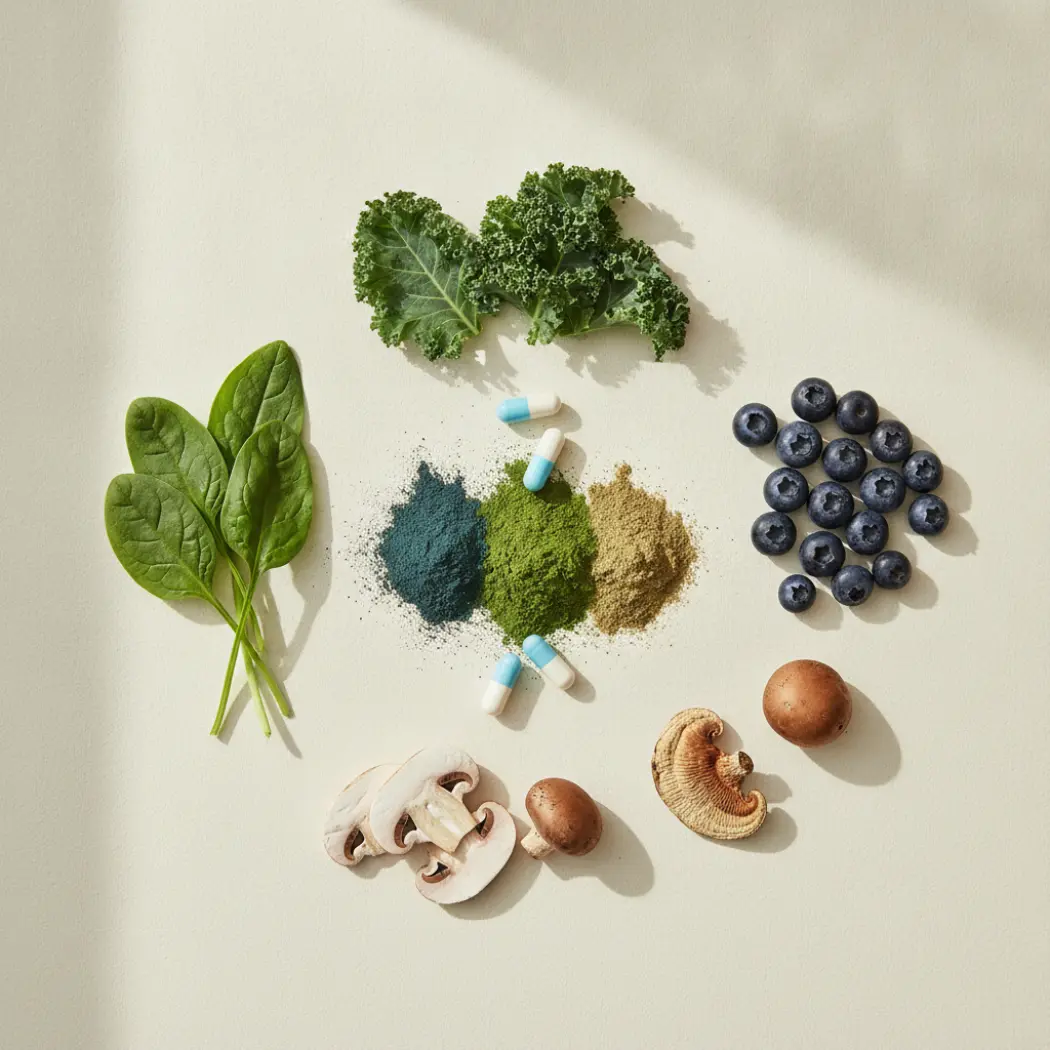
🔍 AG1's ingredients sit inside a proprietary blend, meaning the label shows the categories but hides the dose of each individual ingredient. That's a problem because:
- The whole scoop is only about 13 grams — and 83 ingredients have to share that space.
- Ingredients like reishi mushroom (studied at ~1,500–9,000mg) or ashwagandha (~500–600mg) simply can't fit at clinical doses alongside 80 others in 13g.
- So many of the "83 ingredients" are almost certainly present as a sprinkle — enough to list on the label, not enough to do what studies show.
➡️ The honest takeaway: the impressive "83 ingredients" is more marketing breadth than proven potency. The well-dosed parts are likely the vitamins/minerals; the headline superfoods, adaptogens and mushrooms are probably too small to matter. You're paying a premium for a long list, not for clinically-dosed actives.
Does AG1 replace a multivitamin or your vegetables?
AG1's marketing implies it's your one-and-done nutrition base. Two honest corrections:
💊 It doesn't fully replace a multivitamin. AG1 contains no iron and no vitamin D — two nutrients a lot of people actually need (especially menstruating women and anyone with low sun exposure). So if you're relying on it instead of a multivitamin, you may have real gaps.
🥦 It doesn't replace vegetables. A scoop has only about 2g of fiber, and powdered greens don't replicate the fiber, volume and full benefits of actual whole vegetables. AG1 is a complement to a good diet, not a substitute for eating your produce.
➡️ So treat AG1 as a convenience top-up, not a replacement for either a proper multivitamin or real food. If you eat reasonably well, much of what AG1 provides you may already be getting — which is central to the value question.
Is AG1 worth $99 a month versus cheaper greens?
Here's the objection everyone has, and it's the right one.
💰 At roughly $79–99 a month (about $3.30 a serving), AG1 is one of the most expensive greens powders on the market — and much of that price reflects its enormous marketing budget, not a proven performance edge. What you genuinely pay extra for is the NSF Certified for Sport testing and the convenience/brand.
| Product | ~Price/mo | Note |
|---|---|---|
| AG1 | ~$79–99 | Premium, NSF-tested, 83-ingredient proprietary blend |
| ActivatedYou Morning Complete | ~$79 | Similar greens+gut drink; no NSF; also proprietary |
| Budget greens (Amazing Grass, Live it Up) | ~$20–40 | Much cheaper; fewer ingredients, less testing |
| Multivitamin + gentle fiber | ~$25–55 | Covers the real gaps (incl. iron/D) for less; targeted |
➡️ Value verdict: AG1 is worth its premium only if you specifically value the NSF testing and the one-scoop convenience and you're not price-sensitive. For most people — and especially for a bloating goal — a cheaper greens, or a plain multivitamin plus a targeted gut product, delivers more of what you actually need for far less.
What changed in AG1 Next Gen?
In 2025–2026 AG1 rolled out its first big reformulation ("Next Gen"), so it's worth knowing what's new:
- 🦠 Five researched probiotic strains (like LGG, NCFM, HN019) — a genuine upgrade to the gut side.
- 💊 Active-form B vitamins (benfotiamine, P5P), magnesium malate, boron, choline — more bioavailable forms.
- 🔢 83 ingredients (up from 75) and new flavors, with a claimed larger research investment.
➡️ The honest read: Next Gen is a real, sensible improvement — especially the named probiotic strains and better B-vitamin forms. But the core issues remain: it's still a proprietary blend with hidden doses, still 83 ingredients sharing 13g, and still ~$79–99/month. Better, but the same fundamental value and "is it dosed to matter" questions apply.
How do you take AG1, and who should skip it?
Mix one scoop into cold water (many prefer it chilled), ideally in the morning. To avoid the common first-week bloating:
- 🥄 Start with a half scoop for the first week, then build up.
- 🍽️ Take it with food, not on an empty stomach, if it upsets your stomach.
- 💧 Give it 2–4 weeks — any subjective benefits build gradually.
👎 You should probably skip AG1 if:
- Your main goal is less bloating — its prebiotics may worsen it; a gentle low-FODMAP fiber or targeted product is better.
- You're IBS/SIBO-prone — the fermentable inulin can backfire (for methane/SIBO, see a targeted approach).
- You're budget-conscious — you can cover the real gaps for far less.
- You need iron or vitamin D — AG1 doesn't have them.
⚠️ One safety note: AG1 carries a California Prop 65 lead warning, and a 2026 lawsuit alleges heavy metals (lead, cadmium, arsenic) above Prop 65 thresholds (AG1 disputes this and says its batches are third-party tested). For context, this is a common issue for greens powders generally — plants like spirulina and wheatgrass concentrate soil minerals — not unique to AG1, and the Prop 65 threshold is very low. It's worth knowing, not a reason to panic.
A pharmacist can help you decide whether an all-in-one greens is worth it for you — see how your pharmacist helps you use supplements wisely.
My verdict on AG1 — should you buy it?
Is AG1 worth it for your gut? My verdict is: a well-made convenience product, oversold and overpriced for bloating — 5/10.
Credit where it's due: AG1 is a genuinely well-made, NSF-certified, convenient all-in-one from a reputable brand, with real gut ingredients and a sensible Next Gen upgrade. If you have money to spare, poor dietary habits, and you value one-scoop simplicity plus third-party testing, it's a legitimate (if pricey) daily nutrition base that some people love.
But for the gut and bloating focus that probably brought you here, the honest picture is underwhelming: it can cause bloating as easily as help it, its 83 ingredients hide in a proprietary blend at likely sub-clinical doses, its digestive evidence is thin (no significant edge over placebo in a trial), it lacks iron/vitamin D and barely any fiber, and it costs ~$79–99/month. That's a lot of money for something that isn't a targeted gut solution.
- 👍 Consider AG1 if you want a tested, convenient all-in-one greens/multivitamin, you're not price-sensitive, and you'll ease into it to avoid bloating.
- 👎 Skip it if your goal is less bloating (its prebiotics may worsen it), you're IBS-prone, you're budget-conscious, or you need iron/vitamin D.
➡️ Bottom line: AG1 is a good product wrapped in great marketing at a premium price — fine as convenient general nutrition, but a poor, indirect, expensive choice for bloating. If less bloating is the goal, put your money into a gentle targeted fiber or gut product and eat your vegetables; if you just want a tested one-scoop base and don't mind the cost, AG1 delivers that — just start low and keep your expectations realistic.
Tested, convenient all-in-one nutrition — start with a half scoop, and know it's not a targeted debloat.
AG1 FAQ
Does AG1 help bloating or cause it?
Both, depending on your gut. Its inulin/FOS prebiotics, probiotics and fiber can cause gas and bloating — especially the first 1–2 weeks or if you're IBS/FODMAP-sensitive. Others feel lighter once adjusted. It's not a targeted debloat; start with a half scoop and take it with food to reduce the risk.
Does AG1 actually do anything, or is it a placebo?
It's real nutrition, not a pure placebo — it can fill some dietary gaps and give a modest probiotic/prebiotic nudge. But its digestion-specific evidence is thin: a placebo-controlled trial found no significant difference from placebo on stool consistency, bowel frequency or digestive quality of life. Expect convenience, not a proven gut treatment.
Is AG1 worth $99 a month?
Only if you value the NSF third-party testing and one-scoop convenience and aren't price-sensitive. At ~$3.30/serving it's among the priciest greens, and much of the cost is marketing. For most people — and especially for bloating — a cheaper greens, or a multivitamin plus a targeted gut product, delivers more of what you need for far less.
Is AG1's proprietary blend underdosed?
Likely, for many ingredients. The 83 ingredients share a ~13g scoop with hidden individual doses, so headline actives like reishi or ashwagandha can't be present at their studied amounts. The vitamins/minerals are probably well-dosed; many superfoods and adaptogens are likely a label-friendly sprinkle rather than a clinical dose.
Does AG1 replace a multivitamin or vegetables?
Not fully. AG1 contains no iron and no vitamin D, so it's an incomplete multivitamin substitute for people who need those. And with only ~2g fiber, it doesn't replace the fiber and whole-food benefits of actual vegetables. Treat it as a complement to a good diet, not a replacement.
How do you take AG1 and how long until it works?
Mix one scoop into cold water, ideally in the morning. Start with a half scoop for the first week and take it with food if it upsets your stomach. Any subjective benefits build over 2–4 weeks. There's no fast "debloat" effect — it's a daily nutrition habit.
What's new in AG1 Next Gen?
The 2025–2026 reformulation added five researched probiotic strains, active-form B vitamins (benfotiamine, P5P), magnesium malate, boron and choline, and expanded to 83 ingredients with new flavors. It's a real improvement, especially on the gut side — but it's still a proprietary blend at the same premium price.
Keep reading before you buy AG1
All-in-one greens are convenient but pricey — here's how AG1 compares for your gut:
- ActivatedYou Morning Complete review — a similar greens-and-gut morning drink, often a bit cheaper (but no NSF testing).
- Pendulum Gut Fuel review — a gentle, low-FODMAP prebiotic fiber if AG1's prebiotics bloat you.
- Atrantil review — important if your bloating is methane/SIBO-driven, where fermentable inulin can backfire.
- How your pharmacist helps you use supplements wisely — useful before committing to a $99/month greens.
Disclaimer: This AG1 (Athletic Greens) review is independent editorial information, not medical advice. Dietary supplements are not intended to diagnose, treat, cure or prevent any disease. AG1 is a general greens/multivitamin powder, not a targeted bloating treatment; its prebiotics (inulin/FOS), probiotics and fiber can cause temporary gas and bloating, particularly in the first weeks or in people with IBS or SIBO. Its ingredients are in a proprietary blend with undisclosed individual doses, and its digestion-specific clinical evidence is limited (including a trial showing no significant difference from placebo on digestive measures). AG1 does not contain iron or vitamin D and provides minimal fiber, so it does not replace a complete multivitamin or dietary vegetables. If you are pregnant, breastfeeding, take medication, or have a medical condition, consult a licensed healthcare professional before use. This page may contain affiliate links; we may earn a commission at no extra cost to you, which never changes our honest assessment. Pricing and formulation were accurate at the time of writing (July 2026) and may change — verify on the official site.