Seed DS-01 Review 2026 - Worth $50 a Month? is presented for informational purposes by Elmont Drugs. Talk to a pharmacist or your physician before starting any new supplement, device or treatment.
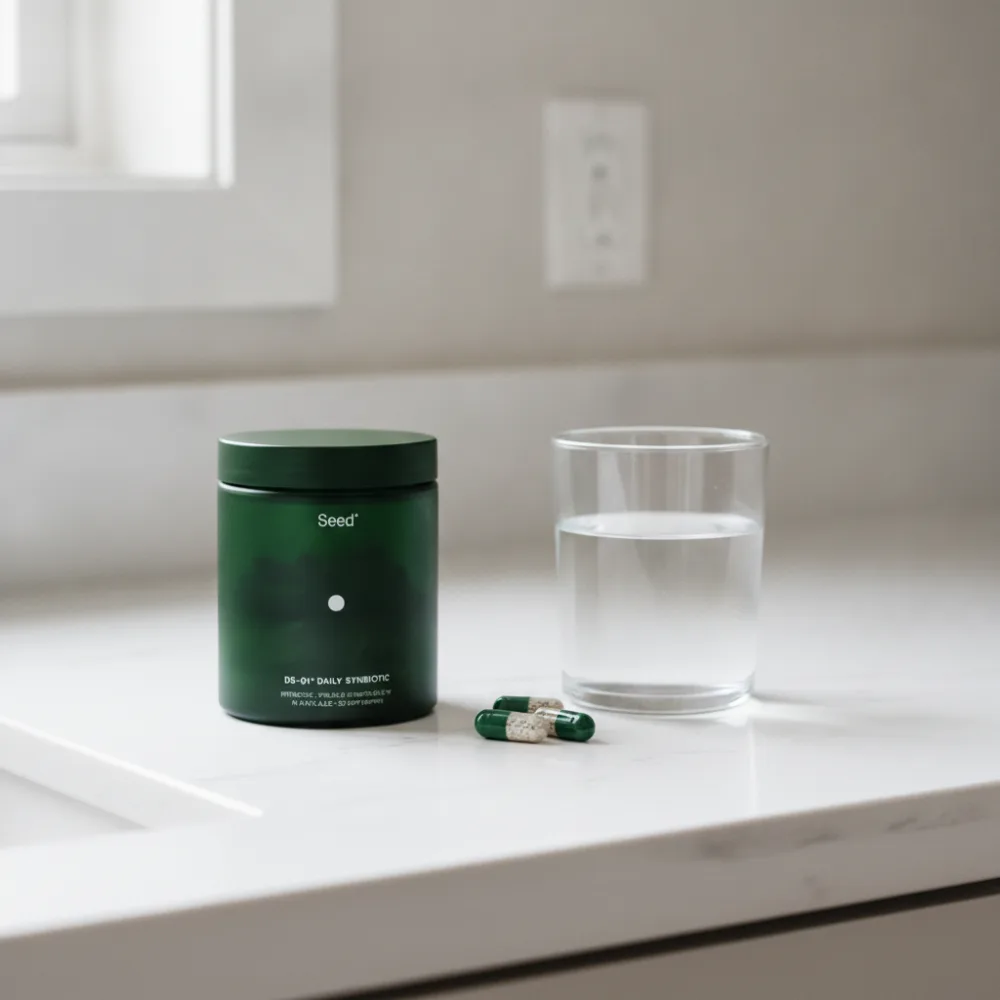 Synbiotic
Seed DS-01 Daily Synbiotic Review: Worth $50 a Month?
12713 reviews
An honest Seed DS-01 Daily Synbiotic review: whether the premium probiotic works, if the science and AFU justify the price, the subscription catch, and whether it's worth $50 a month.
Published July 6, 2026
Is Seed DS-01 worth it? My honest review at a glance
Seed's DS-01 Daily Synbiotic is the podcast-and-Instagram-famous "premium probiotic" — 24 strains, 53.6 billion AFU, a built-in prebiotic, and a clever 2-in-1 ViaCap capsule — at $49.99 a month, subscription-only. Let me be honest and useful from the first line: this is one of the genuinely best-formulated, most transparent probiotics on the market. Unlike most, its strains are named to the exact strain, it has actual clinical trials on the finished product (rare), it measures potency with the more precise AFU method, and it includes a real prebiotic. The honest question isn't "is it legit" (it is) — it's "is the premium science worth $50 a month for you, and can you live with subscription-only?" And whether the "whole body" claims live up to the digestion ones. Let me walk you through it.
I went through whether it works and how fast, whether the science justifies the price, the subscription model, and how it compares. Here's my straight take.
A genuinely premium, science-forward synbiotic — strain-designated, with finished-product clinical trials (rare), a real prebiotic, and shelf-stable ViaCap delivery. It reliably helps bloating and regularity for many (usually within ~2–3 weeks). The honest catches: it's expensive ($49.99/month), subscription-only (with some cancellation friction), 2 large capsules a day, and the "whole body" (skin/heart/immune) claims outrun the digestion evidence. Excellent product, premium price.
The essentials of my Seed DS-01 review
My rating: 7/10 — a legitimately excellent, transparent synbiotic; the main knocks are price, subscription-only, and oversold systemic claims.
Key spec: 2 capsules daily — 24 strains, 53.6 billion AFU + prebiotic.
| Detail | Seed DS-01 Daily Synbiotic |
|---|---|
| Brand | Seed Health — science-forward microbiome company |
| Format | 2-in-1 ViaCap capsules; 2 daily; shelf-stable (no refrigeration) |
| What's inside | 24 designated strains, 53.6B AFU + a non-fiber (pomegranate) prebiotic |
| Best for | Bloating, regularity and gut health, if you value proven science |
| Main knocks | Price; subscription-only; broad "whole body" claims |
| Price | $49.99/month (or ~$135 quarterly); subscription-only |
✅ What I liked about Seed DS-01
- ✅ Strain-designated + finished-product trials — the actual product is studied, not just its ingredients (genuinely rare).
- ✅ A true synbiotic — 24 studied strains plus a real prebiotic, delivered by a shelf-stable 2-in-1 capsule that survives to the colon.
- ✅ It works for many — consistent reports of less bloating and better regularity within a few weeks.
- ✅ Transparent & precise — AFU potency (more accurate than CFU), full disclosure, third-party tested.
❌ What held Seed DS-01 back
- ❌ Expensive — $49.99/month is a big step up from a $15 drugstore probiotic.
- ❌ Subscription-only — no one-time option, and some report cancellation friction.
- ❌ Oversold "whole body" claims — the skin/heart/immune benefits outrun the (strong) digestion evidence.
- ❌ Two large capsules daily — and an adjustment period of mild gas for some.
Genuinely premium — just know it's subscription-only, and you can pause or cancel.
In this Seed DS-01 review:
- What is Seed DS-01 Daily Synbiotic, and what's in it?
- Does Seed DS-01 actually work, and how long does it take?
- Is the science behind Seed DS-01 actually better?
- Does AFU vs CFU in Seed DS-01 matter?
- Are Seed's whole-body claims for skin and heart proven?
- Is Seed DS-01 worth $50 a month, and what's the subscription catch?
- How does Seed DS-01 compare to Ritual and cheaper probiotics?
- Are there side effects to Seed DS-01, and who should skip it?
- My verdict on Seed DS-01
- Seed DS-01 FAQ
What is Seed DS-01 Daily Synbiotic, and what's in it?
Seed DS-01 is a once-daily (2-capsule) synbiotic — a probiotic and a prebiotic together — built to a notably high standard.
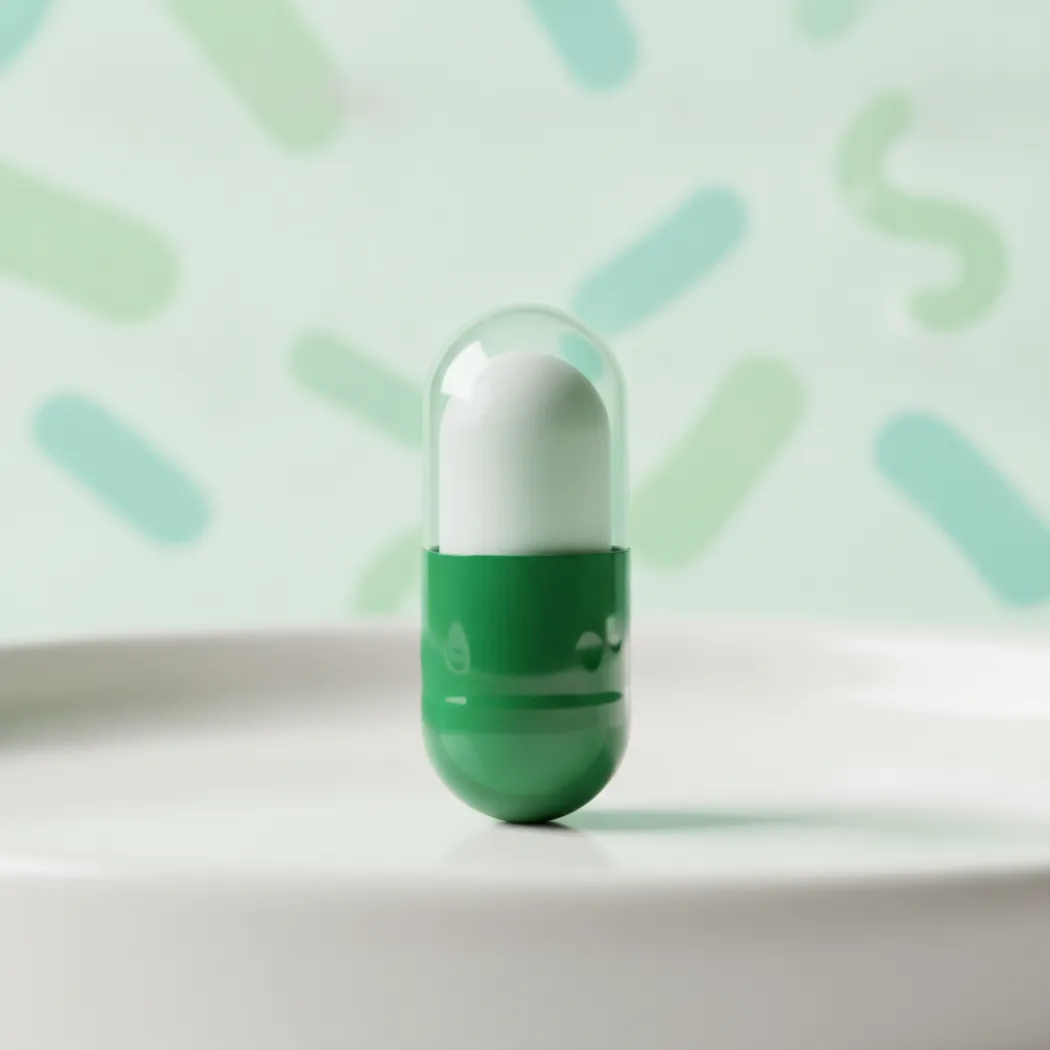
- 🦠 24 designated strains, 53.6 billion AFU — grouped into digestive, dermatological, cardiovascular and micronutrient blends (digestion is the biggest, 38.7B).
- 🌿 A non-fiber prebiotic (~400mg) — Indian-pomegranate polyphenols (punicalagins) that feed your existing microbes without the gas a big fiber dose can cause — and it's low-FODMAP-friendly, unlike inulin/FOS.
- 💊 ViaCap 2-in-1 capsule — a probiotic capsule nested inside a prebiotic outer shell, engineered to survive stomach acid and reach the colon; shelf-stable, no fridge.
💡 The key thing that sets Seed apart: this isn't a generic "billions of bacteria" blend. The strains are named to the exact strain, the potency uses the more precise AFU measure, and — unusually — the finished product has been through human trials. That's the real story here, and it's why the rest of this review is mostly about price and expectations, not quality.
Does Seed DS-01 actually work, and how long does it take?
For digestion, yes for many people — with a realistic timeline.
🗓️ What users report: the most consistent, believable wins are less bloating and more regular, easier bowel movements — some notice it within 24–48 hours, but for most the meaningful change builds over ~2–3 weeks. Reviews describe the effect as real but sometimes subtle ("close to a magic pill" for some, "hard to tell" for others).
⚠️ The adjustment period: some people get mild extra gas or looser stool in the first few days as their microbial population shifts. This is normal adjustment, not toxic "die-off" (a term that doesn't really apply to probiotics), and it usually settles within days to two weeks. If it doesn't settle, stop.
➡️ So Seed genuinely helps bloating and regularity for a good share of users, backed by trials on the actual product — just give it a full 2–3 weeks, expect a subtle rather than dramatic effect, and don't panic at a few days of adjustment gas.
Is the science behind Seed DS-01 actually better?
Yes — and this is the honest reason it can justify a premium.
🔬 Three things put Seed above most probiotics:
- Strain designation — every strain is named to the exact strain (not just "Lactobacillus"), so it can be tied to specific research. Most cheap probiotics can't say that.
- Finished-product clinical trials — Seed has run human RCTs on the actual DS-01 formula, not just on isolated ingredients. A 2026 randomized trial of 350 adults (published in Nutrients, led by a Harvard/Brigham researcher) reported that most participants were "never/rarely" bloated by the end. In the supplement world, studying the finished product is genuinely rare.
- Delivery you can verify — the ViaCap system is designed (and tested) to survive digestion and reach the colon, and it's shelf-stable without refrigeration.
⚖️ One fair caveat: the clinical trials are company-funded (common in the industry), so they're not fully independent. But studying the finished product at all still puts Seed ahead of nearly every rival that only cites ingredient research.
➡️ So the science isn't marketing gloss — it's real, and better than the category norm. That's what you're paying the premium for: not more bacteria, but better-documented, better-delivered bacteria.
Does AFU vs CFU in Seed DS-01 matter?
It's a genuine upgrade, not a marketing trick.
🔢 Most probiotics list CFU (colony-forming units), measured by growing bacteria on a plate — which misses live cells that don't happen to grow in that test. Seed uses AFU (active fluorescent units), measured by flow cytometry, which counts viable cells more completely and precisely.
✅ So Seed's "53.6 billion AFU" isn't an inflated number dressed up in fancy letters — AFU is arguably a more accurate potency measure than CFU, not a bigger one. (That said, remember the usual rule: the right strains matter more than the headline count, whichever unit is used.)
➡️ So don't dismiss AFU as a gimmick — it's a legitimately better measuring method. It's part of what makes Seed's transparency real, though it isn't a reason on its own to pay the premium.
Are Seed's whole-body claims for skin and heart proven?
Here's where I'd temper expectations: the digestion evidence is strong; the "whole body" claims are not equal to it.
🧬 Seed groups its strains into digestive, dermatological, cardiovascular and micronutrient blends, and markets benefits across all of them. But the strongest, finished-product evidence is for digestion (bloating, regularity, gut barrier). The skin, heart, immune and mood claims lean more on single-strain or earlier/lab research — plausible, but not proven for this product to the same degree.
➡️ So buy Seed for its real, well-evidenced job — gut and digestion — and treat the skin/heart/immune benefits as possible bonuses, not guarantees. If clear skin or heart health is your primary goal, a probiotic isn't the targeted tool.
Is Seed DS-01 worth $50 a month, and what's the subscription catch?
It's a real premium — justified for some, not for everyone.
💰 At $49.99/month (about $135 quarterly), Seed costs 3–4× a decent drugstore probiotic. You're paying for the strain designation, finished-product trials, AFU precision, prebiotic and delivery — genuine quality, but a lot more than a $15 bottle that may work fine for basic needs.
⚠️ The subscription catch (take this seriously): Seed is subscription-only — there's no one-time purchase. And while the on-site rating is a glowing 4.8/5, Seed's independent Trustpilot score sits far lower (around 1.7–2/5), dominated by complaints about hard-to-cancel subscriptions, surprise 3-month billing, and no phone support. (Trustpilot skews negative, but the pattern is real.) If you buy, note the cancellation steps up front, use a disputable card, and set a reminder before renewal if you're only testing it.
➡️ The value verdict: Seed is worth it if you value proven science and transparency and a cheaper probiotic has underwhelmed you. If you just want basic gut support on a budget, a quality drugstore probiotic delivers most of the everyday benefit for far less — the premium buys documentation and delivery, not a different category of result.
How does Seed DS-01 compare to Ritual and cheaper probiotics?
Among premium synbiotics, Seed is the science leader; value shoppers have cheaper options.
| Product | Strains / potency | ~Price/mo | Note |
|---|---|---|---|
| Seed DS-01 | 24 designated / 53.6B AFU | ~$50 | Finished-product trials; subscription-only |
| Ritual Synbiotic+ | 2 designated / 11B + postbiotic | ~$54 | Minimalist 3-in-1, transparent, 1 capsule |
| mindbodygreen Probiotic+ | 3 designated / 22B | ~$40–80 | Studied bloating strains; no prebiotic |
| Culturelle / Align (drugstore) | 1 studied strain | ~$15–30 | Cheap, proven single strain; basic |
So which makes sense? If you want the most rigorously documented synbiotic and don't mind the price, Seed is the leader. If you prefer a simpler, single-capsule 3-in-1, Ritual is a strong (and non-subscription-only) alternative. If you want studied strains for less, mindbodygreen or a drugstore single-strain (Culturelle/Align) covers the basics cheaply. For contrast, high-CFU blends like Stonehenge chase strain count, which matters less than Seed's designation and trials.
Are there side effects to Seed DS-01, and who should skip it?
Well tolerated, with the normal probiotic caveats.
- 💨 Adjustment period — mild gas or looser stool in the first few days is common and usually settles within days to two weeks.
- 💊 How to take it — 2 capsules daily, with or without food (some prefer morning, empty stomach). The capsules are on the larger side.
- 🧪 Clean profile — vegan, allergen-free, shelf-stable, third-party tested.
- ⚠️ Who should check first — if you're immunocompromised, pregnant, or take medication, talk to a professional — see how your pharmacist helps you use supplements safely.
➡️ So the main "side effect" is your gut adjusting to a new population — a normal sign, not a problem. Skip it if the price or subscription-only model doesn't suit you, or if you want a probiotic for a non-gut goal.
My verdict on Seed DS-01 — should you buy it?
Is Seed DS-01 worth it? My verdict is: one of the best, most credible probiotics — at a premium price — 7/10.
Let's give it full credit: on quality and transparency, Seed is near the top of the entire category. Its strains are named to the exact strain, it has clinical trials on the finished product (rare), it measures potency with the more precise AFU method, it includes a real prebiotic, and its ViaCap delivery is shelf-stable and built to reach the colon. For digestion — less bloating, better regularity — it genuinely delivers for many, usually within a few weeks. This is a serious, science-forward product, not hype.
What keeps it at a 7 is price and model, not quality. At $49.99/month it's expensive, it's subscription-only (with some cancellation friction), it's two large capsules a day, and its "whole body" (skin/heart/immune) claims outrun the digestion evidence — the finished-product proof is really about your gut.
- 👍 Buy Seed DS-01 if you value proven science and transparency, a cheaper probiotic has underwhelmed you, and the price and subscription are fine — it's a genuinely excellent gut probiotic.
- 👎 Skip it if you want basic gut support on a budget, dislike subscriptions, or you're buying a probiotic mainly for skin/heart/mood — a targeted or cheaper option fits better.
➡️ Bottom line: Seed DS-01 is a legitimately premium, transparent, evidence-backed synbiotic — you're paying for better-documented, better-delivered bacteria, not a miracle. For gut health and bloating, it's one of the most trustworthy choices available, and worth the money if the science matters to you. If you just need everyday gut support for less, a quality drugstore probiotic gets you most of the way there — and either way, judge it after a full 2–3 weeks.
Subscription-only — note the cancellation steps up front, and give it 2–3 weeks.
Seed DS-01 FAQ
Does Seed DS-01 actually work?
For digestion, yes for many people. The most consistent benefits are less bloating and better regularity, backed by clinical trials on the actual DS-01 formula (rare in supplements). Some notice changes in 24–48 hours, but for most the meaningful effect builds over 2–3 weeks and can be subtle rather than dramatic. Give it a full few weeks.
How long does Seed DS-01 take to work?
Most people see reduced bloating and more regular bowel movements within about 24 hours to 2–3 weeks of daily use, with day ~21 a common point for noticeable bloating improvement. Mild gas or looser stool in the first few days is a normal adjustment period, not toxic "die-off," and usually settles within days to two weeks.
Is the science behind Seed better than other probiotics?
Yes, meaningfully. Its strains are named to the exact strain (traceable to research), it has human trials on the finished product (not just its ingredients), and it uses the more precise AFU potency measure with tested ViaCap delivery. The trials are company-funded, so not fully independent — but studying the finished product at all puts Seed ahead of most rivals.
Does AFU vs CFU matter?
It's a real upgrade, not a gimmick. CFU counts bacteria that grow on a plate and misses live cells that don't; AFU (flow cytometry) counts viable cells more completely and precisely. So Seed's 53.6 billion AFU is a more accurate potency measure, not an inflated one — though the right strains still matter more than the headline number.
Is Seed DS-01 worth $50 a month?
It's worth it if you value proven science and transparency and cheaper probiotics have underwhelmed you — you're paying for strain designation, finished-product trials, AFU precision, a prebiotic and delivery. If you just want basic gut support on a budget, a quality drugstore probiotic delivers most of the everyday benefit for far less; the premium buys documentation, not a different result.
Is Seed subscription-only, and how do I cancel?
Yes — Seed is subscription-only, with no one-time purchase. You can pause or cancel, but some users report needing to contact support and finding it a bit sticky. If you're only testing it, note the cancellation steps up front and set a reminder before your next renewal so you're not auto-billed.
Are the skin, heart and immune claims proven?
Not equally. Seed's strongest, finished-product evidence is for digestion (bloating, regularity, gut barrier). The skin, cardiovascular, immune and mood claims lean more on single-strain or earlier/lab research — plausible but not proven for this product to the same degree. Buy it for gut health, and treat the whole-body benefits as possible bonuses.
Keep reading before you buy Seed DS-01
Premium synbiotics vary a lot on price and approach — here's how Seed compares:
- Ritual Synbiotic+ review — a minimalist 3-in-1 (not subscription-only).
- mindbodygreen Advanced Probiotic+ review — studied bloating strains, no prebiotic.
- Good Bacteria Rotating Synbiotic review — a rotating-strain synbiotic approach.
- Stonehenge Dynamic Biotics review — a high-CFU, count-focused contrast.
- How your pharmacist helps manage medications and supplements — useful before any new probiotic.
Disclaimer: This Seed DS-01 Daily Synbiotic review is independent editorial information, not medical advice. Dietary supplements are not intended to diagnose, treat, cure or prevent any disease. Seed DS-01 has clinical trials on the finished product (uncommon in the category), but these are company-funded; its strongest evidence is for digestive outcomes (bloating, regularity, gut barrier), while dermatological, cardiovascular, immune and mood claims rely more on single-strain or preclinical research and are less established for this specific product. AFU is a flow-cytometry potency measure that is more precise than CFU, not an inflated one. Mild gas or looser stools during the first days is a normal adjustment, not toxic "die-off." The product is sold on a subscription-only basis; review the cancellation terms before purchasing. If you are immunocompromised, pregnant or breastfeeding, take medication, or have a medical condition, consult a licensed healthcare professional before use, and see a doctor for persistent or severe digestive symptoms. This page may contain affiliate links; we may earn a commission at no extra cost to you, which never changes our honest assessment. Pricing and formulation were accurate at the time of writing (July 2026) and may change — verify on the official site.