Emma Relief Review 2026 - Legit Gut Fix or Overhyped? is presented for informational purposes by Elmont Drugs. Talk to a pharmacist or your physician before starting any new supplement, device or treatment.
 Berberine
Emma Relief Review: Does This Doctor-Fronted Gut Pill Work?
340 reviews
An honest Emma Relief (Daily Digestive) review: whether the berberine blend works for bloating, the truth about the "heal your gut lining" claims, the subscription/billing catch, and whether it's worth $59.
Published July 3, 2026
Is Emma Relief legit or a scam? My honest review at a glance
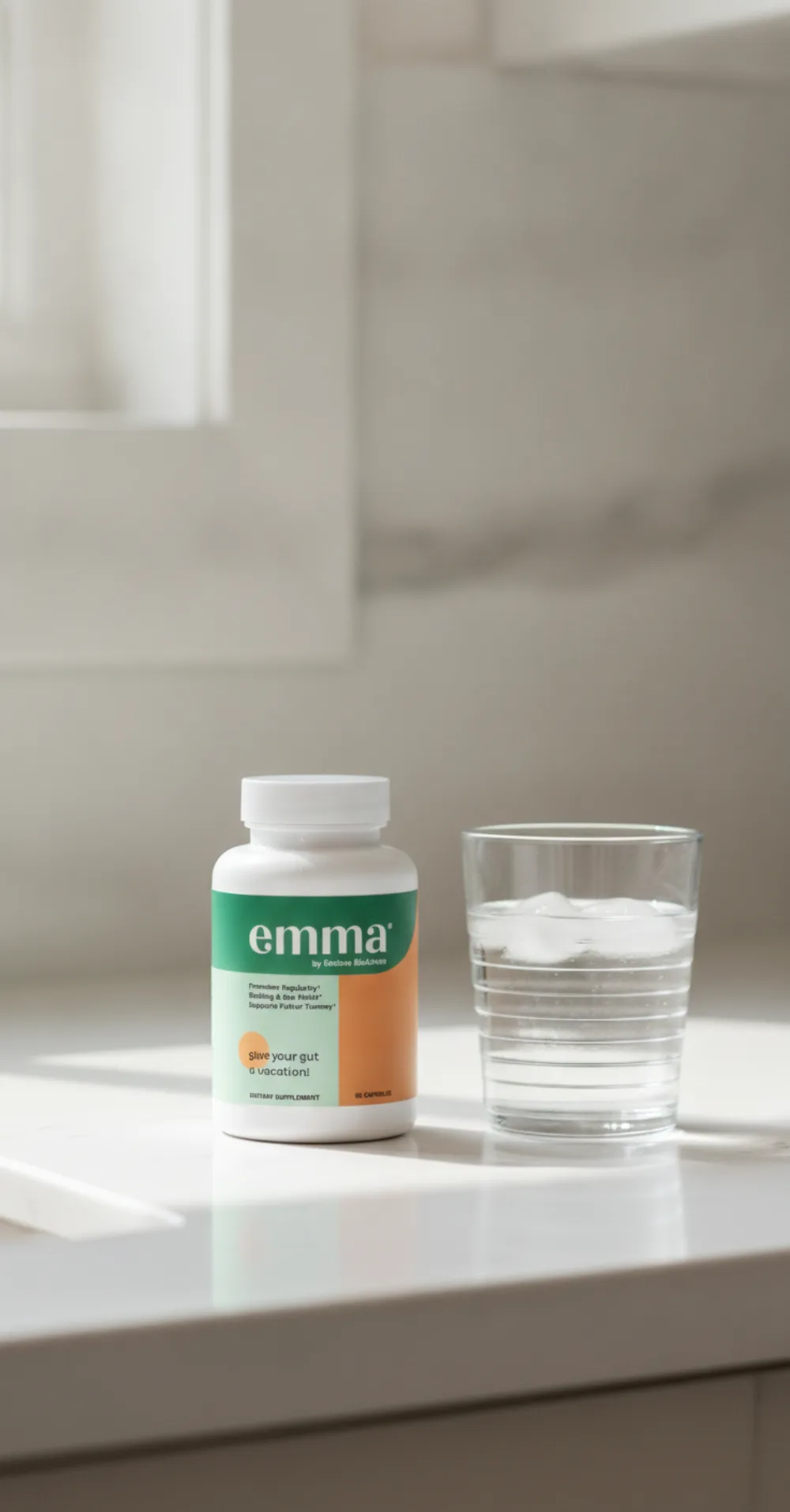
Emma Relief (sold as "Emma" or "Emma Daily Digestive," and stocked at GNC) is the aggressively-advertised gut supplement with a real gastroenterologist — Dr. Gina Sam — as its face. The ads promise to "reset your gut," heal your gut lining, eliminate food intolerances, and give you a flatter tummy. Let me be honest and careful from the first line, because this is a health and money decision: Emma is not an outright scam — it's a real product with a real ingredient (berberine) and a real doctor. But its "heal everything" claims are overstated, its doses are likely too small to do much, and its biggest risk is the subscription/auto-ship billing trap that generates a lot of complaints. Let me walk you through the honest picture.
I went through what's actually in it, whether it works, the "heal your gut" claims, the berberine hype, the doctor endorsement, and the subscription catch. Here's my straight, safety-first take.
A real, doctor-fronted herbal gut blend (berberine, DGL licorice, star anise, quercetin) that eases bloating for some people — but it's oversold and overpriced. Its "heal your gut lining / eliminate food intolerance" claims aren't supported (one science watchdog calls it "deceptively marketed"); its proprietary blend hides likely sub-therapeutic doses; berberine's benefits are modest, not "nature's Ozempic"; and the biggest real-world risk is the subscription/auto-ship that draws heavy billing and refund complaints (an F BBB rating). Not a scam — but a risky, overpriced buy for most people.
The essentials of my Emma Relief review
My rating: 3/10 — real ingredients and a real doctor undercut by overstated claims, sub-therapeutic doses, a berberine-hype angle, and serious subscription/billing complaints.
Key spec: 2 capsules daily with a meal — a berberine + herbal gut blend.
| Detail | Emma Relief |
|---|---|
| Brand | Emma, by Enclave BioActives (the same company behind Akka) |
| Format | Capsules — 60 per bottle; 2 daily with a meal |
| Key ingredients | Berberine, DGL licorice, star anise, quercetin, chicory inulin, resveratrol (proprietary blend) |
| Face of brand | Dr. Gina Sam, gastroenterologist (spokesperson — not clinical proof) |
| Main risk | Subscription/auto-ship billing complaints (BBB F rating) |
| Price | $59/bottle (~$39 in bulk); also at GNC/Amazon |
✅ The few things that are true about Emma Relief
- ✅ Real, relevant ingredient — berberine has genuine (if modest) metabolic and gut data.
- ✅ A real gastroenterologist is involved — more credibility than a faceless funnel.
- ✅ Sold at GNC and Amazon — retail channels are more legitimate (and easier) than the subscription funnel.
- ✅ Some genuine relief — a share of users do report less bloating and better regularity.
❌ What's wrong with Emma Relief
- ❌ Overstated claims — "heal your gut lining / eliminate food intolerance" isn't supported; a watchdog calls it "deceptively marketed."
- ❌ Likely sub-therapeutic doses — the proprietary blend hides amounts that look far below studied doses.
- ❌ Berberine hype — it's not "nature's Ozempic"; benefits are modest.
- ❌ Subscription/billing complaints — surprise multi-bottle charges, hard cancellations, BBB F rating.
⚠️ If you try it, buy a single bottle from GNC/Amazon to avoid the subscription auto-ship — and talk to a doctor if you take medication.
In this Emma Relief review:
- What is Emma Relief, and what's actually in it?
- Does Emma Relief actually work for bloating?
- Are Emma Relief's "heal your gut lining" claims real?
- Is the berberine in Emma Relief really "nature's Ozempic"?
- Does Dr. Gina Sam's endorsement make Emma Relief proven?
- What's the catch with Emma Relief's price and subscription?
- How does Emma Relief compare, and is it the same as Akka?
- Are there side effects to Emma Relief, and who should avoid it?
- My verdict on Emma Relief
- Emma Relief FAQ
What is Emma Relief, and what's actually in it?
Emma Relief is a capsule herbal gut blend marketed for regularity, bloating and "gut healing." Its formula centers on a handful of botanicals, led by berberine — a plant compound that's become a wellness-world darling.

The main ingredients and what they do:
- 🌿 Berberine — an antimicrobial, metabolism-affecting plant compound (the headline active).
- 🍬 DGL licorice — a soothing botanical for the GI lining.
- ⭐ Star anise — a traditional carminative (anti-gas) herb.
- 🧅 Quercetin — an anti-inflammatory flavonoid.
- 🍇 Resveratrol — an antioxidant compound.
- 🌱 Chicory inulin — a prebiotic fiber (in a small amount here).
⚠️ The catch: these sit in a proprietary blend, so the label hides the dose of each. Independent analysis suggests several are present at far below their studied amounts (for example, tiny milligram amounts of ingredients that are studied in grams). So the ingredient list looks impressive; the doses may not be.
Does Emma Relief actually work for bloating?
For some people, modestly — but results are genuinely split, and the doses temper expectations.
🗓️ What users report:
- Some feel less bloated and more regular after a few days to a few weeks (berberine and carminatives can plausibly help).
- Others say it did "nothing," and a number report it worsened their bowel movements or caused diarrhea.
🔬 The honest read: berberine and the carminative herbs give Emma a plausible mechanism for easing bloating and supporting regularity, and the positive reviews are real. But because the actives sit in a proprietary blend at likely sub-therapeutic doses, and there's no published trial on the finished Emma product, it's best seen as a "might help some" herbal blend — not a reliable fix.
➡️ So Emma Relief can genuinely take the edge off bloating for a subset of users, especially over a few weeks. Just go in expecting modest, variable results, not the dramatic "reset" the ads promise.
Are Emma Relief's "heal your gut lining" claims real?
This is where the marketing runs well ahead of the evidence.
Emma's ads and page claim it will "heal your gut flora and gut lining," "eliminate food intolerance," and "heal inflammation." Here's the honest reality:
- ❌ There's no published evidence that the finished Emma product heals the gut lining or eliminates food intolerances.
- ❌ These are structure/function marketing claims, not proven cures — a university science watchdog has publicly called Emma "deceptively marketed," noting no proof backs claims like targeting "bacterial overgrowth, parasites and pathogens."
- ✅ What's fair to say: it may reduce bloating for some — it does not "cure" leaky gut, inflammation or food intolerances.
➡️ The takeaway: treat the "heal everything" language as marketing, not mechanism. If a supplement promises to cure food intolerances and repair your gut lining, that's a claim no herbal blend can currently back up. Emma is a bloating/regularity aid at best — not the gut cure the funnel sells.
Is the berberine in Emma Relief really "nature's Ozempic"?
Berberine is Emma's star ingredient and rides the viral "nature's Ozempic" trend, so let's be clear-eyed.
🔬 What berberine genuinely does: it's a real plant compound with legitimate but modest data — it activates a metabolic pathway (AMPK), can modestly help blood sugar and cholesterol, has antimicrobial activity, and may aid some gut symptoms. That's a real, if small, foundation.
⚠️ What it is not: berberine is not comparable to GLP-1 drugs like Ozempic. Where those produce 15–20% weight loss, berberine's effect is on the order of a few pounds over weeks, and the "nature's Ozempic" label is social-media hype that experts (including major health systems) have pushed back on. In Emma, its role is digestive support, not dramatic weight loss.
➡️ So if you're buying Emma expecting a berberine "Ozempic" effect, reset your expectations: it's a modest gut/metabolic herb, and in a proprietary blend you can't even confirm you're getting a meaningful dose of it.
Does Dr. Gina Sam's endorsement make Emma Relief proven?
The gastroenterologist front-and-center is Emma's biggest trust lever, so it's worth being precise.
👩⚕️ The credibility: Dr. Gina Sam is a real, qualified gastroenterologist, and having an actual GI involved is genuinely more reassuring than a faceless supplement funnel. That's a legitimate point in Emma's favor.
⚠️ The important limit: a doctor spokesperson is not the same as clinical evidence. A credentialed face lends authority and helps sell the product, but it doesn't replace a published trial showing the finished blend works. Plenty of doctor-fronted supplements make claims their formulas can't back up — and as noted, an independent science watchdog flagged Emma's specific claims as overstated.
➡️ So take the doctor endorsement as a credibility signal, not proof. It means Emma isn't a random scam; it does not mean the "heal your gut" claims are validated. Judge the product on its ingredients, doses and honest evidence — not the white coat.
What's the catch with Emma Relief's price and subscription?
This is the single most important section for protecting your wallet, because it's where the real complaints are.
💰 Emma runs $59 for one bottle, dropping to about $39/bottle in multi-bottle "packs." But the bigger issue than price is the subscription/auto-ship model, which generates a striking volume of complaints:
- ⚠️ Surprise multi-bottle charges — buyers report ordering one bottle and being charged for (and shipped) several, or hit with unexpected recurring charges.
- ⚠️ Hard-to-cancel subscriptions and unresponsive customer service.
- ⚠️ Difficult refunds despite a "money-back guarantee."
- ⚠️ The brand carries an F rating with the Better Business Bureau and low scores on consumer-complaint sites, driven largely by these billing issues.
🛡️ How to protect yourself: if you want to try Emma, buy a single bottle from GNC or Amazon rather than signing up for the official-site subscription — you avoid the auto-ship trap and it's far easier to walk away. Never accept a multi-bottle "deal" for a product you haven't tried.
➡️ Bottom line on cost: the product isn't wildly overpriced per bottle, but the subscription funnel is the real risk — and it's the reason a lot of "Emma Relief scam" searches exist. Buy it the safe way or not at all.
How does Emma Relief compare, and is it the same as Akka?
Two useful comparisons — the same company's other product, and plain berberine.
🔀 Emma and Akka are from the same company (Enclave BioActives) — the same aggressive direct-response playbook, but different products: Akka is a pasteurized-Akkermansia "liver detox" postbiotic; Emma is a berberine-and-herbs gut blend. If one of their funnels caught your eye, know it's a marketing machine either way.
| Option | ~Price | Note |
|---|---|---|
| Emma Relief | $59 ($39 bulk) | Berberine blend, doctor-fronted; proprietary doses; subscription risk |
| Plain berberine (Thorne, NOW) | ~$15–25 | The main active, at a known, full dose, for a fraction of the price |
| Hilma Gas + Bloat | ~$19 | Simple, transparent carminative herbs; no funnel |
| Atrantil | ~$40 | A gut botanical with an actual published study, for methane bloating |
So which makes sense? If berberine is what you're after, plain berberine gives you a known, full dose for a quarter of the price (with none of the subscription risk). For simple bloating, a transparent carminative like Hilma is cheaper and clearer; for studied gut evidence, Atrantil. Emma's main "advantage" — the doctor and the convenient blend — doesn't outweigh the hidden doses and billing risk.
Are there side effects to Emma Relief, and who should avoid it?
Berberine is the key safety consideration here, and it's a real one.
- ⚠️ GI side effects — some users report diarrhea, cramping, or worse bowel movements.
- ⚠️ Berberine drug interactions — berberine can affect blood sugar and interact with common medications (like metformin, blood-sugar drugs, blood thinners, and statins); it can cause hypoglycemia when combined with diabetes meds.
- ⚠️ Broad interaction potential — berberine affects the liver enzymes (CYP3A4 and others) that process many drugs, so it can raise the blood levels of some medications.
- ⚠️ Not for pregnancy/breastfeeding — berberine is specifically not recommended in pregnancy or breastfeeding.
👎 You should avoid Emma Relief if you take medication (especially diabetes drugs, blood thinners or statins), are pregnant or breastfeeding, or you're tempted by the multi-bottle subscription. Given the berberine interactions, this is genuinely a talk-to-your-doctor-or-pharmacist product — see how your pharmacist can check it against your medications.
My verdict on Emma Relief — should you buy it?
Is Emma Relief worth it? My verdict is: real ingredients, oversold and risky to buy — 3/10.
Emma isn't a pure scam. It has a genuinely relevant ingredient (berberine has real, modest data), a real gastroenterologist involved, retail availability at GNC and Amazon, and a share of users who feel less bloated on it. If it were sold plainly at a fair price with honest claims, it'd be a middling-but-fine herbal gut blend.
But the way it's actually sold sinks it: the "heal your gut lining / eliminate food intolerance" claims are unsupported (and independently flagged as deceptive), the proprietary blend hides likely sub-therapeutic doses, the berberine "Ozempic" angle is hype, and — most importantly — the subscription/auto-ship model draws serious billing and refund complaints (BBB F). Add the berberine drug interactions, and this is a product to approach with real caution.
- 👍 Only consider Emma if you specifically want its exact blend, you buy a single bottle from GNC/Amazon (never the subscription), and your doctor okays it with your meds.
- 👎 Skip it if you want the berberine effect (buy plain berberine for far less), you take interacting medication, or you're tempted by the multi-bottle funnel.
➡️ Bottom line: Emma Relief is a modest, real herbal gut blend wrapped in overstated "cure your gut" marketing and a risky subscription funnel. The doctor and the berberine keep it off the bottom of the barrel, but the hidden doses, hype and billing complaints make it a poor, overpriced choice for most people. If berberine intrigues you, buy it plain and cheap; if bloating is the goal, a transparent carminative or a studied option will serve you better and safer.
If you try it, buy one bottle from a retailer — skip the subscription auto-ship.
Emma Relief FAQ
Is Emma Relief legit or a scam?
It's a legitimate product, not an outright scam — real ingredients (berberine), a real gastroenterologist (Dr. Gina Sam), and retail availability at GNC and Amazon. But its "heal your gut" claims are overstated (independently flagged as deceptive), its doses are likely sub-therapeutic, and it draws heavy subscription/billing complaints (BBB F rating). Buy cautiously, if at all.
Does Emma Relief actually work for bloating?
For some people, modestly — berberine and carminative herbs can plausibly ease bloating and support regularity, and some users feel better within days to weeks. But results are split (others feel nothing or get diarrhea), the doses are hidden and likely low, and there's no published trial on the finished product. Expect variable, modest results, not a "reset."
Are Emma Relief's "heal your gut lining" claims true?
No. There's no published evidence that Emma heals the gut lining or eliminates food intolerances — these are structure/function marketing claims, and a science watchdog has called Emma "deceptively marketed." It may reduce bloating for some, but it does not cure leaky gut, inflammation or food intolerances.
Is the berberine in Emma "nature's Ozempic"?
No. Berberine has real but modest data (AMPK activation, small blood-sugar and weight effects of a few pounds over weeks). It is not comparable to GLP-1 drugs like Ozempic (which cause 15–20% weight loss), and the "nature's Ozempic" label is social-media hype. In Emma its role is digestive support, at an undisclosed dose.
What's the catch with Emma Relief's subscription?
The auto-ship model is the biggest risk. Buyers report surprise multi-bottle charges, hard-to-cancel subscriptions, unresponsive customer service and difficult refunds, contributing to an F BBB rating. To avoid this, buy a single bottle from GNC or Amazon rather than the official-site subscription.
Are there side effects or drug interactions with Emma Relief?
Yes. Some users report diarrhea or cramping. More importantly, berberine interacts with medications — it affects liver enzymes (like CYP3A4) that process many drugs, can cause low blood sugar with diabetes medications, and interacts with blood thinners and statins. Avoid it in pregnancy/breastfeeding, and check with a doctor or pharmacist if you take any medication.
Is Emma Relief the same as Akka?
They're different products from the same company (Enclave BioActives). Akka is a pasteurized-Akkermansia "liver detox" postbiotic; Emma is a berberine-and-herbs gut blend. Both use the same aggressive direct-response marketing, so approach either with the same caution about claims and subscriptions.
Keep reading before you buy Emma Relief
Doctor-fronted "gut reset" supplements need a careful eye — here's useful context:
- Akka review — the same company's (Enclave BioActives) Akkermansia "liver detox" product.
- GutPersonal Gut Soother review — another product making "heal your gut lining" claims (via L-glutamine).
- Atrantil review — a gut botanical that actually has a published study behind it.
- How your pharmacist helps manage medications and supplements — important given berberine's drug interactions.
Disclaimer: This Emma Relief review is independent editorial information, not medical advice. Dietary supplements are not intended to diagnose, treat, cure or prevent any disease. Emma's claims to "heal the gut lining," "eliminate food intolerance" or "heal inflammation" are not supported by published evidence on the finished product; its ingredients are in a proprietary blend with undisclosed, likely sub-therapeutic doses. Berberine has modest, not dramatic, effects and is not comparable to GLP-1 medications; it can lower blood sugar and interacts with medications including diabetes drugs, blood thinners and statins. Do not use if pregnant or breastfeeding, and consult a licensed healthcare professional or pharmacist before use if you take any medication or have a medical condition. Many consumer complaints concern the subscription/auto-ship billing and refunds — consider buying a single bottle from a retailer. This page may contain affiliate links; we may earn a commission at no extra cost to you, which never changes our honest assessment. Pricing and formulation were accurate at the time of writing (July 2026) and may change — verify on the official site.