Snap Gut Health Review 2026 - Worth $67 for 17 Herbs? is presented for informational purposes by Elmont Drugs. Talk to a pharmacist or your physician before starting any new supplement, device or treatment.
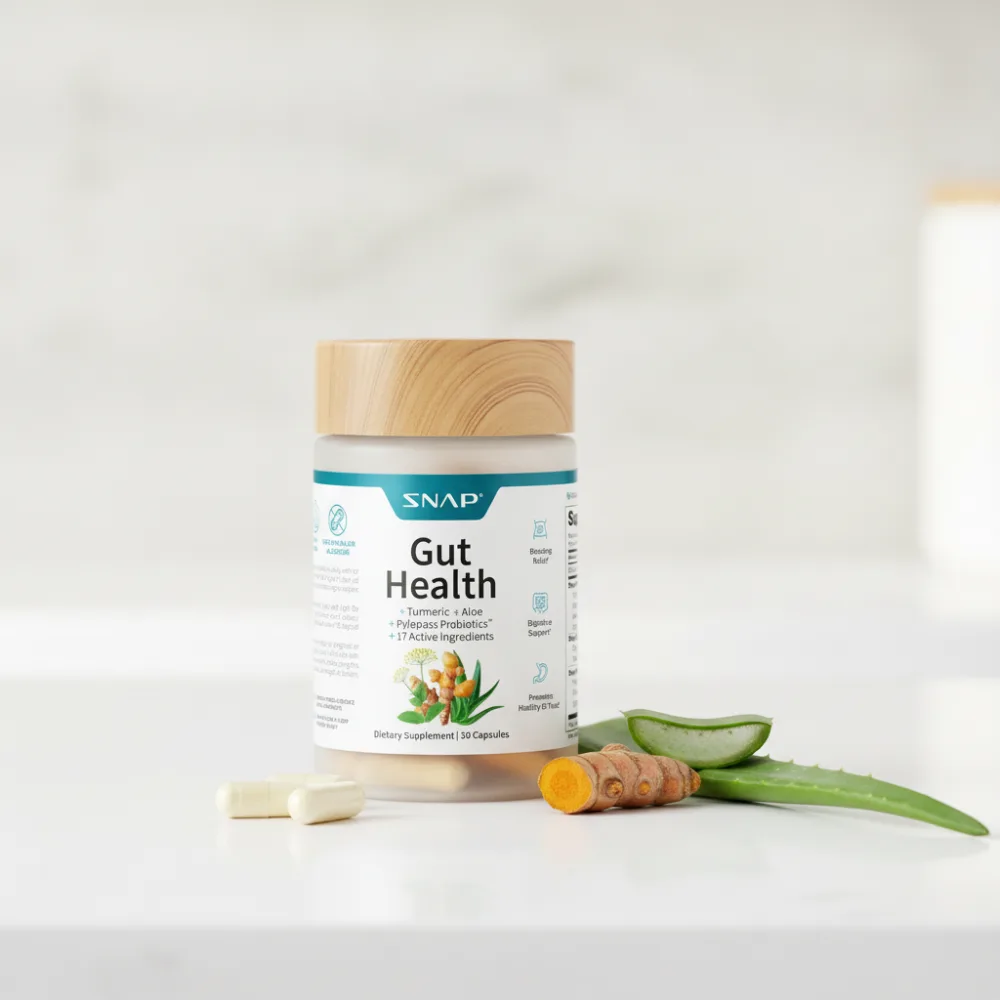 All-in-One Gut
Snap Supplements Gut Health Review: Worth $67-90?
216 reviews
An honest Snap Supplements Gut Health review: whether the 17-ingredient gut blend works, if the Pylopass really helps H. pylori, the proprietary-blend doses, and whether it's worth $67 to $90.
Published July 5, 2026
Is Snap Supplements Gut Health worth it? My honest review at a glance
Snap Supplements Gut Health (sold on UnderYours and elsewhere) is a "17 active ingredients, heals at the root" capsule that throws turmeric, aloe, a Pylopass probiotic, peppermint, fennel, licorice and more at your bloating and digestion — with an eye-catching claim of helping against H. pylori. Let me be honest and useful from the first line: this blend actually contains a few genuinely interesting ingredients — especially Pylopass, a real probiotic strain studied to bind H. pylori. But the catches are significant: it's a proprietary blend (so the individual doses are hidden), 17 ingredients means each is likely sprinkled, and it's very expensive ($67–90 for just 50 capsules). So the honest question is: a clever gut blend with a real H. pylori angle, or a pricey kitchen-sink you can't verify? Let me walk you through it.
I went through whether it works, whether the Pylopass H. pylori claim holds up, the proprietary-blend doses, and whether it's worth the price. Here's my straight take.
A 17-ingredient "all-in-one" gut blend with some legit actives (Pylopass, peppermint, fennel, DGL, a prebiotic). The honest catches: it's a proprietary blend so the doses are hidden and likely sprinkled; the Pylopass H. pylori angle is real but binds (doesn't eradicate) and can't be confirmed at the studied dose; the "heals at the root" claim is oversold; and it's very expensive ($67–90 for ~25 days). Interesting formula, unverifiable and overpriced.
The essentials of my Snap Gut Health review
My rating: 4/10 — a few real ingredients (Pylopass especially) undercut by proprietary-blend sprinkling, oversold claims, and a steep price.
Key spec: 2 capsules daily — 17-ingredient herbal + probiotic gut blend.
| Detail | Snap Supplements Gut Health |
|---|---|
| Brand | Snap Supplements (sold via UnderYours & Amazon) |
| Format | Capsules; 2 daily (50/bottle ≈ 25 days) |
| What's inside | 17 actives: turmeric, aloe, Pylopass, peppermint, fennel, licorice/DGL, chicory + enzymes (proprietary blends) |
| Best for | People drawn to the Pylopass/H. pylori angle who want an all-in-one |
| Main knocks | Hidden doses; likely underdosed; oversold claims; very pricey |
| Price | ~$67.49 (regular ~$90) for 50 capsules |
✅ What I liked about Snap Gut Health
- ✅ A genuinely interesting active — Pylopass (L. reuteri DSM 17648) is a real strain studied to bind H. pylori.
- ✅ Sensible supporting herbs — peppermint and fennel (carminatives), DGL licorice, and a chicory prebiotic.
- ✅ Clean positioning — vegan, plant-based, allergen-free, no added sugar, GMP-made.
- ✅ Helps some people — a share of users report less bloating and gas.
❌ What held Snap Gut Health back
- ❌ Proprietary blend — the mg of each of the 17 ingredients is hidden, so you can't verify the doses.
- ❌ Kitchen-sink sprinkling — 17 actives split across small blends means each is likely underdosed.
- ❌ Oversold claims — "heals at the root" and gut-lining repair go beyond the evidence.
- ❌ Very expensive — $67–90 for ~25 days is a steep price for an unverifiable formula.
If you have H. pylori, see a doctor — this is not a treatment for the infection.
In this Snap Supplements Gut Health review:
- What is Snap Gut Health, and what's in it?
- Does Snap Gut Health actually work?
- Is the Pylopass in Snap Gut Health proven for H. pylori?
- Are the 17 ingredients in Snap Gut Health properly dosed?
- Is Snap Gut Health worth $67 to $90?
- Is Snap Supplements legit, and are there side effects?
- How does Snap Gut Health compare to other gut supplements?
- Who should buy Snap Gut Health, and who should skip it?
- My verdict on Snap Gut Health
- Snap Gut Health FAQ
What is Snap Gut Health, and what's in it?
Snap Gut Health is a twice-daily "all-in-one" gut capsule that combines herbs, a prebiotic, digestive enzymes and a probiotic strain into one formula.
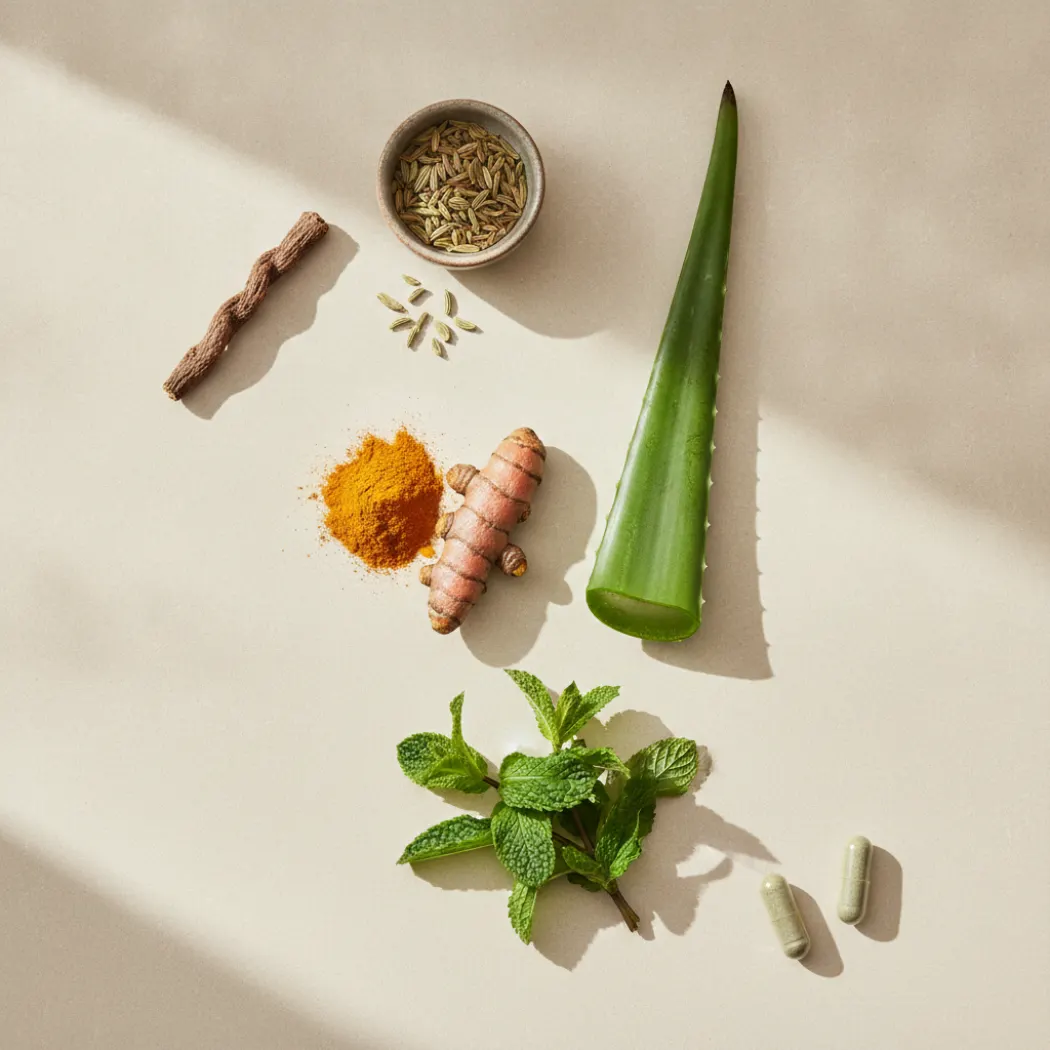
- 🦠 Pylopass (L. reuteri DSM 17648) — the headline active, a probiotic strain studied to bind H. pylori (inside a shared probiotic blend).
- 🌿 Soothing/carminative herbs — turmeric, aloe vera, peppermint, fennel and licorice/DGL.
- 🌾 Prebiotic + enzymes — chicory root (inulin) and digestive enzymes.
- 💊 Two capsules daily — vegan, plant-based, allergen-free.
💡 The key structural fact: these are packed into proprietary blends (a mucosal-support blend, a digestive blend, and a probiotic blend), so the label shows the blend totals but not how much of each ingredient you get. With 17 actives, that's a lot to split — which is the heart of the dosing question below.
Does Snap Gut Health actually work?
For some people, modestly — and reviews are genuinely split.
🗓️ What users report: the positive camp says their "bloating and gas are gone," and a few with H. pylori feel they're "almost back to normal." But there's a real negative camp too: "did absolutely nothing," and — notably — some report the opposite of the promise: "horrible constipation and bloating." Others note it may take more than one bottle to judge (which compounds the cost).
🔬 Why it may help: the peppermint and fennel are genuine carminatives (peppermint has decent IBS/bloating evidence), the DGL licorice is soothing, and a prebiotic can nudge digestion. Some benefit is plausible.
➡️ So Snap Gut Health works for a share of users on bloating, but results are inconsistent and a minority feel worse. Give it a couple of weeks — and don't count on the dramatic "heals your gut at the root" transformation the marketing implies.
Is the Pylopass in Snap Gut Health proven for H. pylori?
This is the product's real differentiator, so let's be precise: Pylopass is a genuine ingredient with real (but limited) evidence — and it does not cure H. pylori.
🔬 What Pylopass actually does: Pylopass is Lactobacillus reuteri DSM 17648 (typically used in an inactivated "postbiotic" form), a strain that physically binds (co-aggregates with) H. pylori in the stomach — which can lower the bacterial load and may ease symptoms. There's a small but real evidence base, including a 2024 trial using it as an adjuvant. Crucially, it reduces H. pylori load — it does not eradicate the infection, and is not a substitute for the standard antibiotic "triple/quadruple therapy" a doctor prescribes.
⚠️ The catch: the studies used a specific dose (~200mg / ~2×10¹⁰ cells, often several tablets a day). In Snap Gut Health, the Pylopass sits inside an undisclosed probiotic blend shared with other strains — so you cannot verify it reaches the studied dose. "Contains Pylopass" isn't the same as "contains the studied amount of Pylopass."
➡️ So credit Snap for including a legitimately interesting H. pylori-binding ingredient — but treat it as possible symptom support, not treatment, at a dose you can't confirm. If you have H. pylori, see a doctor — it's a real infection that needs proper testing and antibiotics.
Are the 17 ingredients in Snap Gut Health properly dosed?
Probably not — and the label is built so you can't tell.
🔢 Snap Gut Health uses proprietary blends (a larger mucosal-support blend, plus smaller digestive and probiotic blends), which show a combined weight but hide the milligrams of each of the 17 ingredients. When you split a modest capsule load across 17 actives, most are almost certainly present in small, sub-clinical amounts — a classic "kitchen-sink" formula.
⚠️ That matters because several of these ingredients only work at real doses: peppermint oil is studied around 180–225mg, functional prebiotic fiber runs in grams, and Pylopass needs its ~200mg studied dose. A blend that lists all of them impressively can still deliver a fraction of each.
➡️ So the "17 active ingredients" headline is breadth, not proven potency. The best-formulated gut products disclose every dose so you can match them to research — Snap doesn't, which is a real transparency and value problem.
Is Snap Gut Health worth $67 to $90?
On value, it's a hard sell.
💰 At ~$67 (often listed near $90) for 50 capsules — about 25 days at 2/day — this listing works out to roughly $2.70–3.60 a day, and it doesn't even last a full month.
🚩 Watch where you buy it: the exact same 50-capsule bottle sells for around $32.95 on Snap's own website — so the $67–90 price on UnderYours/Amazon is roughly double. Before paying the higher price, it's worth checking the brand's official store; a ~2× markup for the identical product is a lot.
⚠️ You could buy the parts that have real evidence separately for less — enteric-coated peppermint oil, a standalone Pylopass supplement, and DGL — and know exactly what you're taking. The all-in-one convenience is the main thing you're paying a premium for.
➡️ The value verdict: Snap Gut Health is overpriced for what you can confirm you're getting. If the Pylopass/H. pylori angle specifically appeals to you and you'll use the money-back guarantee, it's a defensible experiment — but on pure value, cheaper and more transparent options win.
Is Snap Supplements legit, and are there side effects?
The brand is real; the main issues are dosing transparency and a few side effects.
✅ Legitimacy: Snap Supplements is an established supplement brand (this product also sells on Amazon, Walmart and iHerb), GMP-made, with a money-back guarantee. It isn't a fly-by-night scam — the criticism is the proprietary blend and price, not fraud. (Note the product has at times been on backorder.)
- 💨 Side effects — some users report constipation, bloating or cramping (ironic for a debloat product); the aloe and herbs don't suit everyone.
- 🥄 How to take it — 2 capsules daily (often suggested on an empty stomach); give it a couple of weeks.
- ⚠️ Cautions — licorice can raise blood pressure in larger amounts, aloe can be laxative, and if you take medication or have H. pylori, check with a professional — see how your pharmacist helps you use supplements safely.
➡️ So it's a legitimate product with the usual herbal-blend caveats — the thing to watch is your own tolerance (some get constipated) and, if H. pylori is involved, getting real medical care.
How does Snap Gut Health compare to other gut supplements?
Against other "all-in-one" gut blends, Snap is distinguished by Pylopass — and by its price.
| Product | Approach | ~Price | Note |
|---|---|---|---|
| Snap Gut Health | 17-ingredient herbal + Pylopass | ~$67–90 | H. pylori angle; hidden doses; pricey |
| Emma Relief | Berberine-led gut blend | ~$60 | Similar "root cause" pitch; funnel-priced |
| Unbloat | 40-ingredient kitchen-sink | ~$50–65 | Even more ingredients, same dosing issue |
| Standalone Pylopass + peppermint | Buy the studied parts separately | ~$30–40 | Known doses, cheaper; less convenient |
So which makes sense? If you want the H. pylori-binding ingredient at a known dose, a standalone Pylopass plus enteric-coated peppermint oil costs less and tells you exactly what you're taking. Among the all-in-one blends, Snap, Emma and Unbloat share the same core flaw — lots of ingredients, hidden doses, premium prices. Snap's genuine edge is the Pylopass angle; whether that's worth $67–90 is the real question. For gut-lining specifically, Gundry Total Restore or a glutamine powder is a different route.
Who should buy Snap Gut Health, and who should skip it?
This one really depends on what's driving your purchase.
👍 Snap Gut Health may fit if you:
- Are specifically drawn to the Pylopass/H. pylori-binding angle and want it combined with soothing herbs (as symptom support, alongside — not instead of — medical care).
- Want a vegan, allergen-free all-in-one and value convenience over knowing exact doses.
- Will use the money-back guarantee to test it.
👎 You should skip it if you:
- Want disclosed, verifiable doses — the proprietary blend hides them.
- Are value-focused — the studied ingredients cost far less bought separately.
- Have diagnosed H. pylori and expect a cure — you need a doctor and antibiotics, not a supplement.
My verdict on Snap Gut Health — should you buy it?
Is Snap Gut Health worth it? My verdict is: an interesting formula you can't verify, at a steep price — 4/10.
Credit where due: Snap Gut Health includes some genuinely worthwhile ingredients. Pylopass (L. reuteri DSM 17648) is a real, studied H. pylori-binding strain — a legitimately interesting inclusion few competitors have — and the peppermint, fennel, DGL and prebiotic are sensible supporting actives. It's vegan, allergen-free, and a share of users do feel less bloated.
What holds it to a 4 is that you can't confirm you're getting effective amounts of any of it. The proprietary blends hide the doses, 17 ingredients means each is likely sprinkled, the Pylopass can't be verified at its studied ~200mg dose, the "heals at the root" claim is oversold, and at $67–90 for ~25 days it's expensive — with mixed reviews that include people who got more constipated.
- 👍 Consider Snap Gut Health if the Pylopass/H. pylori angle specifically appeals to you, you value the all-in-one convenience, and you'll use the guarantee — alongside proper medical care for any infection.
- 👎 Skip it if you want disclosed doses or better value — buying a standalone Pylopass and peppermint oil tells you exactly what you're taking, for less.
➡️ Bottom line: Snap Gut Health is a thoughtfully-themed gut blend — real ingredients, a genuine H. pylori-binding angle — wrapped in a proprietary blend that hides the doses, at a premium price. The Pylopass idea is its best feature; the inability to confirm you're getting a working dose of it (or anything else) is its biggest flaw. If you're intrigued, try it with the guarantee — but for value and certainty, the studied ingredients bought separately are the smarter play, and H. pylori always warrants a doctor.
Use the money-back guarantee to test it — and see a doctor for H. pylori rather than self-treating.
Snap Gut Health FAQ
Does Snap Gut Health actually work?
For some people, modestly. Users report less bloating and gas, likely from the peppermint, fennel, DGL and prebiotic, and a few with H. pylori feel better. But reviews are split, with a "did nothing" camp and some who report more constipation. Give it a couple of weeks, and don't expect the "heals at the root" transformation the marketing implies.
Is the Pylopass proven for H. pylori?
Partly. Pylopass (L. reuteri DSM 17648) is a real strain studied to bind H. pylori and lower its load, with a small but genuine evidence base. Crucially, it does not eradicate the infection or replace antibiotic triple/quadruple therapy — and studies used a specific ~200mg dose that you can't confirm is present in Snap's proprietary blend. If you have H. pylori, see a doctor.
Are the 17 ingredients properly dosed?
Probably not, and you can't tell. Snap uses proprietary blends that show combined weights but hide the milligrams of each ingredient. Splitting a modest capsule load across 17 actives means most are likely present in small, sub-clinical amounts — a "kitchen-sink" formula. Ingredients like peppermint oil and Pylopass only work at real doses, which this label doesn't disclose.
Is Snap Gut Health worth $67 to $90?
On value, it's a hard sell. That's ~$2.70–3.60/day for 50 capsules (about 25 days), for a proprietary blend whose doses you can't verify. You could buy the evidence-backed parts — a standalone Pylopass, enteric-coated peppermint oil, and DGL — separately for less and know exactly what you're taking. The all-in-one convenience is the main thing you're paying a premium for.
Is Snap Supplements legit?
Yes — it's an established brand sold on Amazon, Walmart and iHerb, GMP-made, with a money-back guarantee. It's not a scam. The valid criticisms are the proprietary blend (hidden doses), the premium price, and occasional backorders — not fraud. Just judge it on the doses you can't see and the price, not the marketing.
Are there side effects, and how do you take it?
Take 2 capsules daily (often suggested on an empty stomach). Some users report constipation, bloating or cramping — ironic for a debloat product — since the aloe and herbs don't suit everyone. Licorice can raise blood pressure in larger amounts. If you take medication, are pregnant, or have H. pylori, check with a healthcare professional first.
How does it compare to Emma or Unbloat?
They share the same core flaw: lots of ingredients, hidden proprietary-blend doses, and premium prices. Snap's genuine edge is the Pylopass/H. pylori angle that Emma (berberine-led) and Unbloat (40 ingredients) don't have. But for value and certainty, buying a standalone Pylopass plus peppermint oil gives you known doses for less than any of these all-in-one blends.
Keep reading before you buy Snap Gut Health
All-in-one gut blends vary a lot — here's how Snap compares:
- Emma Relief review — a berberine-led "root cause" gut blend.
- Unbloat review — a 40-ingredient kitchen-sink debloat.
- Gundry MD Total Restore review — a gut-lining capsule (L-glutamine, DGL).
- HUM Flatter Me review — a dedicated digestive-enzyme blend.
- How your pharmacist helps manage medications and supplements — useful before any new supplement, especially with H. pylori.
Disclaimer: This Snap Supplements Gut Health review is independent editorial information, not medical advice. Dietary supplements are not intended to diagnose, treat, cure or prevent any disease. Helicobacter pylori is a bacterial infection that requires medical diagnosis (e.g., breath, stool or endoscopic testing) and standard antibiotic therapy; Pylopass (L. reuteri DSM 17648) has a limited evidence base for binding and lowering H. pylori load and easing symptoms, but it does not eradicate the infection and is not a substitute for prescribed treatment — see a doctor. This product uses proprietary blends that do not disclose the amount of each of its ~17 ingredients, so it cannot be confirmed that any active (including Pylopass, peppermint or the prebiotic) is present at a clinically studied dose. Results vary, and some users report constipation, bloating or cramping. Licorice can raise blood pressure and lower potassium in larger amounts; aloe can have a laxative effect. If you are pregnant or breastfeeding, take medication, or have a medical condition, consult a licensed healthcare professional before use. This page may contain affiliate links; we may earn a commission at no extra cost to you, which never changes our honest assessment. Pricing and formulation were accurate at the time of writing (July 2026) and may change — verify on the official site.