ZOE Daily30+ Review 2026 - Worth It or a Bag of Seeds? is presented for informational purposes by Elmont Drugs. Talk to a pharmacist or your physician before starting any new supplement, device or treatment.
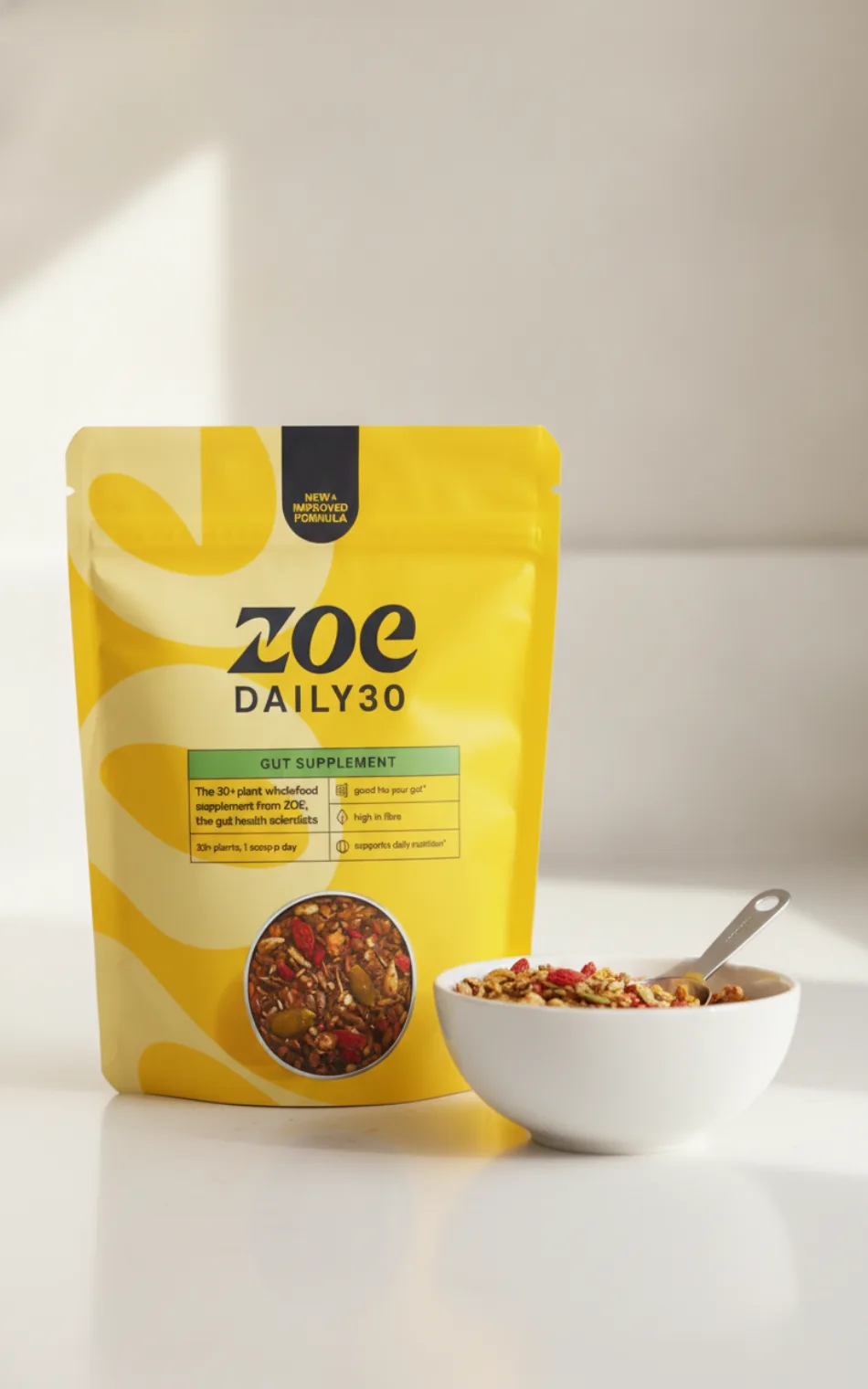 Wholefood Prebiotic
ZOE Daily30+ Review: Worth $60 or Just Ground Seeds?
300 reviews
An honest ZOE Daily30+ review: whether the 30-plant wholefood supplement works, what the clinical trial really shows, if you can make your own for less, the taste, and whether it's worth ~$60.
Published July 4, 2026
Is ZOE Daily30+ worth it? My honest review at a glance
ZOE Daily30+ is the "30+ plant" wholefood supplement from ZOE — the gut-science company led by Professor Tim Spector (of "eat 30 plants a week" fame). Unlike a greens drink or a gummy, it's a scoop of dried, milled whole plants — seeds, nuts, legumes, fruit, veg, mushrooms and herbs — that you sprinkle on your food, delivering 5g of fiber, plant protein, omega-3 and thousands of polyphenols. Let me be honest and useful from the first line: this is one of the most science-credible, transparent products I've reviewed — real scientists, an evidence-based concept, actual whole food, and a rare clinical trial on the finished product. The honest question isn't "is it legit" (it is), but "is it worth ~$60 for what is, essentially, ground-up seeds and nuts you could partly make yourself?" Let me walk you through it.
I went through whether it works, what the trial really shows, whether you can make your own for less, the taste, and whether it's worth it. Here's my straight, balanced take.
A genuinely science-backed, transparent whole-food mix — 30+ real plants, 5g fiber, plant polyphenols and omega-3 in one scoop, from credible scientists, and (rare for a supplement) tested in a 349-person clinical trial. The honest catches: it's essentially milled seeds, nuts, legumes and veg you can largely DIY for less; the 5g fiber is a top-up, not a substitute for eating plants; the trial is ZOE's own (real, but company-funded with a weak control); and at ~$60/month you're paying for convenience and breadth. Worth it if you value the ease; skip it if you'd rather DIY.
The essentials of my ZOE Daily30+ review
My rating: 7/10 — a legitimately science-forward, transparent whole-food product; the only real knock is that you're paying a premium for something largely DIY-able.
Key spec: 1 scoop (15g) sprinkled on food daily — 30+ plants, 5g fiber.
| Detail | ZOE Daily30+ |
|---|---|
| Brand | ZOE (Prof. Tim Spector & team) — gut-science company |
| Format | Dried, milled whole-plant powder; 1 scoop (15g) sprinkled on food |
| What's inside | 30+ whole plants (seeds, nuts, legumes, fruit, veg, mushrooms, herbs); 5g fiber + polyphenols + omega-3 |
| Best for | Boosting plant diversity and fiber conveniently, with real science behind it |
| Main knocks | Price vs DIY; 5g fiber is a top-up; company-funded trial |
| Price | ~$55/month ongoing (a $33 trial pack is offered) |
✅ What I liked about ZOE Daily30+
- ✅ Real science and scientists — Tim Spector's team, an evidence-based "30 plants" concept, and a genuine finished-product trial.
- ✅ Total transparency — it's just whole food; every ingredient is listed, no proprietary blend to hide behind.
- ✅ Genuinely useful nutrition — 5g of fiber, plant polyphenols, omega-3 and plant diversity in one easy scoop.
- ✅ Not a gimmick format — you sprinkle real milled plants on food; no fake "superfood" sprinkle doses.
❌ What held ZOE Daily30+ back
- ❌ Largely DIY-able — it's milled seeds, nuts, legumes and veg you can roughly assemble for less.
- ❌ 5g fiber is a top-up — that's ~15% of your daily target; you still need to eat plants.
- ❌ The trial is ZOE's own — real, but company-funded, with a weak control and no cardiometabolic change.
- ❌ Premium price + subscription — ~$60/month, and watch for accidental recurring charges.
A genuinely science-backed product — but a DIY seed-and-nut mix delivers similar nutrients for less.
In this ZOE Daily30+ review:
- What is ZOE Daily30+, and what's in it?
- Does ZOE Daily30+ actually work, and can you trust the trial?
- Can you make your own ZOE Daily30 for less?
- Is 5g of fiber in ZOE Daily30+ enough?
- Is the "30 plants a week" behind ZOE Daily30 real science?
- Is ZOE Daily30+ worth ~$60, or is it just expensive ground seeds?
- How do you use ZOE Daily30+, and what about taste and side effects?
- Who should buy ZOE Daily30+, and who should skip it?
- My verdict on ZOE Daily30+
- ZOE Daily30+ FAQ
What is ZOE Daily30+, and what's in it?
Daily30+ is genuinely different from the greens powders and gummies it's often lumped with: it's real, dried, milled whole plants you sprinkle onto meals (yogurt, salads, soups), not a drink or a pill.
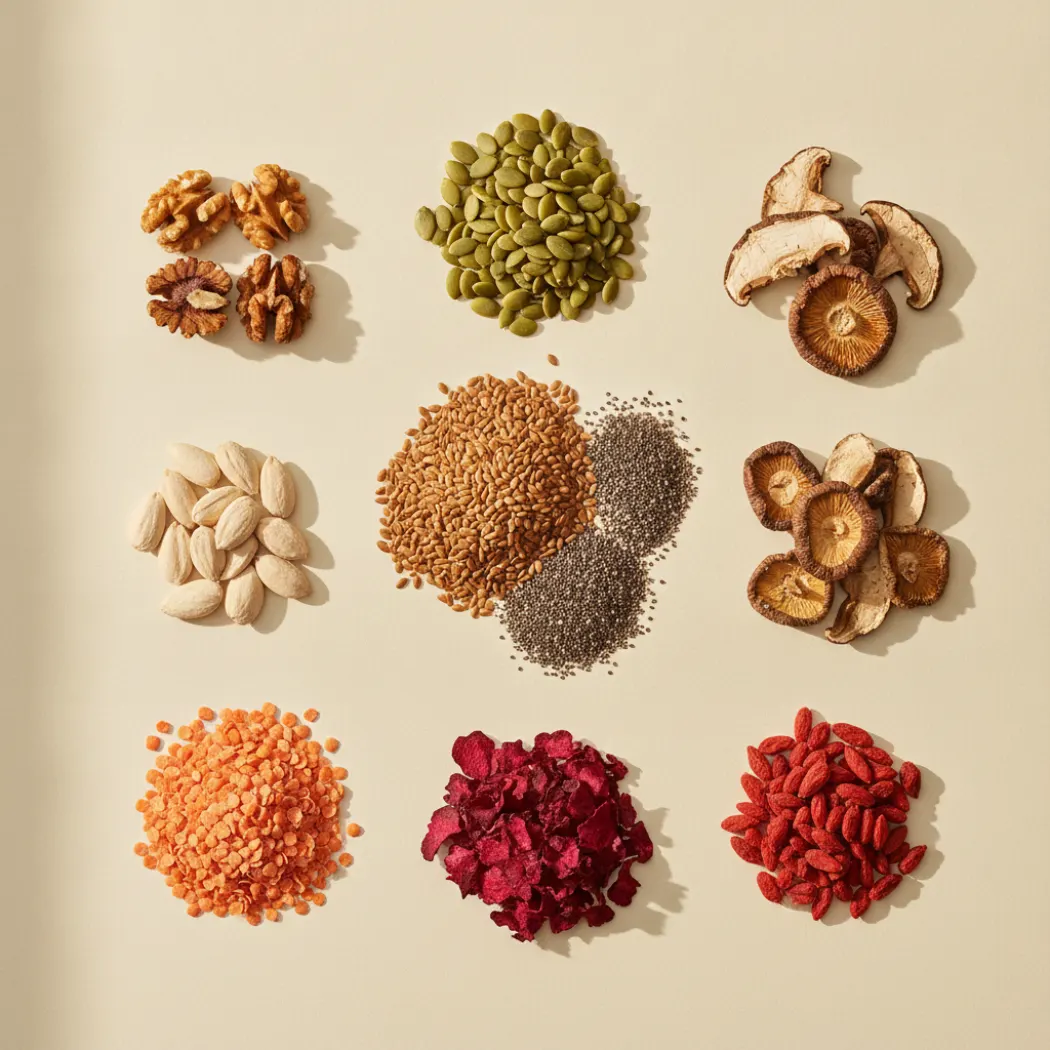
A 15g scoop delivers:
- 🌱 30+ whole plants — flax, chia, hemp, pumpkin, sunflower and grape seeds; almonds, walnuts, hazelnuts; red lentils, baobab, beetroot, carrot, chicory inulin, mushrooms and herbs.
- 🌾 5g of fiber — a real, mixed prebiotic fiber dose.
- 🍇 Polyphenols — thousands of plant compounds that feed a healthy microbiome.
- 🐟 Plant omega-3 & protein — from the seeds and nuts.
💡 The key honesty point up front: everything in Daily30+ is just food. That's its biggest strength (real nutrition, total transparency) and the root of its biggest criticism (you could buy or mill these ingredients yourself). Both things are true — the rest of this review weighs them.
Does ZOE Daily30+ actually work, and can you trust the trial?
There's real evidence here — more than almost any supplement — but read it with clear eyes.
🔬 The rare good part: ZOE ran an actual 349-person randomized controlled trial on the finished Daily30+ product — genuinely uncommon in supplements, where most "studies" are on isolated ingredients. It reported improvements in microbiome diversity and digestive symptoms (less indigestion and constipation, better regularity).
⚠️ The honest caveats: the trial was company-funded, non-blinded, had no placebo, and is published as a non-peer-reviewed preprint; the control group was weak (croutons/breadcrumbs); and the hard cardiometabolic markers that matter most — waist, cholesterol, triglycerides — didn't significantly move. The headline percentages are also participant-reported, not objective measures. So trust the digestion and diversity direction; be skeptical of any broader "transforms your health" implication. (Note: ZOE reformulated Daily30+ in late 2025, so the widely-cited trial was on the earlier recipe.)
➡️ So Daily30+ works for what it plausibly should — more fiber and plant diversity, better regularity — backed by better evidence than its rivals. Just don't expect a metabolic overhaul; it's good nutrition, not medicine.
Can you make your own ZOE Daily30 for less?
This is the question everyone asks (and a UK consumer-watchdog headline), so let's answer it straight: largely, yes.
🥣 Because Daily30+ is just milled seeds, nuts, legumes, fruit and veg, you can assemble a similar mix yourself: buy flax, chia, pumpkin and sunflower seeds, mixed nuts, and some dried beetroot/mushroom/berries, and grind or combine them. Per serving, a DIY version is meaningfully cheaper than Daily30+'s ~$2/scoop — the raw ingredients cost a fraction.
💡 What you'd give up by DIY-ing: the convenience (no sourcing 30 ingredients, milling, storing), the exact diversity in one scoop, and the clinical trial + quality testing on the finished blend. Those are real, but they're conveniences — not nutrients you can't get elsewhere.
➡️ So the honest framing: the nutrients are DIY-able; the "30 plants in one easy scoop" is what you're actually paying for. If you'll genuinely assemble and use a homemade mix, you'll save money. If you know you won't, Daily30+'s convenience may be worth it — only you can judge that.
Is 5g of fiber in ZOE Daily30+ enough?
It's a genuine, useful amount — but not a solution on its own.
📏 The context: the daily fiber target is roughly 28–38g, and most people fall well short (the average American gets about half). Daily30+ provides roughly 3.5–5g of fiber (depending on serving size — ZOE markets "5g," and its label works out to about 3.5g per 15g scoop) — a real, mixed-fiber contribution of around 10–17% of the target, and better than the token 2g in many greens powders.
⚠️ The limit: 5g is a top-up, not a replacement. You still need to eat fruit, vegetables, legumes and whole grains to hit your fiber and diversity goals — Daily30+ helps close the gap, it doesn't fill it.
➡️ So value the 5g fiber as a helpful daily boost that also brings polyphenols and plant diversity — not as "my fiber is sorted." If a bigger single fiber dose is your only goal, a cheaper option like Benefiber or a targeted prebiotic fiber delivers more grams per dollar (without the diversity).
Is the "30 plants a week" behind ZOE Daily30 real science?
Yes — and importantly, the concept predates the product.
🔬 The "30 different plants a week" idea comes from the 2018 American Gut Project — a large, independent study that found people eating 30+ types of plants per week had more diverse gut microbiomes than those eating 10 or fewer. Microbiome diversity is broadly linked to better gut and metabolic health. So this isn't ZOE marketing spun from nothing; it's a real, published finding.
➡️ Daily30+ is essentially a convenient tool to act on genuine science: get a wide variety of plants in easily. The concept is sound — the fair debate is only whether you need to buy a product to do it, or can get there through a varied diet (and a DIY mix).
Is ZOE Daily30+ worth ~$60, or is it just expensive ground seeds?
Both framings are fair — it depends on what you value.
💰 At about $2 a scoop (~$55/month ongoing; a $33 trial pack exists), critics are right that you're paying a premium for ingredients that individually cost far less. "It's a bag of seeds" is a fair jab on cost.
✅ But it's not a rip-off either: it's real whole food (not fairy-dusted extracts), it's fully transparent, it packs 30+ plants and 5g fiber into one no-effort scoop, and it's been through an actual trial. Compared to a $80 greens powder like AG1 (extracts, proprietary blend), Daily30+ arguably offers more honest nutrition per dollar.
➡️ The value verdict: Daily30+ is fairly priced for what it is (a convenient, tested whole-food diversity booster) and overpriced versus DIY. If convenience and the science reassure you, it's a reasonable buy; if you're cost-focused and will actually make your own, it's an easy skip.
How do you use ZOE Daily30+, and what about taste and side effects?
Simple to use, with two practical tips.
- 🥄 How to use it — sprinkle one scoop (15g) onto food daily: yogurt, oats, salads, soups, roasted veg. It's not a drink.
- 😋 Taste — most find it mild, nutty and pleasant with a nice crunch; the mushroom/herbal notes can clash with very sweet foods, so it shines more on savory dishes.
- 💨 Start low — because of the fiber, begin with half a scoop and build up to avoid temporary gas or bloating.
- ⚠️ Allergens — it contains nuts and seeds; if you have a medical condition or take medication, check with a professional. A pharmacist can help — see how your pharmacist helps you use supplements safely.
- 🏷️ Recall context — ZOE recalled specific Daily30+ batches in December 2024 as a precaution over possible metal/stone fragments (a Class II recall covering a small number of units, with no reported injuries; those batches have since expired). A resolved incident, but worth knowing.
➡️ So it's an easy daily habit, best on savory food, ramped up slowly — and one of the few supplements where the "side effect" is simply your body adjusting to more fiber, which is a good sign.
Who should buy ZOE Daily30+, and who should skip it?
This is really about whether you'll DIY or not.
👍 ZOE Daily30+ is a good fit if:
- You want an easy, science-backed way to add plant diversity and fiber and won't assemble a DIY mix yourself.
- You value transparency and real food over extracts and proprietary blends.
- You're already in the ZOE / Tim Spector world and want the convenient tool.
👎 You should skip it if:
- You're cost-focused and will genuinely make your own seed/nut/veg mix for less.
- You just want a big fiber dose — a cheaper single fiber gives more grams per dollar.
- You have a nut/seed allergy, or you expect a metabolic/weight transformation (it's a diversity booster, not a cure).
My verdict on ZOE Daily30+ — should you buy it?
Is ZOE Daily30+ worth it? My verdict is: one of the most honest, science-backed products in the category — 7/10.
Let's give it full credit: Daily30+ is refreshingly legitimate. It's built on real, independent science (the American Gut Project's 30-plants finding), it comes from credible scientists (Tim Spector's team), it's totally transparent (just whole food, no proprietary blend), it delivers genuine nutrition (5g fiber, polyphenols, omega-3, real plant diversity), and — rare for a supplement — it's been through an actual clinical trial on the finished product. Compared to most of this category, that's a breath of fresh air.
What keeps it at a 7 is value, not quality: it's essentially milled seeds, nuts and veg you can largely DIY for less, the 5g fiber is a top-up (you still must eat plants), the impressive-sounding trial is company-funded with a weak control and no cardiometabolic movement, and at ~$60/month with a subscription you're paying for convenience.
- 👍 Buy ZOE Daily30+ if you want an easy, transparent, science-backed diversity-and-fiber booster and you won't bother making your own.
- 👎 Skip it if you're cost-focused and will DIY, you only want a big fiber dose, or you expect it to transform your metabolic health.
➡️ Bottom line: ZOE Daily30+ is a genuinely good, honest, science-forward whole-food supplement — you're mainly paying a premium for convenience and a trial, not for magic. If the ease and the credibility are worth ~$60 to you, it's a reasonable, above-board choice (and better value than a fancy greens powder). If you'll assemble your own seed-and-plant mix, you'll get most of the benefit for a fraction of the cost — and either way, keep eating your plants.
Honest, science-backed nutrition — the $33 trial pack is a low-risk way to see if you'll use it.
ZOE Daily30+ FAQ
Does ZOE Daily30+ actually work?
For plant diversity, fiber and digestion, yes — and it's backed by better evidence than most supplements: an actual 349-person trial on the finished product reported better microbiome diversity and fewer digestive symptoms. Just note the trial was company-funded and hard metabolic markers (waist, cholesterol) didn't move, so expect gut benefits, not a health transformation.
Can you make your own ZOE Daily30?
Largely, yes. It's milled seeds, nuts, legumes, fruit and veg, so you can assemble a similar mix (flax, chia, pumpkin/sunflower seeds, mixed nuts, dried beetroot/berries) for meaningfully less per serving. What you lose by DIY-ing is the convenience, the exact 30-plant diversity in one scoop, and the clinical testing — conveniences, not unique nutrients.
Is 5g of fiber in Daily30+ enough?
It's a real, useful amount — about 13–17% of the ~28–38g daily target, and better than the 2g in many greens powders — but it's a top-up, not a replacement. You still need to eat fruit, vegetables, legumes and whole grains. Daily30+ helps close the fiber and diversity gap; it doesn't fill it.
Is the "30 plants a week" idea real science?
Yes. It comes from the 2018 American Gut Project, a large independent study that found people eating 30+ types of plants per week had more diverse gut microbiomes than those eating 10 or fewer. Diversity is broadly linked to better gut health. The concept predates the product and isn't just ZOE marketing.
What does ZOE Daily30+ taste like, and how do you use it?
You sprinkle one 15g scoop on food daily — yogurt, oats, salads, soups, roasted veg (it's not a drink). Most find it mild, nutty and pleasantly crunchy, though the mushroom/herbal notes can clash with very sweet foods, so it's best on savory dishes. Start with half a scoop to avoid fiber-related gas.
Is ZOE Daily30+ worth ~$60?
It's fairly priced for a convenient, tested whole-food diversity booster, but overpriced versus a DIY mix. You're paying about $2 a scoop for real whole food (not extracts), full transparency and a clinical trial — arguably better value than an $80 greens powder, but more than making your own. Worth it if convenience matters; skip it if cost does.
Are there side effects to ZOE Daily30+?
The main one is temporary gas or bloating from the added fiber — normal as your gut adjusts, and minimized by starting with half a scoop. It contains nuts and seeds, so avoid it with those allergies. If you take medication or have a medical condition, check with a healthcare professional before starting.
Keep reading before you buy ZOE Daily30+
Fiber, greens and wholefood supplements vary a lot — here's how Daily30+ compares:
- Pendulum Gut Fuel review — the closest rival: a prebiotic fiber + polyphenol blend you drink.
- AG1 (Athletic Greens) review — the greens-powder benchmark (extracts, not whole food).
- Grüns Superfood Gummies review — a gummy "superfood" alternative (with sprinkled doses).
- Benefiber review — a cheap single fiber if grams-per-dollar is all you want.
- How your pharmacist helps manage medications and supplements — useful before any daily supplement.
Disclaimer: This ZOE Daily30+ review is independent editorial information, not medical advice. Dietary supplements are not intended to diagnose, treat, cure or prevent any disease. Daily30+ is a whole-food supplement providing about 5g of fiber per scoop (roughly 13–17% of the daily target) plus plant polyphenols and omega-3; it is designed to complement, not replace, a varied diet of fruit, vegetables, legumes and whole grains. The "30 plants per week" concept is supported by the independent 2018 American Gut Project, but ZOE's clinical trial on the finished product was company-funded, used a weak control, and did not show significant improvements in cardiometabolic markers such as waist circumference, cholesterol or triglycerides; the product was also reformulated in late 2025. It contains nuts and seeds — avoid with those allergies. If you are pregnant, breastfeeding, take medication, or have a medical condition, consult a licensed healthcare professional before use. Some consumer complaints concern subscription/auto-renewal billing — review the terms. This page may contain affiliate links; we may earn a commission at no extra cost to you, which never changes our honest assessment. Pricing and formulation were accurate at the time of writing (July 2026) and may change — verify on the official site.